
Frank Sinatra songs are the very backbone of the Great American Songbook. Few artists in the history of American music have left a mark as deep, as lasting, or as emotionally resonant as Francis Albert Sinatra — a man whose voice could make a crowded room fall silent and whose persona defined an entire era of style, swagger, and sentiment.
Born on December 12, 1915, in Hoboken, New Jersey, Sinatra rose from humble beginnings to become one of the most celebrated entertainers in history. He was a singer, an actor, a cultural icon — and above all, a storyteller whose voice carried genuine feeling through every phrase. Known affectionately as Ol’ Blue Eyes and the Chairman of the Board, his career spanned an extraordinary 54 years, yielding over 1,400 recorded songs and 59 solo studio albums.
What made Frank Sinatra truly exceptional was his ability to transcend genre boundaries. In the 1940s and 1950s, jazz was pop music, and Sinatra sat at its center. He appealed to bobby soxers (teenage girls of the 1940s who wore distinctive rolled-down socks) the way rock stars would appeal to later generations — with an intensity that inspired something close to hysteria, a phenomenon dubbed Sinatramania. He worked alongside jazz legends including Count Basie, Duke Ellington, and Tommy Dorsey, while also starring in Hollywood films and hobnobbing with presidents.
His career was not without its valleys. He endured professional slumps and personal controversies, but Sinatra always came back — refining his craft, deepening his interpretations, and recording some of his most mature work well into his later decades. This resilience is part of what makes exploring the Frank Sinatra discography such a rich journey.
Below, we explore 25 of the greatest Frank Sinatra songs ever recorded — from swinging jazz numbers to heartbreaking ballads, and from holiday classics to Hollywood soundtracks. These recordings span his entire career and represent the full breadth of his artistry.
Who Was Francis Albert Sinatra?
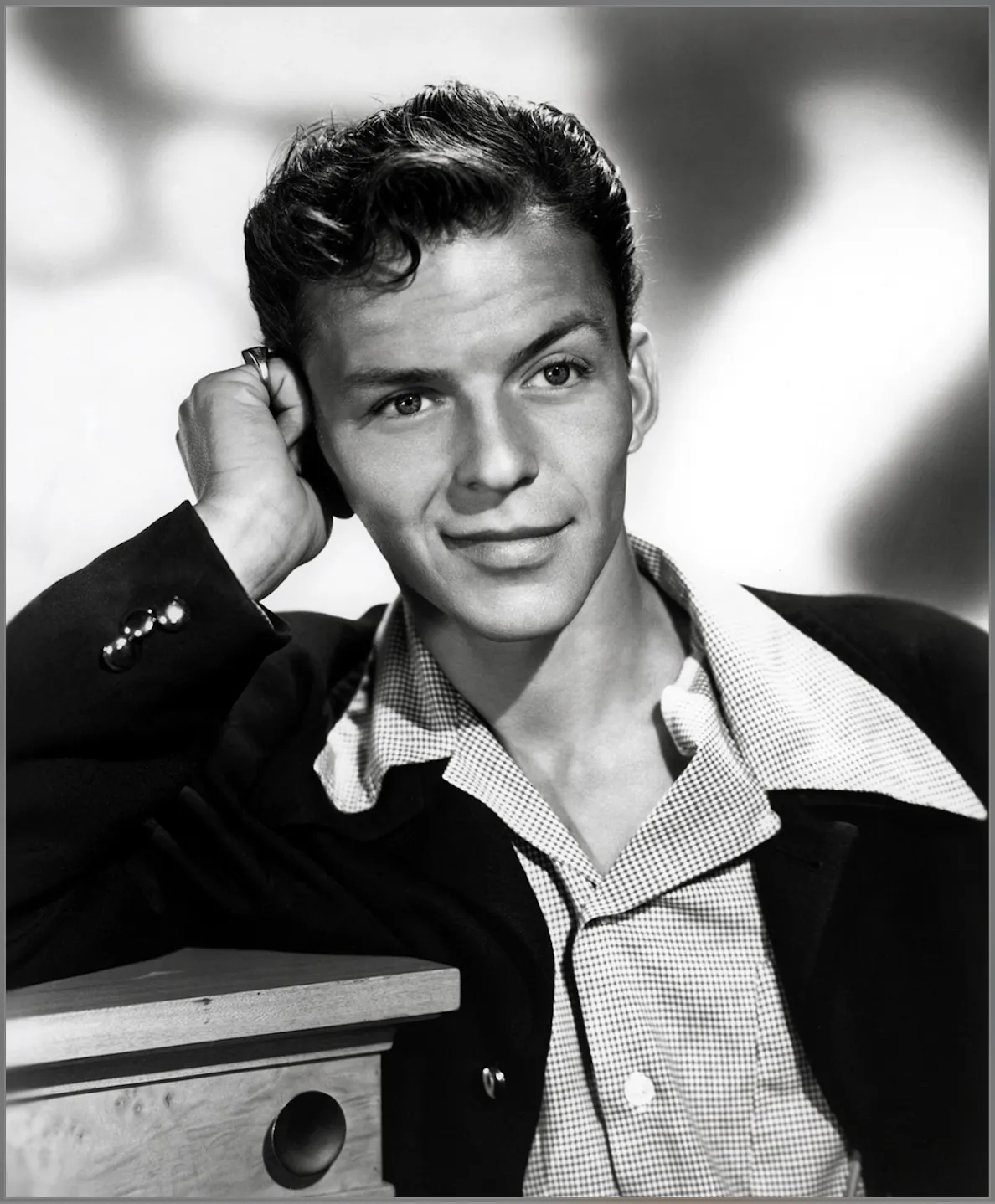
Sinatra began his professional singing career with the Harry James Orchestra in 1939, quickly moving on to the Tommy Dorsey Orchestra, where he honed the smooth, breath-controlled phrasing that would become his signature. His ability to sustain long melodic lines — reportedly inspired by watching Dorsey’s trombone technique — gave his voice a flowing, almost instrumental quality.
By the early 1940s, he had launched a solo career that would see him signed to major labels, cast in musicals, and elevated to a cultural phenomenon the likes of which America had not quite seen before. He personified the style and attitude of postwar America: confident, charming, and unapologetically himself.
Throughout his career, Sinatra collaborated with some of the greatest musicians and arrangers of the 20th century — Nelson Riddle, Billy May, Gordon Jenkins, Quincy Jones, Count Basie, Duke Ellington, and the Brazilian composer Antônio Carlos Jobim, among others. Each collaboration shaped a distinct chapter of his artistic evolution.
Now, let’s dig into the songs themselves.
The 25 Greatest Frank Sinatra Songs
1. Fly Me to the Moon
Originally written in 1954 by songwriter Bart Howard under the title In Other Words, this song became one of the most recognizable Frank Sinatra songs in history thanks to his definitive 1964 recording. Sinatra’s version appeared on the album It Might As Well Be Swing, recorded with the Count Basie Orchestra and arranged by the legendary Quincy Jones.
Jones changed the song’s time signature from 3/4 waltz time to 4/4, giving it that irresistible, propulsive swing feel. It was Sinatra’s own insistence that the band play it hard and loose, full of energy.
The song gained yet another layer of cultural significance in 1968, when it became an unofficial anthem of NASA’s Apollo program — a fitting soundtrack for humanity’s greatest leap.
2. In the Wee Small Hours of the Morning
Composed by David Mann with lyrics by Bob Hilliard, this song served as the title track of Sinatra’s landmark 1955 album In the Wee Small Hours — widely regarded as one of the first true concept albums in popular music history.
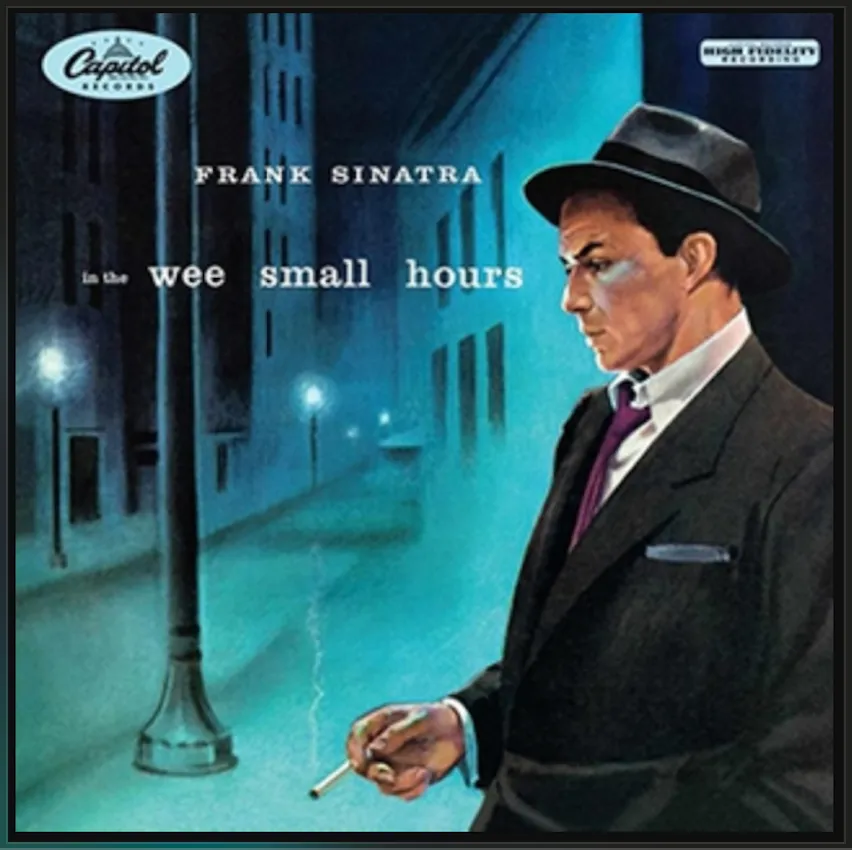
The album explored themes of longing, unrequited love, and emotional desolation with a coherence and intentionality that was groundbreaking for its time. The title track perfectly encapsulates that late-night melancholy — the kind that creeps in when the world is quiet and reflection becomes unavoidable. No subsequent version has matched the intimacy of Frank’s original.
3. My Funny Valentine
A show tune written by Richard Rodgers and Lorenz Hart for the 1937 Broadway musical Babes in Arms, “My Funny Valentine” had already become a standard in American music when Sinatra recorded it in 1953. His version appeared on his seventh studio album, Songs for Young Lovers (1954), released by Capitol Records.

This album marks the beginning of Sinatra’s celebrated partnership with conductor and arranger Nelson Riddle — a creative relationship that would last more than two decades and produce some of the finest recordings in American popular music.
4. Somethin’ Stupid
Originally a folk song written by C. Carson Parks and recorded with his wife Gaile Foote in 1966, Somethin’ Stupid took on an entirely new dimension when Frank Sinatra recorded it as a duet with his daughter Nancy Sinatra in 1967. The single spent four weeks at number one on the Billboard Hot 100 — a remarkable achievement for a soft pop ballad.
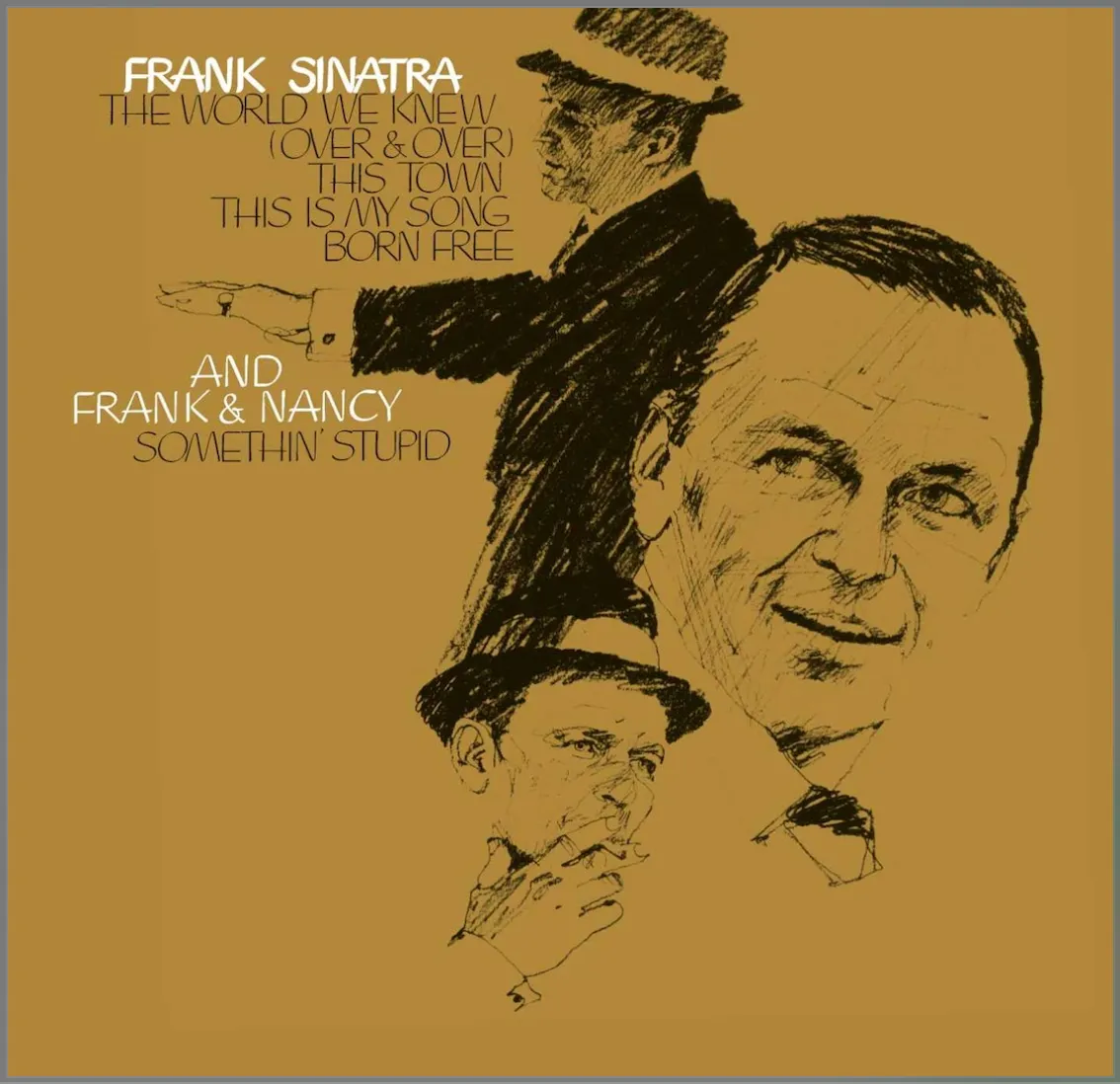 Album cover for The World We Knew by Frank Sinatra, released in 1967
The song later appeared on the album The World We Knew (1967). Stylistically, it departed from Sinatra’s classic swing sound, offering instead a gentle, easy-listening quality that demonstrated his cross-genre appeal and ability to remain relevant even as musical tastes shifted dramatically around him.
5. The Christmas Waltz
Written specifically for Frank Sinatra by the songwriting duo of Sammy Cahn and Jule Styne in 1954, “The Christmas Waltz” first appeared on the holiday album White Christmas that same year. However, its most beloved version comes from his 1957 holiday record A Jolly Christmas from Frank Sinatra, featuring a sumptuous arrangement by Nelson Riddle.
This album is among the finest Christmas records ever made — warm, nostalgic, and radiating the kind of seasonal joy that never grows old.
6. Autumn Leaves
One of the most recorded jazz standards of all time, “Autumn Leaves” originated as the French song Les Feuilles Mortes composed by Joseph Kosma in 1945. Poet Jacques Prévert wrote the original French lyrics, and in 1950, lyricist Johnny Mercer penned the now-famous English version.
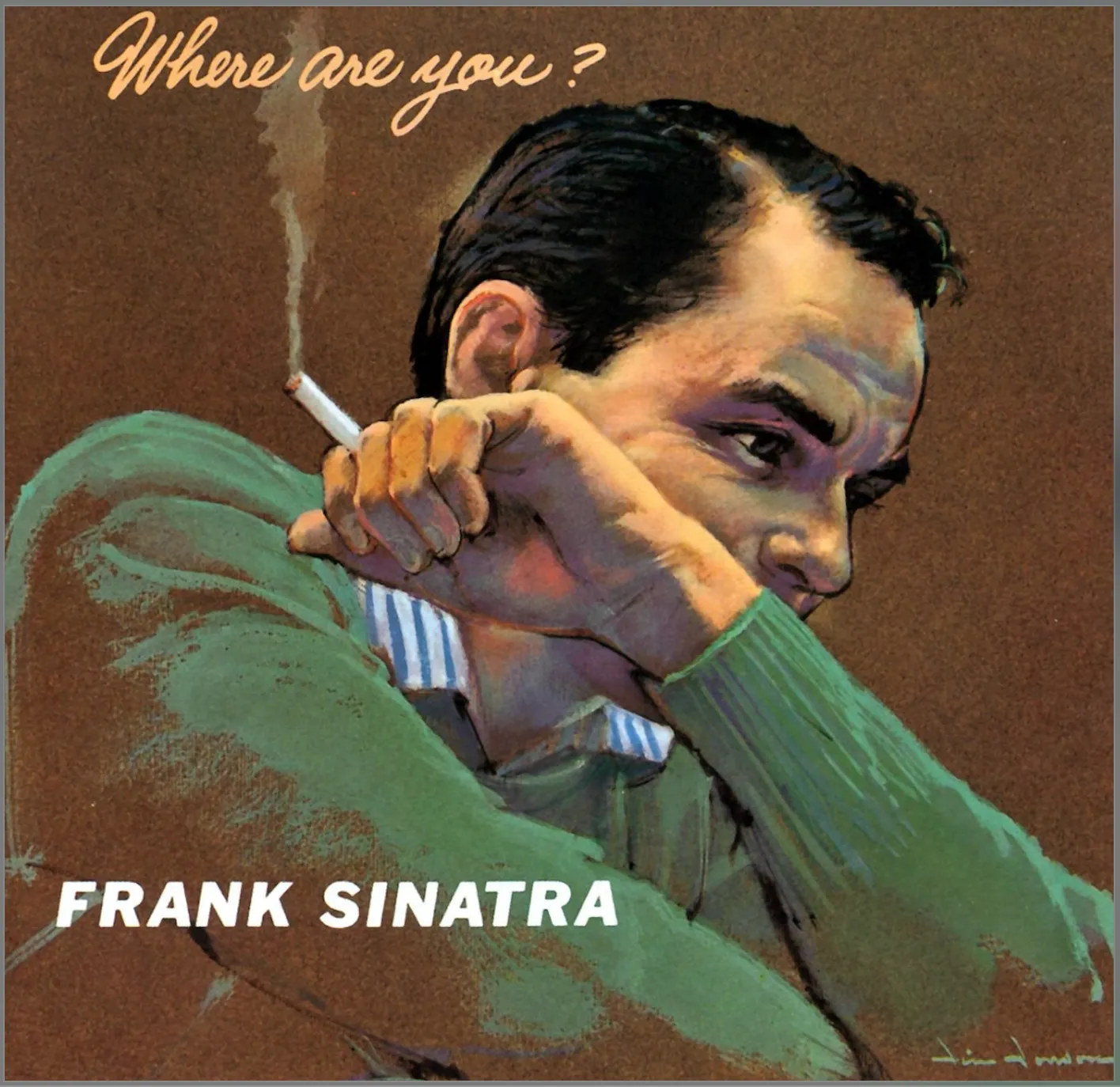
Sinatra’s recording appeared on his 1957 all-ballad album Where Are You?, which stood in deliberate contrast to his concurrent swing album A Swinging Affair. His version of “Autumn Leaves” is deeply contemplative — a study in emotional restraint and vocal beauty.
7. My Way
Released as a single in 1969, “My Way” is perhaps the most emblematic Frank Sinatra song in terms of persona. The music derives from the French tune Comme d’habitude by Jacques Revaux, but the English lyrics — written expressly with Sinatra in mind by Paul Anka — transformed it into something deeply personal.
The song is a retrospective meditation on a life lived on one’s own terms: confronting its challenges, owning its choices, and standing firm in the face of the final curtain. It became an anthem not just for Sinatra, but for anyone who has navigated life with conviction and self-determination. Elvis Presley and Sid Vicious were among the many artists who later recorded their own memorable versions.
8. The Way You Look Tonight
From the 1936 film Swing Time, with music by Jerome Kern and lyrics by Dorothy Fields, “The Way You Look Tonight” won the Academy Award for Best Original Song that year. By the time Sinatra recorded it for his 1964 album Sinatra Sings Days of Wine and Roses, Moon River, and Other Academy Award Winners, it had long been established as a jewel of the American Songbook.
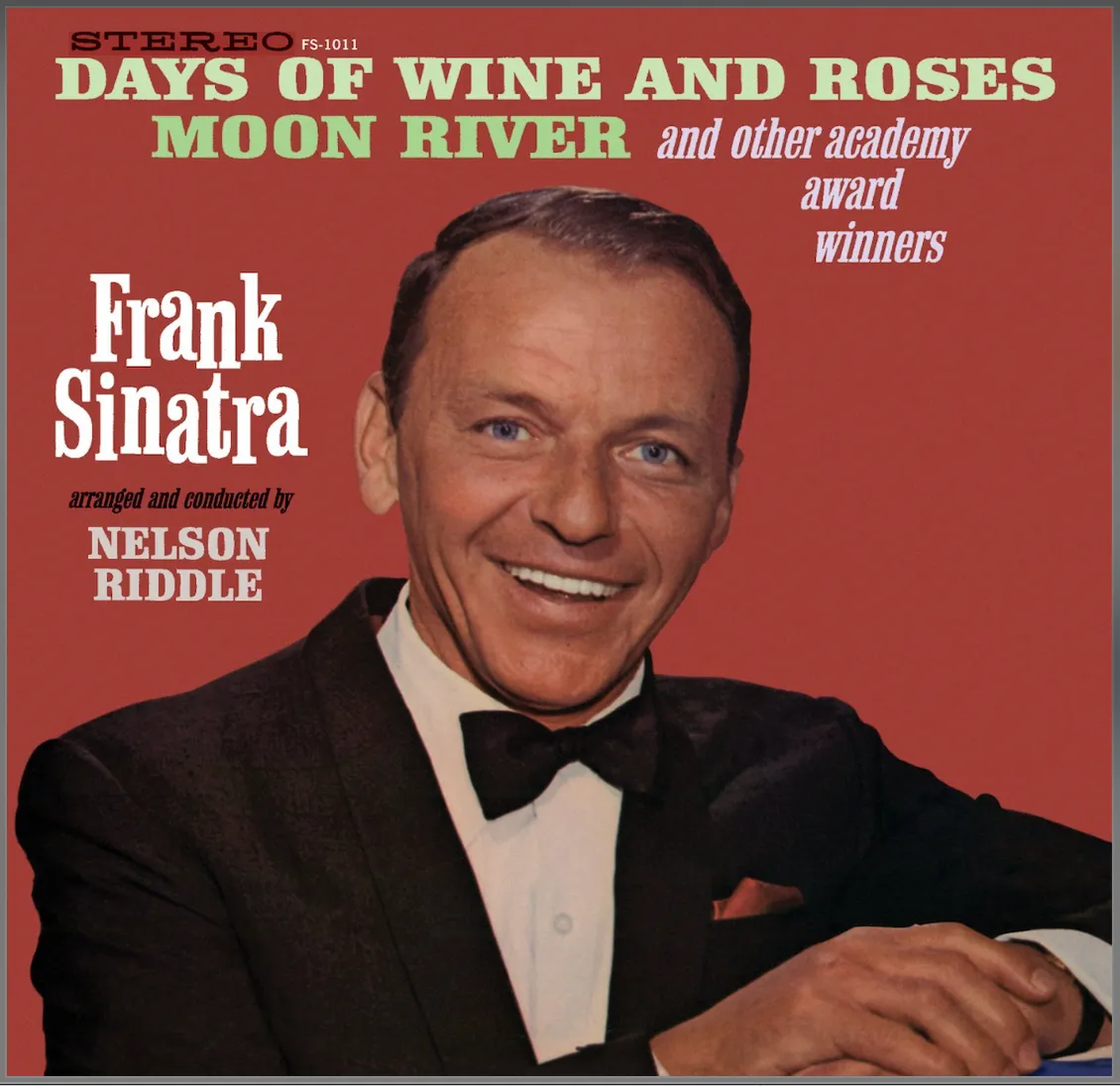 Album cover for Sinatra Sings Days of Wine and Roses, Moon River, and Other Academy Award Winners, released in 1964
Sinatra’s version elevates the song to something close to a declaration of love — tender, unhurried, and irresistibly romantic.
9. The Girl from Ipanema
Garota de Ipanema was composed by Antônio Carlos Jobim with original Portuguese lyrics by Vinícius de Moraes. Norman Gimbel later provided the English text. It became the defining song of the Bossa Nova movement — a Brazilian genre that swept through American jazz in the early 1960s with its blend of samba rhythms and cool, sophisticated harmonies.
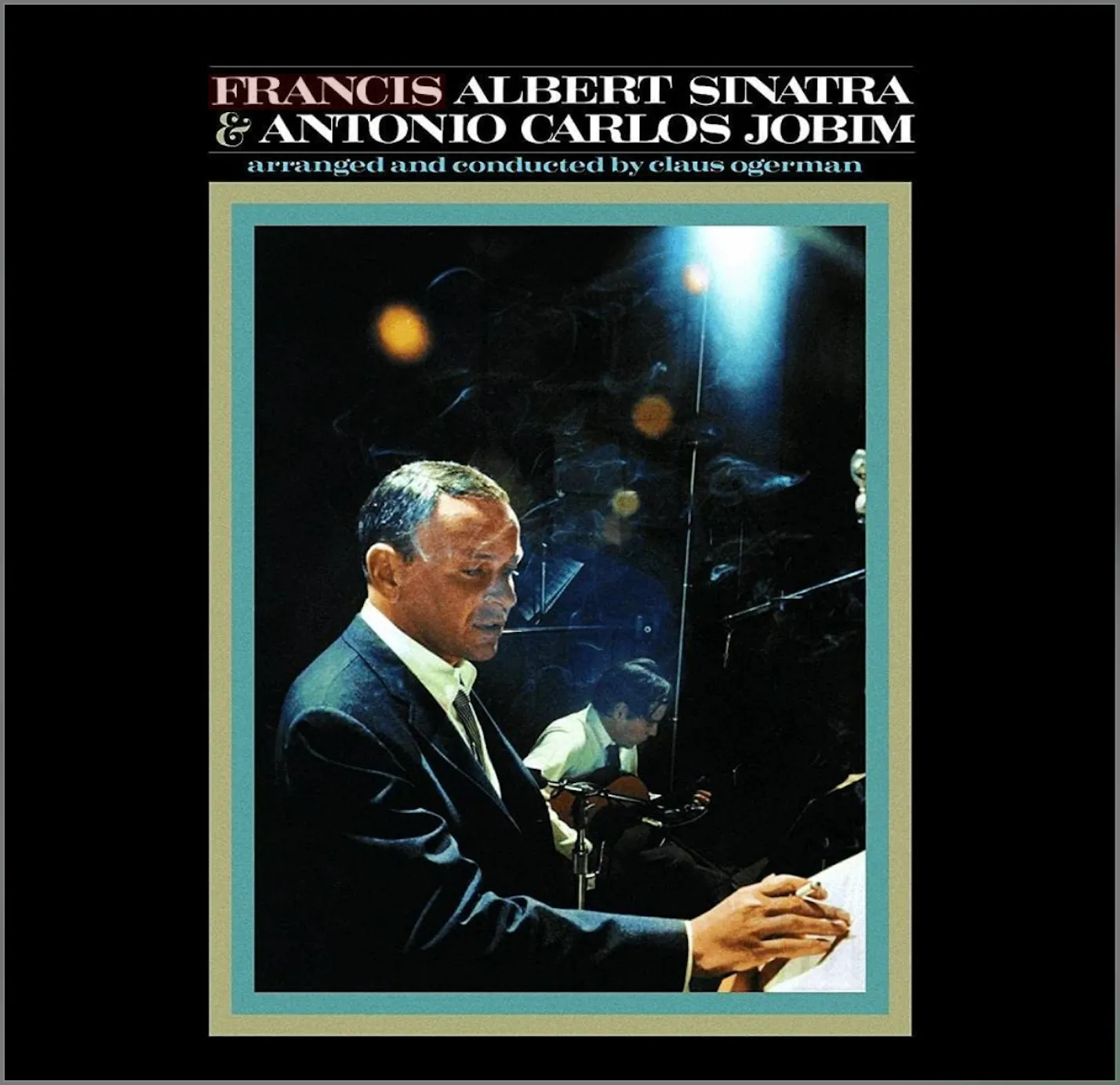
Sinatra’s version is particularly special because it features Jobim himself singing his original Portuguese verses alongside Sinatra’s English lines. This 1967 collaboration, captured on the album Francis Albert Sinatra & Antônio Carlos Jobim, remains one of the most elegant cross-cultural recordings in jazz history.
10. Let It Snow! Let It Snow! Let It Snow!
Composed by Jule Styne with lyrics by Sammy Cahn in 1945, this holiday staple was recorded by Sinatra in 1950 as a single, featuring vocal harmony support from the B. Swanson Quartet. It was later included in the 1957 rerelease of Christmas Songs by Sinatra (originally recorded in 1948), retitled Christmas Dreaming.
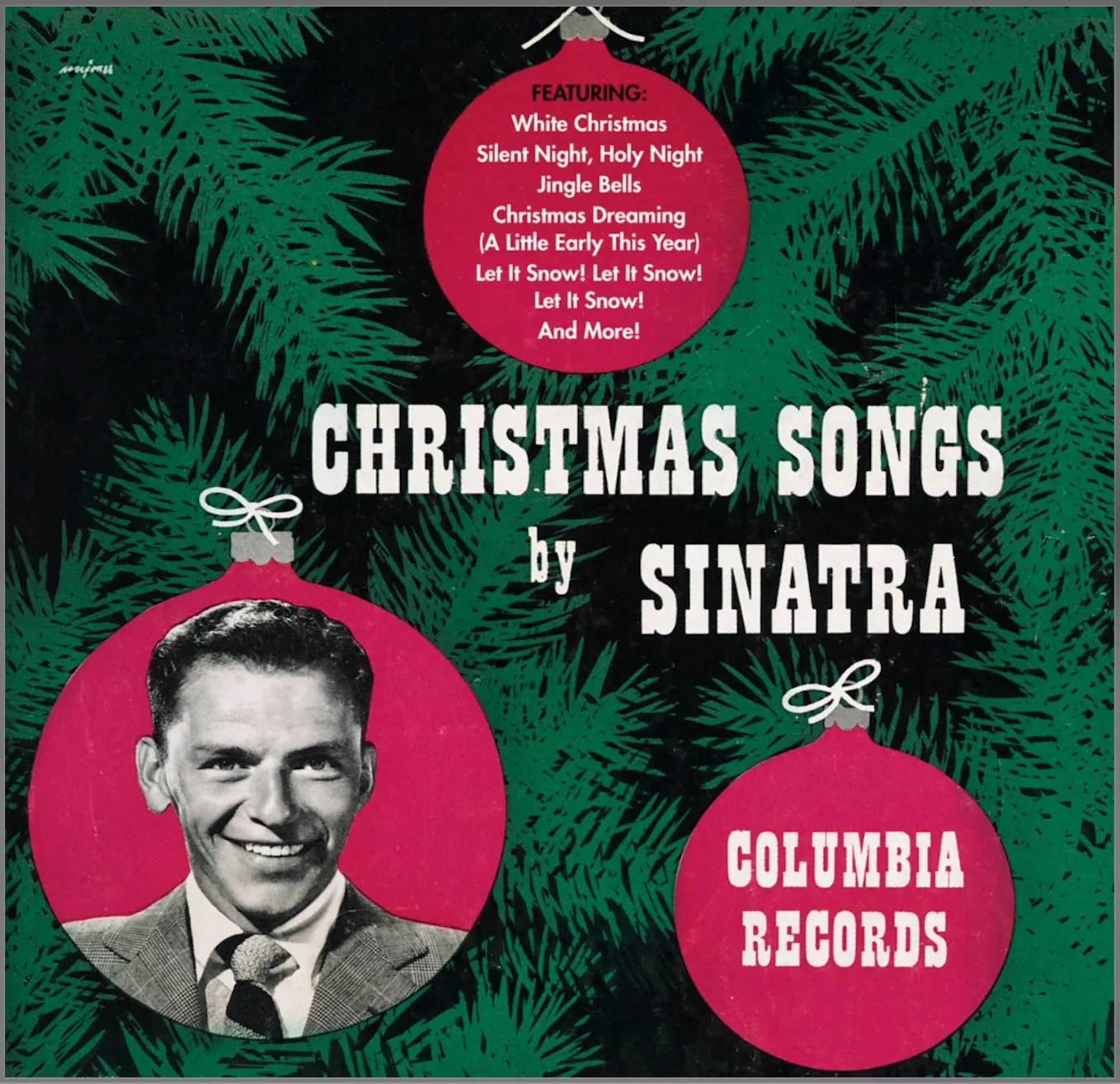 Album cover for Christmas Songs by Sinatra, originally released in 1948 by Columbia Records
The recording is quintessential holiday joy — bright, bouncy, and overflowing with warmth.
11. Misty
Written in 1954 by pianist Erroll Garner as an instrumental piece, “Misty” received lyrics from Johnny Burke and quickly became one of the most beloved jazz standards of the postwar era. Sinatra recorded it for his 1962 album Sinatra and Strings, one of the most lushly orchestrated records of his career.
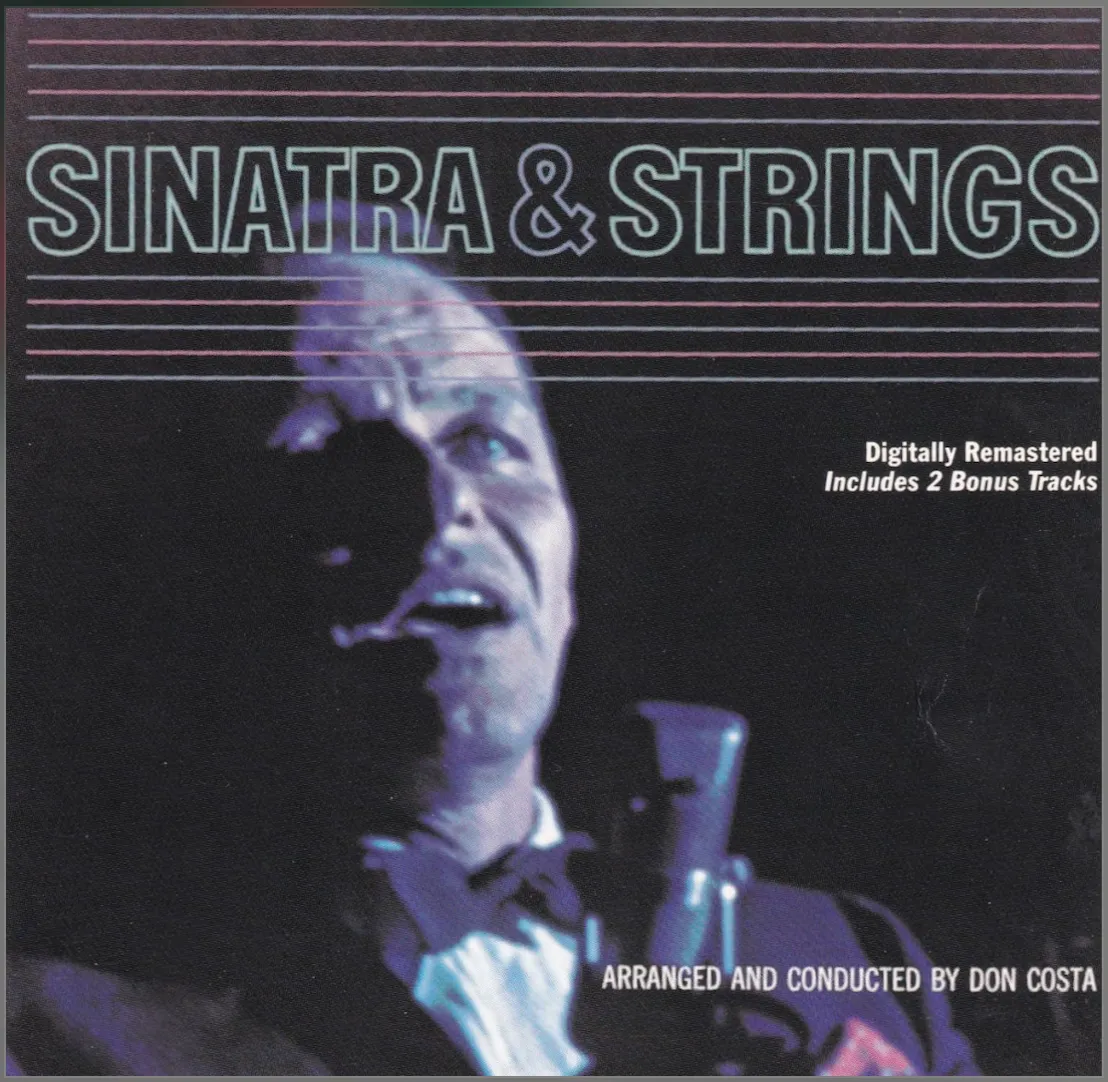
The full string arrangements give the recording a cinematic grandeur, and Sinatra’s phrasing is perfectly calibrated — intimate and expansive at once.
12. I Thought About You
Composed by Jimmy Van Heusen with lyrics by Johnny Mercer in 1939, this jazz standard became one of the standout tracks on Sinatra’s acclaimed 1956 album Songs for Swingin’ Lovers! — a swinging, high-energy collection of American Songbook favorites arranged by Nelson Riddle.
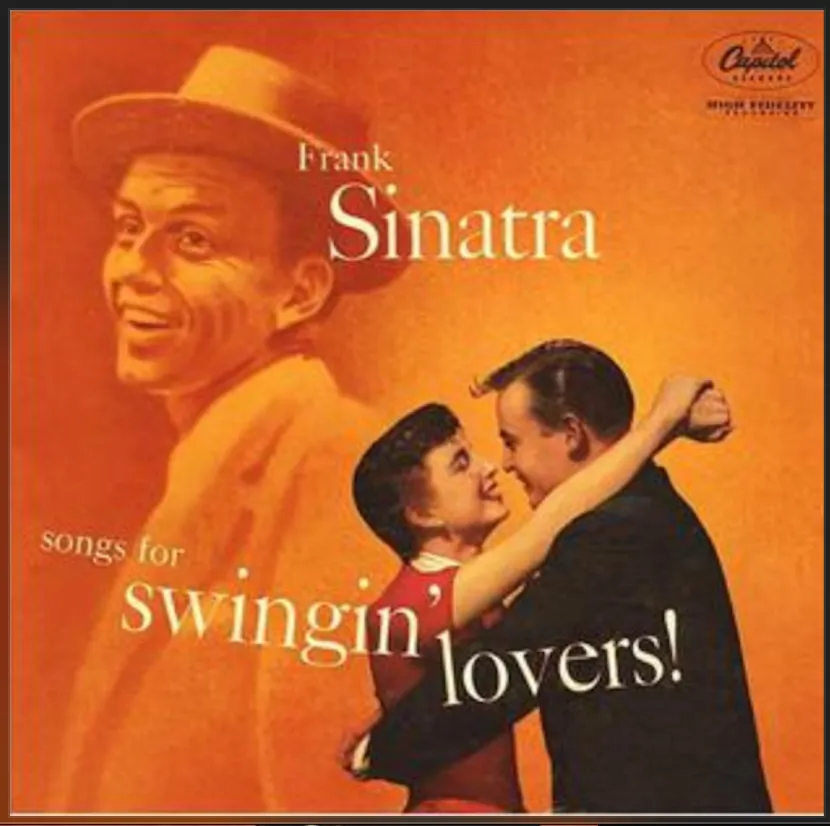 Album cover for Songs for Swingin' Lovers by Frank Sinatra, released in 1956
The album represented a deliberate tonal shift from the introspective In the Wee Small Hours — where that album brooded, Songs for Swingin’ Lovers! bounced. Sinatra sounds effortlessly alive throughout.
13. Have Yourself a Merry Little Christmas
Originally written by Hugh Martin and Ralph Blane for the 1944 MGM musical Meet Me in St. Louis — where it was famously performed by Judy Garland — this holiday song nearly faded from prominence before Frank Sinatra rescued it in 1957.
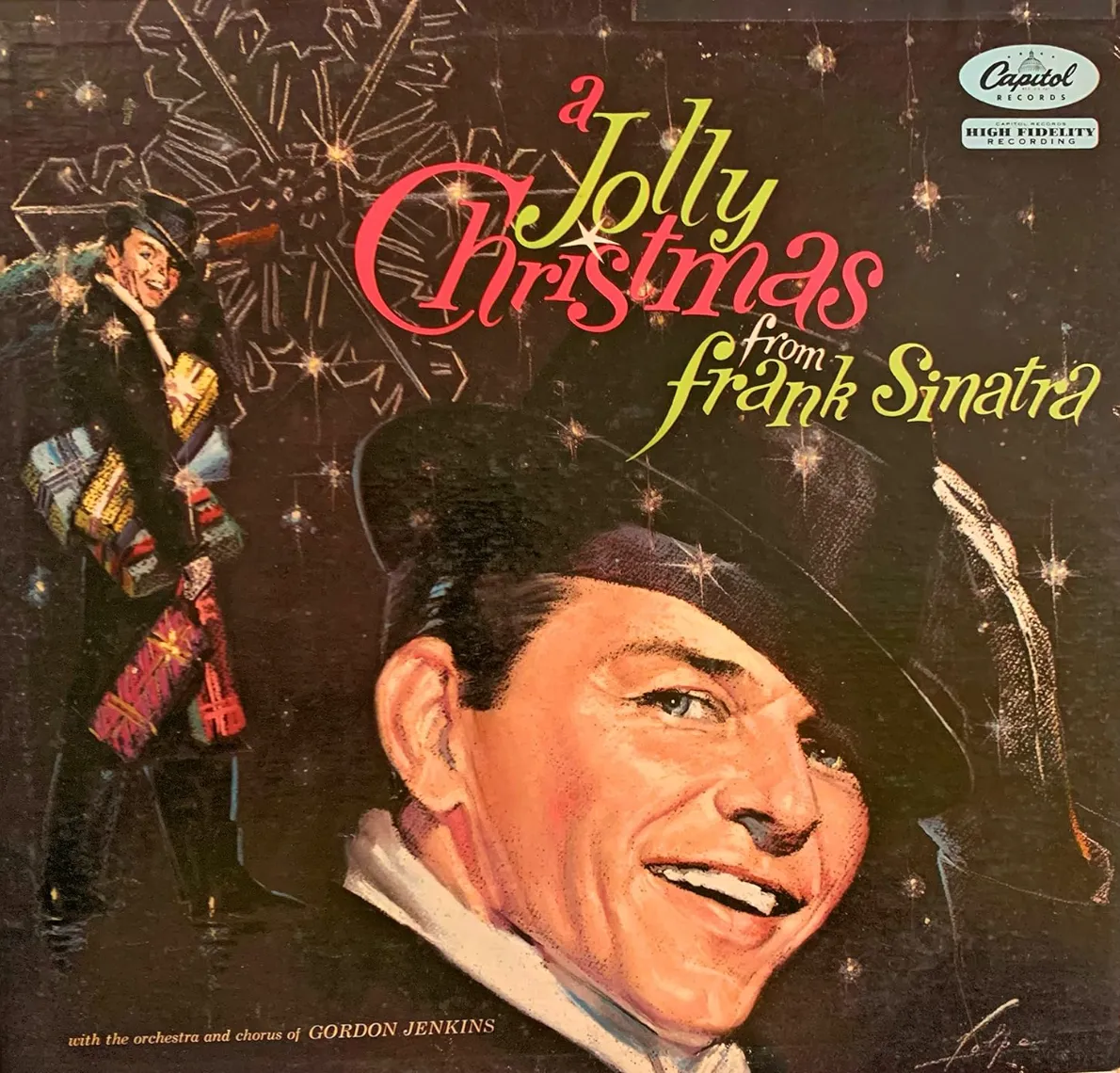 Album cover for A Jolly Christmas from Frank Sinatra, released in 1957
Sinatra further lightened the song’s originally bittersweet lyrics and placed it on his A Jolly Christmas from Frank Sinatra album, where it has remained a holiday staple ever since. His version is gentle and genuinely moving — a perfect holiday song.
14. It Was a Very Good Year
Written in 1961 by Ervin Drake, this song gained immortality through Sinatra’s 1966 recording. Released as a single, it earned him a Grammy Award for Best Male Vocal Performance and became his first number-one single in the Adult Contemporary chart category.
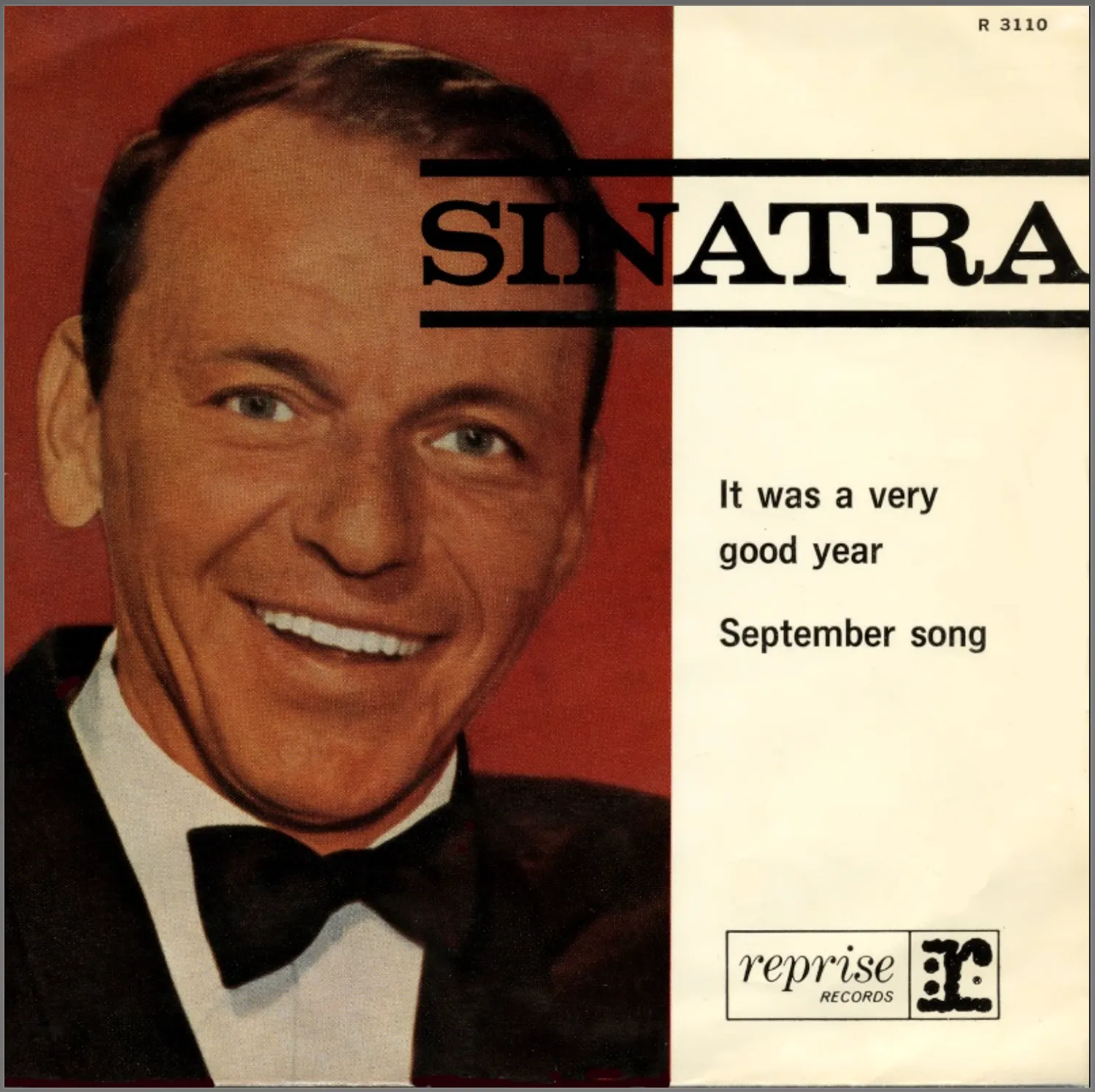 Single release artwork for It Was A Very Good Year by Frank Sinatra, 1966
The song’s meditative tone — a man looking back across the different chapters of his life — suited Sinatra’s voice and persona perfectly. It feels less like a performance than a genuine reckoning.
15. Three Coins in the Fountain
Written by Jule Styne with lyrics by Sammy Cahn for the 1954 romantic comedy film of the same name, “Three Coins in the Fountain” was performed by Sinatra over the film’s opening credits. His recording won the Academy Award for Best Original Song the following year — one of the many intersections between his music career and Hollywood legacy.
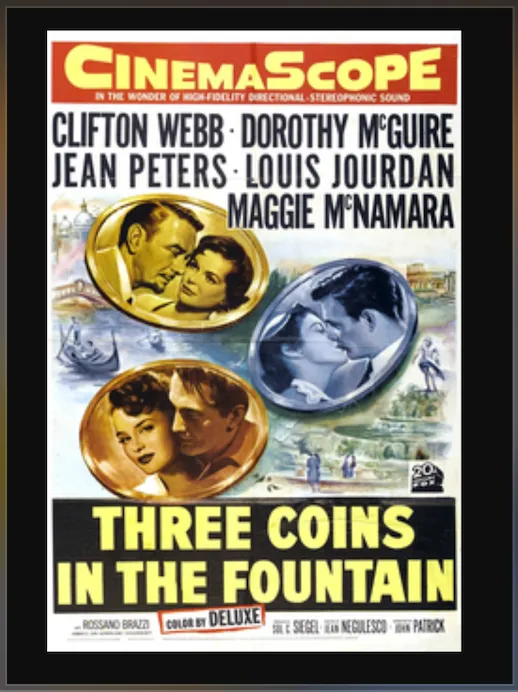 Film poster for Three Coins in the Fountain, the 1954 romantic comedy film
16. Come Fly with Me
One of the most instantly recognizable Frank Sinatra songs, “Come Fly with Me” was composed by Jimmy Van Heusen with lyrics by Sammy Cahn, written expressly for Sinatra. It served as the title track of his 1958 album and quickly became a permanent fixture of his live performances.
Evoking the glamour and romance of international travel in the jet age, the song has since appeared in countless film soundtracks and remains a piece of quintessential American nostalgia.
17. New York, New York
Originally written for Martin Scorsese’s 1977 film of the same name, with the original recording by Liza Minelli, “New York, New York” was transformed into a Sinatra anthem when he recorded it for his 1980 album Trilogy: Past Present Future. It became one of his signature live pieces — a rousing, triumphant celebration of ambition and the city itself.
The song has since become the unofficial musical emblem of New York City, played at the end of every New York Yankees home game.
18. Summer Wind
Originally a German pop song — Der Sommerwind, written by Heinz Meier and Hans Bradtke in 1965 — “Summer Wind” was given English lyrics and recorded by Sinatra in 1966 for his album Strangers in the Night. The recording features an unusual combination of big band brass and a prominent organ, giving it a distinctive pop texture.
It reached number one on the Easy Listening charts and cracked the top 25 on the Billboard Hot 100 — further proof of Sinatra’s ability to adapt without losing his essential character.
19. Santa Claus Is Comin’ to Town
Written in 1934 by J. Fred Coots and Haven Gillespie, this beloved Christmas song has been recorded by artists ranging from Bruce Springsteen to Michael Bublé to the Jackson 5. Sinatra’s version, recorded in 1948 for the album Christmas Songs by Sinatra, remains among the most joyful and enduring interpretations.
20. I Get a Kick Out of You
A Cole Porter classic written for the 1934 Broadway musical Anything Goes, this song holds a particularly interesting place in Sinatra’s discography. He recorded it twice — once in 1953 with the original lyrics, which contained drug references that preceded the introduction of Hollywood censorship codes, and again in 1962 with amended lyrics for the album Sinatra and Swingin’ Brass.
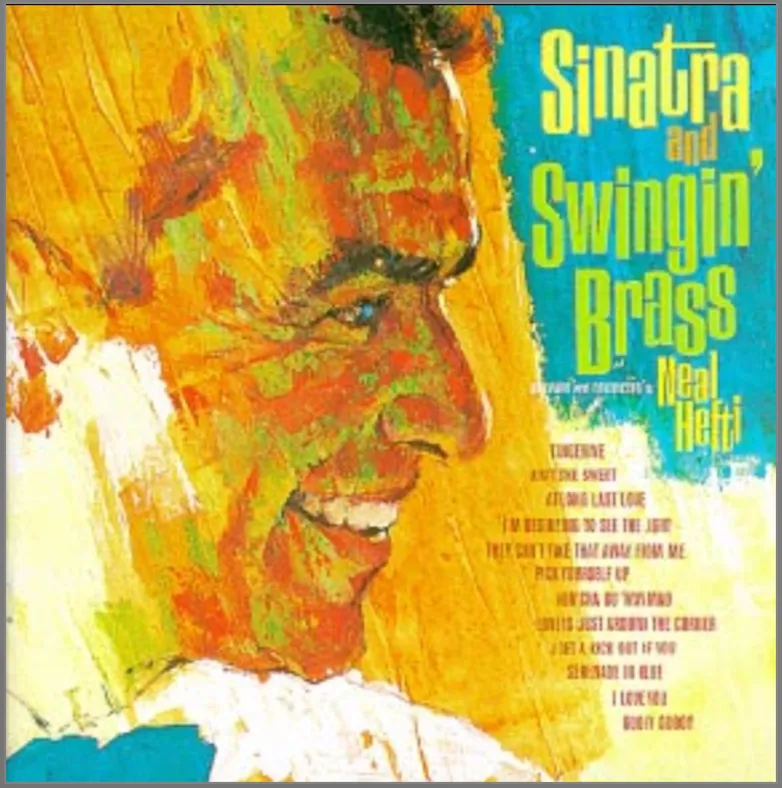 Album cover for Sinatra and Swingin' Brass, released in 1962
The two versions together offer a fascinating window into the evolving cultural landscape of American entertainment.
21. The Brooklyn Bridge
From the 1947 romantic comedy film It Happened in Brooklyn, in which Sinatra starred, “The Brooklyn Bridge” was released as a Columbia Records single that year. More than just a pleasant tune, it represents the inextricable link between Sinatra’s music career and his Hollywood persona — a crossover dynamic that was common in the era of big-screen musicals.
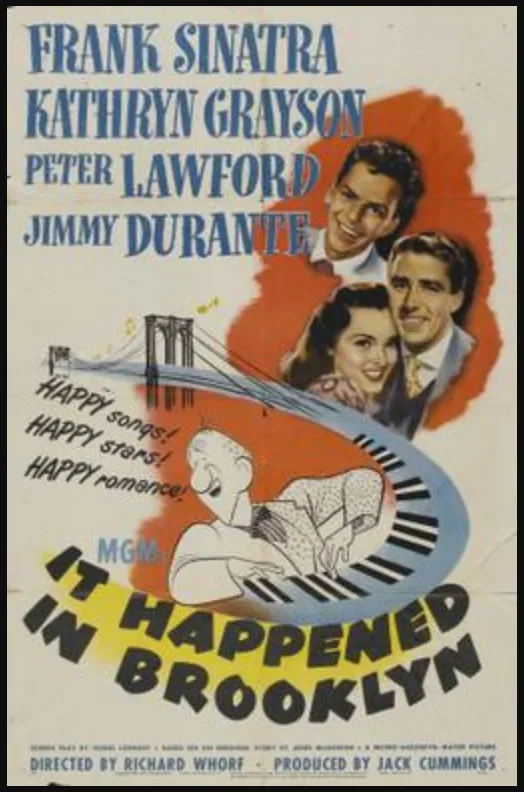 Movie poster for It Happened in Brooklyn, the 1947 romantic comedy starring Frank Sinatra
22. All the Way
Written by Jimmy Van Heusen with lyrics by Sammy Cahn for the 1957 film The Joker Is Wild, in which Sinatra played the lead, “All the Way” is one of the most sweepingly romantic ballads in his catalog.
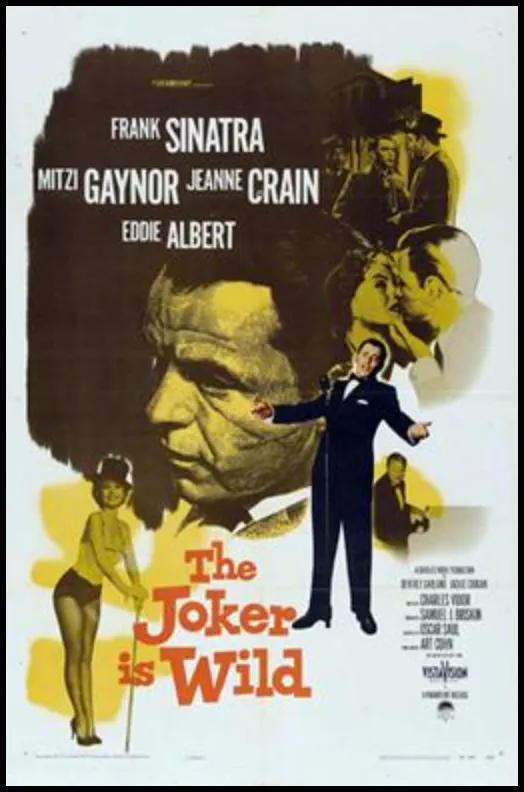 Movie poster for The Joker Is Wild, the 1957 film starring Frank Sinatra
Released as a Capitol Records single in 1957, it stands as another powerful example of his gift for finding the emotional core of a lyric and delivering it with total conviction.
23. The Best Is Yet to Come
Originally composed for Tony Bennett by Cy Coleman and Carolyn Leigh in 1959, this song became a Sinatra classic through his recording for the 1964 album It Might as Well Be Swing, made with Count Basie and his Orchestra. Upbeat, swaggering, and full of forward-looking optimism, it was a natural fit for Sinatra’s irrepressible spirit.
The song holds an especially poignant significance: it was the last song Sinatra performed publicly before his death in May 1998, and the words The Best Is Yet to Come are engraved on his tombstone at Desert Memorial Park in Cathedral City, California.
24. You Make Me Feel So Young
Written by Josef Myrow and Mack Gordon in 1946 for the Hollywood musical Three Little Girls in Blue, this charming, effervescent tune was recorded by Sinatra in 1956 for Songs for Swingin’ Lovers! Its timeless quality is perhaps best illustrated by the fact that it appeared in the 2003 holiday film Elf — still fresh and irresistible nearly six decades after its creation.
25. I’ve Got the World on a String
Saved for last as the author’s personal favorite, this song was written by Harold Arlen and Ted Koehler in 1932 — originally for the Cotton Club revue in Harlem. By the time Sinatra recorded it in 1953, it was already an established American standard, but his version, with Nelson Riddle conducting, transformed it into something transcendent.
Every element comes together perfectly: the buoyant arrangement, Sinatra’s assured phrasing, and that sense of carefree, unshakable optimism that defines the very best Frank Sinatra songs from the Capitol era.
Honorable Mentions
Given that Sinatra recorded over 1,400 songs across a 54-year career, no list of 25 can do full justice to his output. The following recordings are among the finest from his discography and deserve recognition in their own right:
- Nancy (with the Laughing Face) – Columbia Records single (1944)
- Strangers in the Night – Strangers in the Night (1966)
- Night and Day – Sinatra and Strings (1962)
- One for My Baby (And One More for the Road) – Frank Sinatra Sings Harold Arlen (1964)
- Only the Lonely – Frank Sinatra Sings for Only the Lonely (1958)
- Moon River – Sinatra Sings Days of Wine and Roses, Moon River, and Other Academy Award Winners (1964)
- I’ve Got You Under My Skin – Songs for Swingin’ Lovers! (1956)
- High Hopes – All the Way (1961)
- It’s a Wonderful World – Sinatra Swings (1961)
- Hello Young Lovers – September of My Years (1965)
- That Old Black Magic – Columbia Records single (1946)
- Wave – Sinatra and Company (1971)
- O Little Town of Bethlehem – A Jolly Christmas from Frank Sinatra (1957)
- Silent Night, Holy Night – A Jolly Christmas from Frank Sinatra (1957)
- All of Me – Columbia Records single (1948)
- Jingle Bells – Christmas Songs by Sinatra (1948)
- White Christmas – Capitol Records single (1954)
Conclusion: The Timeless Legacy of Frank Sinatra
What makes Frank Sinatra’s music so enduring is not merely technical excellence — though his vocal craft was extraordinary — but the sheer emotional truth he brought to every recording. Whether swinging with Count Basie, whispering through a late-night ballad, or crooning a Christmas standard, Sinatra made every lyric feel lived-in and real.
He was a bridge between generations: between the big band era and rock and roll, between jazz and pop, between Hollywood glamour and everyday American life. His recordings introduced countless listeners to the wider world of jazz, and they continue to do so today for new audiences discovering them for the first time.
The 25 songs on this list — and the many honorable mentions beside them — represent the very best of what American popular music has to offer: craft, feeling, personality, and an irreplaceable sense of time and place.
Whether you are a lifelong devotee or just beginning to explore his catalog, there has never been a better moment to immerse yourself in the music of Frank Sinatra. Put on Songs for Swingin’ Lovers!, let In the Wee Small Hours take you somewhere quiet and reflective, or simply press play on “Fly Me to the Moon” and let Ol’ Blue Eyes do what he did better than anyone — make you feel something.