
Encountering a skunk is an unforgettable experience, primarily due to their potent defense mechanism: a strong, pungent spray. While thankfully not a daily occurrence for most pet owners, the distinct and unpleasant odor left behind by skunk spray can be a significant challenge. In most cases, a skunked dog can be effectively decontaminated at home with a specialized bathing formula. However, certain situations may necessitate a veterinary examination to ensure your pet’s well-being.
Specifically, skunk spray can cause significant eye irritation or damage if it contacts the eyes. In very rare instances, dogs subjected to repeated skunk spray exposure or those heavily sprayed in the face, especially if they ingest some of the spray, might develop a severe reaction. This can lead to a dangerous form of anemia, requiring prompt medical attention.
When Are Dogs Most Likely to Encounter Skunks?
Skunks are primarily nocturnal and crepuscular, meaning they are most active during dawn and dusk, particularly in warmer months. While generally docile creatures, skunks will resort to spraying their musk—a thick, oily, and odorous secretion from their anal glands—when they feel threatened. This spray can reach distances of 7 to 15 feet. Certain factors, such as your dog’s temperament and your geographic location, might increase the likelihood of a skunk encounter.
The Stubborn Nature of Skunk Odor
The distinctive smell of skunk spray comes from a complex mixture of sulfur-containing compounds called thiols and thioacetates. Thiols possess an immediate, strong odor. Thioacetates, while less pungent initially, convert into thiols when they come into contact with water. This chemical reaction means that any thioacetates lingering in your dog’s fur can cause them to continue smelling skunky even after a bath, especially when their coat gets wet again. If not completely eliminated, this lingering scent might be noticeable for a few months.
Medical Concerns Associated with Skunk Spray
When skunk spray directly impacts a dog’s eyes, it can lead to swelling, redness, and potential damage to the cornea, possibly causing temporary blindness. Inhaling the spray can result in respiratory irritation. If ingested, skunk spray can induce nausea, excessive drooling, and vomiting.
A more severe, though rare, complication is the development of Heinz body anemia or methemoglobinemia, which can occur within a few hours to 24 hours after exposure. This serious condition arises when the chemicals in skunk spray cause oxidative damage to red blood cells. The risk of this anemia is higher after heavy spraying, multiple exposures, or ingestion. Signs of anemia include weakness and a distinctive chocolate-brown discoloration of the mucous membranes. It is crucial to monitor your dog closely for 1-3 days post-exposure and seek immediate veterinary care if any of these symptoms appear. Treatment may involve intravenous fluids, supportive care, and in severe cases, a blood transfusion. Veterinarians might also recommend blood work to monitor your dog’s health following significant exposure.
Rabies Concerns After a Skunk Encounter
Rabies is transmitted through the bite of an infected animal. While skunks are known carriers of rabies, most dogs sprayed by a skunk are not bitten during the encounter. Ensuring your dog is up-to-date on their rabies vaccinations is essential. However, if your dog is bitten by a skunk, immediate veterinary attention is imperative.
Preventing Skunk Encounters
To minimize the chances of your dog being sprayed by a skunk, consider these preventive measures:
- Trail Caution: Avoid venturing off-trail in densely wooded areas.
- Yard Vigilance: Supervise your dog closely when they are in the yard, especially during dawn and dusk.
- Remove Food Sources: Eliminate potential attractants from your yard, such as accessible pet food, garbage cans, or compost heaps.
- Den Denial: Block access to areas where skunks might seek shelter, like sheds, under decks or porches, and clear away piles of brush or wood.
What to Do If Your Dog Gets Skunked
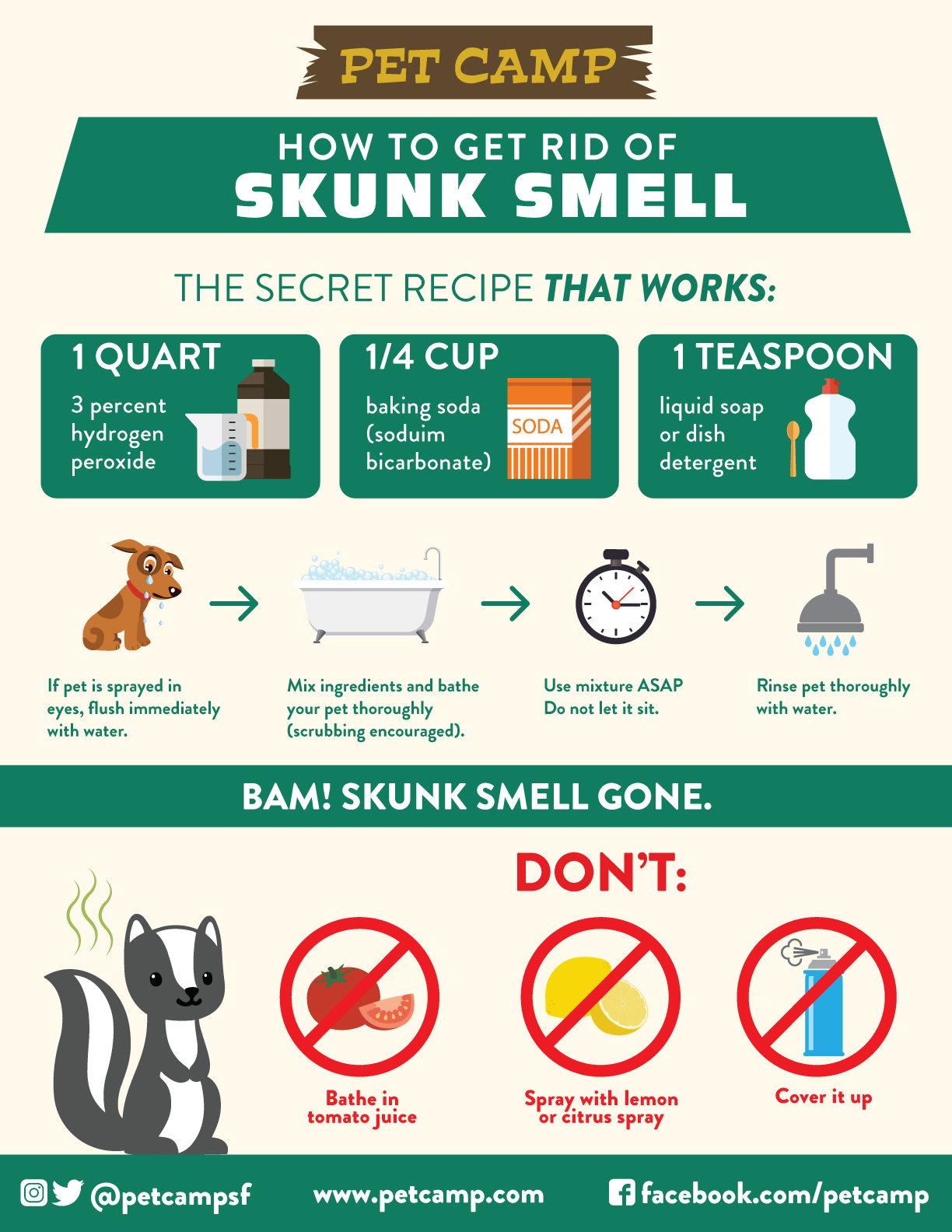
If the skunk spray is not causing severe distress to your dog, you can tackle the oils and odor by bathing them with a specialized formula. Having a commercial de-skunking product on hand can be beneficial, especially if your dog is prone to repeat encounters. Alternatively, a homemade remedy can be effective.
It’s best to bathe your dog outdoors, as skunk oils can be difficult to remove from fabrics and household surfaces. If your dog was sprayed directly in the eyes or mouth, or if they exhibit signs of severe distress like lethargy, weakness, or loss of appetite, seek veterinary care immediately.
Effective Ways to Eliminate Skunk Odor
Several commercial products are available at pet stores, such as Thornell’s Skunk-Off and Nature’s Miracle Skunk Odor Remover, designed to neutralize skunk odor. These products are often safe for use on fabrics and carpets as well.
For a homemade solution, you can combine baking soda and hydrogen peroxide. This mixture works by oxidizing the thiols, converting them into water-soluble sulfonates and neutralizing the odor. However, be aware that hydrogen peroxide can potentially lighten the fur of dark-colored dogs, causing a temporary bronze hue, and may also bleach fabrics. Unlike homemade solutions, commercially available de-skunking products typically do not contain hydrogen peroxide, thus avoiding the risk of altering fur color.
For other pet care needs, you might find resources on outdoor dog supply near me helpful.