
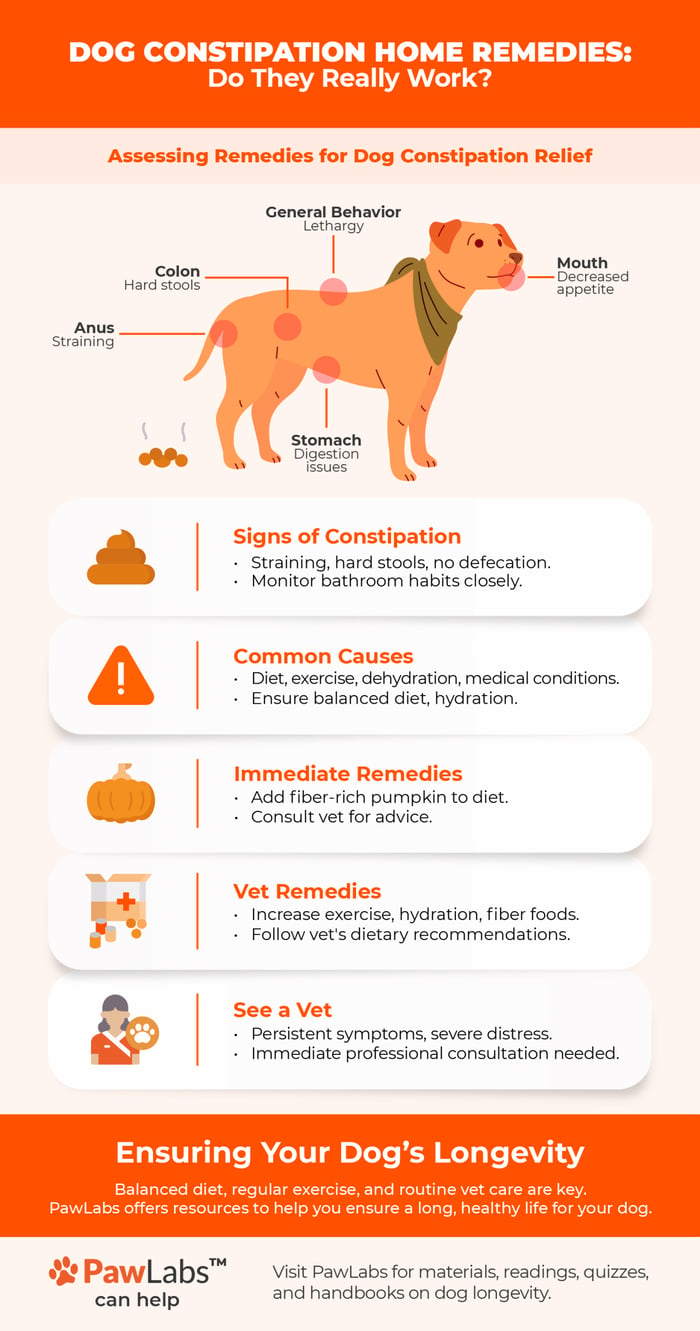
As a dedicated pet parent, monitoring your dog’s digestive health, including their bowel movements, is crucial. While concerns about dog diarrhea are common, it’s equally important to recognize when your dog isn’t pooping on their usual schedule. If your dog is experiencing difficulty defecating or hasn’t pooped as frequently as normal, they may be constipated. This guide explores at-home remedies to help an occasionally constipated dog maintain normal bowel function, tips for encouraging a bowel movement, and crucial advice on when to seek veterinary attention.
Recognizing the Signs of Dog Constipation
Understanding the symptoms can help you determine if your dog is experiencing mild or severe constipation.
Mild Constipation Symptoms
If your dog exhibits mild constipation, home treatment might be effective. Signs include:
- Straining or prolonged defecation: Taking longer than usual to pass stool.
- Discomfort during defecation: Hunched posture, vocalizations, or frequent glances at their hindquarters.
- Small, hard stools: Producing smaller, firmer fecal matter than normal.
Severe Constipation Symptoms
If your dog shows any signs of severe constipation, seek immediate veterinary care. Severe constipation can lead to widespread health issues and potentially permanent damage to the gastrointestinal tract. Symptoms may include:
- Lack of defecation for more than 72 hours.
- Vomiting.
- Lethargy and loss of appetite.
- Abdominal pain or bloating.
- Blood in the stool.
At-Home Strategies to Help a Constipated Dog
For dogs experiencing mild constipation, several at-home strategies can support normal bowel function.
Incorporate Probiotic Supplements
Over-the-counter probiotic supplements for dogs can aid in maintaining healthy gut bacteria and promoting regular bowel movements. Products like Purina Pro Plan Veterinary Diets FortiFlora are formulated with probiotics and antioxidants to support a healthy intestinal environment and digestion. Always consult your veterinarian before introducing any new supplement to your dog’s diet.
Enhance Water Intake
Dehydration is a common cause of constipation in dogs, as the body reabsorbs more water from the stool, leading to hardness. Ensure your dog always has access to fresh water. Consider using dog water fountains to encourage hydration throughout the day. For older dogs or those with mobility issues, elevated water bowls can make drinking more accessible.
Offer Wet Food Options
Incorporating canned food or adding a small amount of water to dry kibble can increase your dog’s moisture intake. This added hydration helps soften stool, making it easier to pass and reducing discomfort. The gastrocolic reflex, a natural response triggered by eating, encourages colon movement, further aiding in bowel regularity.
Adjust Dietary Fiber Content
While fiber can be beneficial, it’s crucial to consult your veterinarian before making significant changes to your dog’s diet.
- Leafy Greens: Vegetables like kale, spinach, and broccoli are high in fiber but should be offered cautiously due to potential for gas.
- Pumpkin Puree: Plain, 100% canned pumpkin (not pie filling) is a popular remedy. A small amount, like a teaspoon for small dogs or a tablespoon for larger dogs, can be mixed into their food.
- Fiber Powders: Your vet might suggest specific fiber supplements like unflavored psyllium (Metamucil).
Encourage Regular Exercise
Physical activity stimulates the gastrointestinal tract and can alleviate constipation. Extra walks, especially in the morning or afternoon, can help move stool along. Ensure your dog is well-hydrated before exercising. Short, frequent walks are particularly effective in promoting healthy bowel movements by increasing blood flow to the digestive system.
Grooming Around the Rear End
For long-haired breeds, matted fur around the anus can obstruct defecation. Carefully trim any mats using electric dog grooming clippers. Never use scissors, as they pose a risk of accidental injury. If you are unable to safely remove matting or notice any abnormalities such as foreign material or tumors, contact your veterinarian or a professional groomer immediately. Do not attempt to remove stool or foreign objects from your dog’s anus yourself.
When to Seek Veterinary Care
While occasional constipation can often be managed at home, it’s essential to know when professional help is necessary.
A veterinary visit is recommended if your dog hasn’t had a bowel movement in 48–72 hours. Seek immediate veterinary attention if you observe any of the following:
- Straining with only small, hard stools or blood in the stool.
- Vomiting or loss of appetite.
- Visible signs of pain or distress.
- Abdominal bloating.
Constipation can sometimes be an indicator of a more serious underlying health issue, making a veterinary examination critical.
Frequently Asked Questions About Dog Constipation
Can I give my dog a laxative?
Never administer a laxative to your dog without explicit instructions from your veterinarian. Many over-the-counter laxatives can be harmful to dogs.
Can I give my dog an enema?
Home enemas are strongly discouraged unless prescribed and administered by a veterinarian. Improper administration can cause severe rectal trauma.
How can I make a constipated dog poop quickly?
There is no immediate “quick fix” for constipation. Veterinary interventions may include oral medications, enemas, or manual fecal extraction, performed by a professional.
How long can dogs go without pooping?
A healthy dog can typically go 12–24 hours without a bowel movement. If this extends beyond 48–72 hours, consult your vet.
What should I feed a constipated dog?
A diet rich in moisture and fiber, along with probiotics, can support digestive health. Always consult your vet for personalized dietary recommendations.
What if my dog hasn’t pooped in two days?
If your dog hasn’t pooped in two days, a veterinary exam is warranted. Even if they appear to be straining, they could have impacted stool or an obstruction.
This article contains sponsored content, paid for by FortiFlora. All opinions expressed are those of the author.