
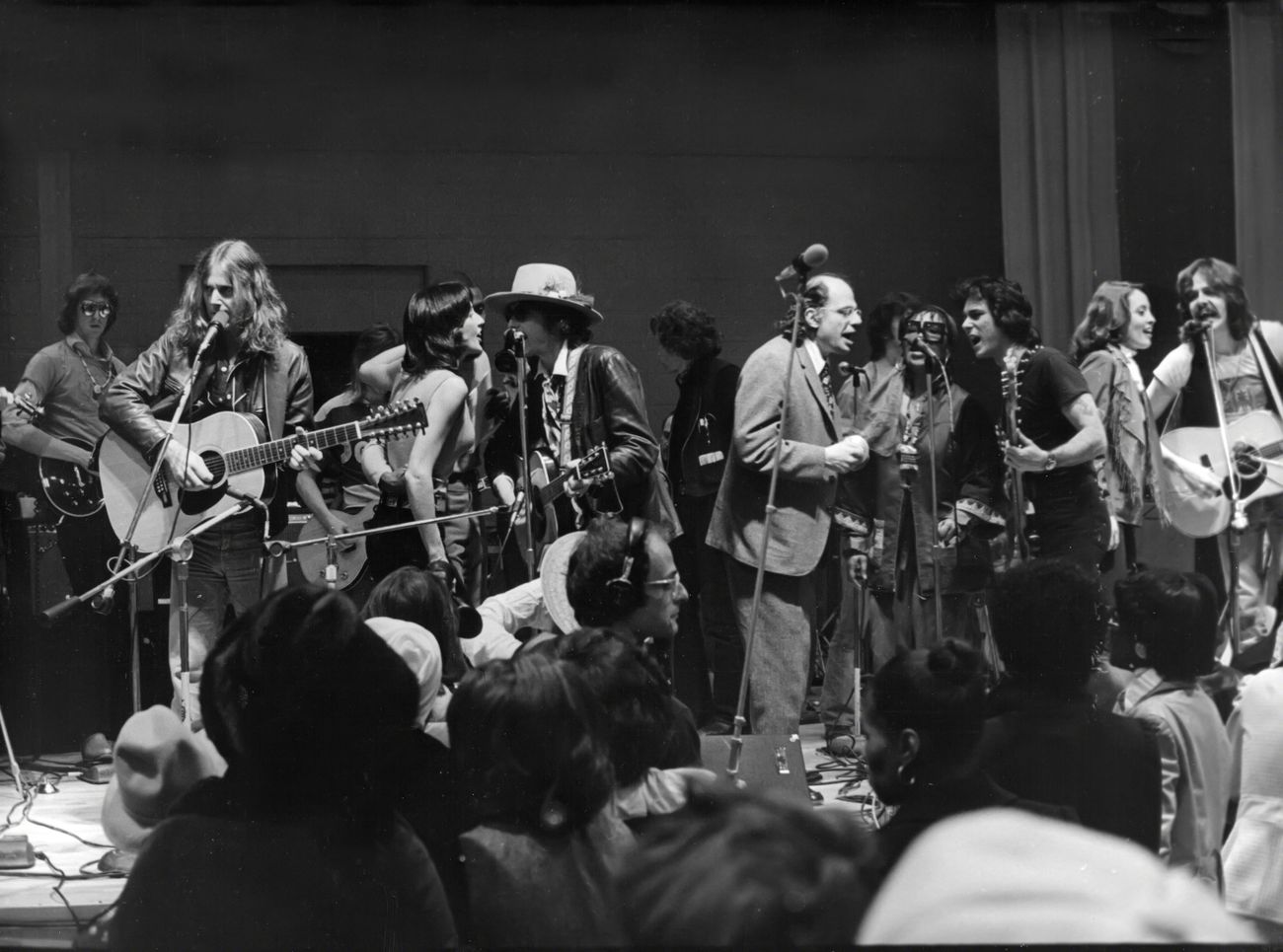
In the autumn of 1975, Bob Dylan embarked on a unique and ambitious project: the Rolling Thunder Revue. This wasn’t just another concert tour; it was a moving carnival of musicians, poets, and artists, traveling by bus and staying in modest accommodations, aiming for a more intimate and chaotic atmosphere than his previous tours. This endeavor was a stark contrast to the 1974 tour with The Band. The tour aimed to bring together a diverse group of artists, including Joan Baez, Ramblin’ Jack Elliott, Roger McGuinn of The Byrds, and Joni Mitchell during her “Hejira” period. Allen Ginsberg also joined, adding a shamanistic presence, and a backing band called Guam was formed, directed by bassist Rob Stoner. Lou Kemp, a childhood friend of Dylan’s, served as the primary organizer for this sprawling artistic collective.
The initial leg of the tour in the fall of 1975 encompassed thirty-one shows, primarily in smaller venues across the Northeast. While a second leg in the spring extended to larger venues, it reportedly lacked the magic of the first. The film “Renaldo and Clara,” an experimental movie Dylan created during this period, captured some of the tour’s essence, though it’s described as a four-hour “fanatics-only” experience. Sam Shepard, who co-wrote some of the script for “Renaldo and Clara,” documented his observations in a logbook, which was later published as a book. Shepard noted that the 1976 leg of the tour coincided with a period of intense patriotic fervor related to the Bicentennial, suggesting a societal yearning for the past amidst present anxieties.
Larry “Ratso” Sloman, a journalist, also accompanied the tour, chronicling his experiences for Rolling Stone and later compiling them into the book “On the Road with Bob Dylan,” which Dylan himself praised as “The ‘War and Peace’ of rock and roll”. The concerts themselves were lengthy affairs, often beginning with warm-up performances by various artists such as T-Bone Burnett, Mick Ronson, and Ronee Blakley. Dylan would typically take the stage after about an hour, often opening with earlier material like “When I Paint My Masterpiece” or “The Lonesome Death of Hattie Carroll.” However, these older songs were revitalized by Dylan’s evident passion and the unique musical contributions of the band, including Ronson’s distinctive guitar work, Dave Mansfield’s folk-infused pedal steel, and Scarlet Rivera’s mesmerizing violin solos.
A standout performance, particularly remembered from bootlegs and live showings, was “Isis.” Dylan introduced it as a song “about marriage,” weaving a narrative of a man’s epic journey through mythological terms—his marriage, separation, adventures with strangers, failed treasure hunts, and eventual return to his wife. During these performances of “Isis” in 1975, Dylan shed his guitar and delivered the song with raw intensity, his physical engagement palpable with bulging neck veins, unblinking eyes, and sweat-drenched face paint. This intense performance style, a departure from his later, more crooner-like stage presence, embodied a punk-like bravado, showcasing a complete lack of restraint.
The Rolling Thunder Revue was more than just a series of concerts; it was a cultural happening that captured a specific moment in time, blending music, poetry, and a sense of communal artistic exploration. The tour’s spirit, documented through film, books, and word-of-mouth, continues to resonate as a pivotal and somewhat enigmatic chapter in Bob Dylan’s storied career.
References
- Original article text provided by the user.