
Bringing a dog home is one of life’s most rewarding decisions — but it comes with real financial responsibilities that many prospective owners underestimate. Before you fall in love with a wagging tail and soulful eyes, it’s worth taking a clear-eyed look at what dog ownership actually costs. From the moment you welcome your new companion through to their golden years, the expenses add up faster than most people expect. Understanding the cost of owning a dog upfront helps ensure you can provide everything your pet truly needs throughout their life.
Lifetime Cost: How Much Will a Dog Really Set You Back?
The total lifetime cost of owning a dog varies significantly depending on size and breed. Based on estimated minimum figures, owners should expect to spend:
- Small dog breeds: At least £6,200 – £12,000
- Medium dog breeds: At least £9,000 – £14,000
- Large dog breeds: At least £8,200 – £18,800
These are conservative, minimum estimates. They reflect the baseline cost of meeting a dog’s core welfare needs across their lifetime — and the real figure can climb considerably higher if your dog develops health conditions, has specific dietary requirements, or simply has expensive tastes.
It’s also worth noting that these figures don’t account for the purchase price of the dog itself. Adopting from a reputable rehoming centre is often a more affordable and responsible route, and many rescue dogs are already vaccinated, microchipped, and neutered.
Getting Started: Initial Setup Costs
Before your dog even steps through the door, you’ll need to invest in essential supplies. The estimated minimum setup costs are:
- Small dog: Around £415
- Medium dog: Around £531
- Large dog: Around £560
This covers the basics — a bed, food and water bowls, a collar, lead, ID tag, crate if needed, and initial grooming supplies. These figures don’t include microchipping, which is a legal requirement in the UK and must be completed by the breeder before eight weeks of age. If for any reason this hasn’t been done, factor that into your budget before or shortly after bringing your dog home.
Keep in mind that these starter items won’t last forever. Beds wear out, leads fray, and toys get destroyed. Budget for periodic replacements over your dog’s life.
Monthly Ongoing Costs
Once your dog is settled in, the monthly expenses become a regular fixture of household budgeting. Core ongoing costs include food, pet insurance, flea and worm treatments, and routine supplies. The estimated minimum monthly figures are:
- Small dog: Around £69/month
- Medium dog: Around £83/month
- Large dog: Around £116/month
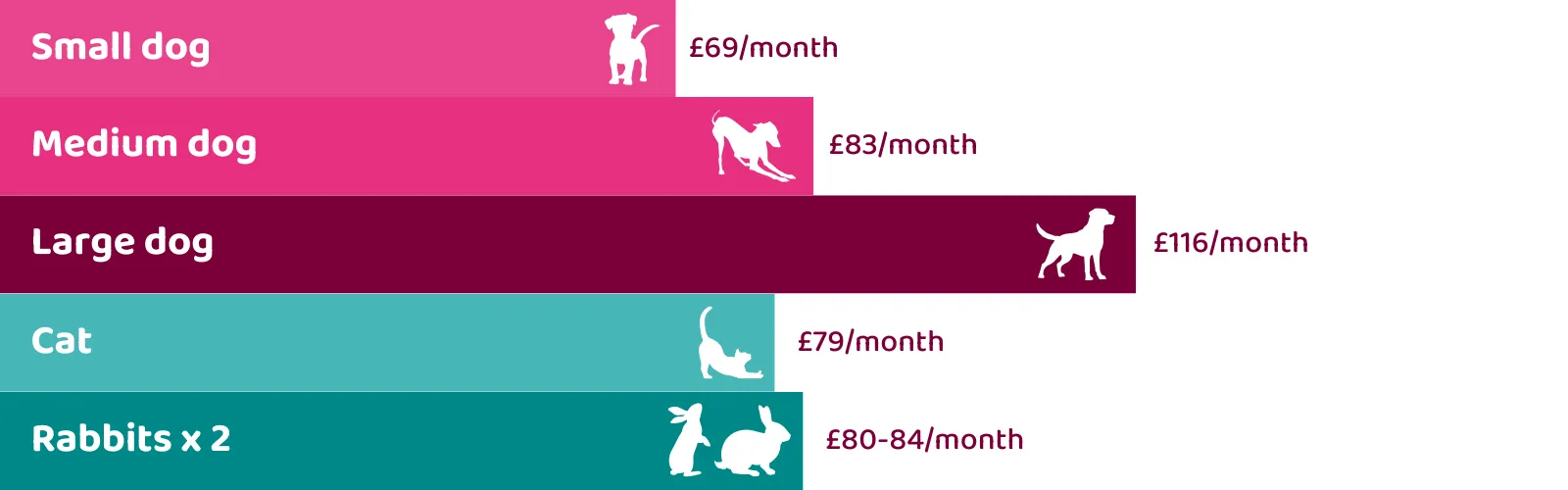
These are starting points, not ceilings. A dog with food sensitivities requiring a prescription diet, for instance, can significantly increase your monthly outgoings. Similarly, if you work full-time and need doggy daycare or a dog walker, those costs will stack on top.
The Cost of Vet Care: Why Pet Insurance Matters
One of the biggest financial wildcards in dog ownership is unexpected veterinary care. A broken bone, swallowed object, or sudden illness can result in vet bills running into the thousands — bills that arrive with no warning and little time to prepare.
The monthly cost estimates above include pet insurance, and for good reason. Insurance acts as a safety net, protecting both your finances and your dog’s access to timely medical treatment. Without it, a single emergency could cost more than an entire year’s worth of routine care.

It’s also worth considering that purebred dogs may carry a higher risk of breed-specific health conditions, which can translate into more frequent vet visits and long-term management costs. Researching your chosen breed’s health profile before committing is a smart financial and ethical step.
What’s Not Included in These Estimates
The figures outlined here cover the essentials, but several real costs fall outside their scope:
- Purchasing or adopting a dog — prices vary enormously depending on breed and source
- Grooming — some breeds require professional grooming every 6–8 weeks
- Training classes — particularly important for puppies and certain working breeds
- Boarding kennels or pet sitters — essential if you travel and can’t bring your dog along
- Specialist diets — for dogs with allergies, intolerances, or chronic conditions
These aren’t optional luxuries for many owners — they’re necessities tied to your lifestyle and your dog’s specific needs. A realistic budget should account for all of them.
How These Cost Estimates Were Calculated
The lifetime cost figures are based on research into current product prices (as of 2024), combined with average life expectancy data for dogs by size. Monthly costs were multiplied by 12 for annual figures, then by the expected lifespan for each size category:
- Small dogs: 7.1–14.2 years
- Medium dogs: 8.4–13.5 years
- Large dogs: 5.5–13.1 years
(Source: O’Neill et al., 2013. Longevity and mortality of owned dogs in England. The Veterinary Journal, 198, 638–643)
Setup costs were then added to arrive at the total minimum lifetime estimate. These numbers give a solid foundation for planning, but personal research into your specific breed and circumstances will give you a more accurate picture.
Making an Informed Decision
Understanding the cost of owning a dog isn’t about being discouraged from getting one — it’s about making sure you can genuinely give a dog the life they deserve. Dogs are legally entitled to have their five welfare needs met, and meeting those needs comes with a price tag attached.
If you’re seriously considering getting a dog, take the time to sit down and build a realistic budget. Factor in your lifestyle, the breed you’re considering, and the unexpected. A well-prepared owner is a better owner — and your dog will thank you for it with years of loyalty and companionship.
References
- O’Neill, D.G. et al. (2013). Longevity and mortality of owned dogs in England. The Veterinary Journal, 198, pp. 638–643.
- PDSA (2024). The cost of owning a dog. Retrieved from pdsa.org.uk