
If you’ve ever watched your dog demolish a brand-new toy in under five minutes, you know the frustration — and the worry. Choosing the right chew toy for a power chewer isn’t just about durability; it’s about safety, enrichment, and matching the toy to your dog’s unique play style. Veterinarians who work closely with pet owners understand that the wrong toy can lead to broken teeth, swallowed pieces, or simply a bored, under-stimulated dog. This guide walks you through the best dog chew toys for aggressive chewers, organized by type, so you can find the perfect match for your furry companion.
Why Choosing the Right Chew Toy Matters
Not all chew toys are created equal — especially when your dog is a serious chewer. Dogs that aggressively chew on toys that are too soft or poorly constructed risk ingesting plastic fragments, foam stuffing, or rope fibers, which can cause intestinal blockages requiring emergency veterinary care. On the flip side, toys that are too hard (like real animal bones or hard nylon) can crack your dog’s teeth, a condition known as slab fractures that’s both painful and expensive to treat.
Beyond safety, the right chew toy provides critical mental and physical stimulation. Dogs that lack adequate enrichment are more likely to develop destructive behaviors — chewing furniture, excessive barking, or digging. Offering an appropriate outlet for chewing can dramatically improve your dog’s overall well-being and your household’s sanity.
Types of Chew Toys for Aggressive Chewers
Understanding which toy category best suits your dog’s preferences is the first step toward making a smart purchase.
Ring-Shaped Chew Toys
Ring-shaped toys are among the most popular choices for owners of heavy chewers, and for good reason. Their circular design makes it difficult for dogs to get a solid grip on one concentrated area, which helps extend the toy’s lifespan. Dogs can easily carry them around, and the shape makes them versatile for interactive play like fetch or tug-of-war. Look for options made from natural rubber or reinforced thermoplastic rubber (TPR) for maximum durability.
Bone and Stick-Style Chew Toys
For dogs that love to gnaw for long stretches — think the dog that settles into a corner and chews contentedly for an hour — bone and stick-style toys are ideal. They’re easy for dogs to grip between their paws and manipulate with their mouths. However, these aren’t the best choice for interactive games between dog and owner. Their value lies in solo, extended chewing sessions that help satisfy a dog’s deep-rooted gnawing instinct.
Stuffable Chew Toys
If your dog loses interest in toys quickly, stuffable chew toys can be a game-changer. Designed with hollow cavities that hold treats, kibble, or peanut butter, these toys turn snack time into a puzzle. Dogs work persistently to extract the reward, keeping them engaged far longer than a standard toy would. This type of toy also provides excellent cognitive stimulation — an often-overlooked component of a dog’s daily enrichment needs.
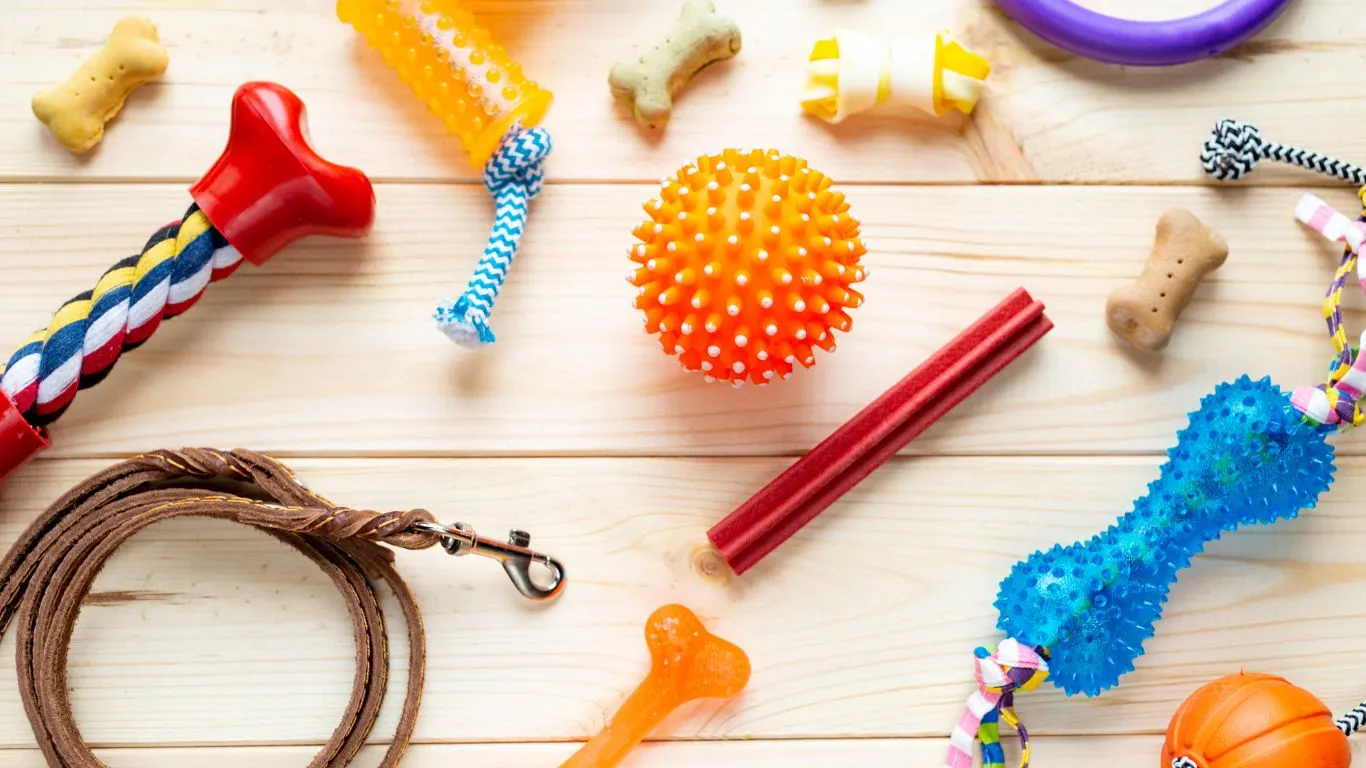
Tug Toys and Ropes
Rope toys are a fantastic outlet for dogs with a strong prey drive or a love of tug-of-war. Typically crafted from tightly braided cotton or synthetic fibers with high tensile strength, quality rope toys feature handles on both ends — one for you, one for your dog. They come in a range of shapes, including “S” shapes, figure-8 designs, and classic knotted ropes. One important note: supervise rope play and discard the toy when the fibers begin to fray, as ingested rope strands can cause serious gastrointestinal issues.
Ball-Style Chew Toys
The tennis ball may be a classic, but for aggressive chewers, solid rubber balls are a far safer and more durable option. They bounce unpredictably, making them endlessly entertaining for dogs that love to run, chase, and retrieve. When selecting a ball, always size up — the ball should be large enough that your dog cannot fit it entirely in their mouth to avoid accidental swallowing.
Discs and Flying Toys
Frisbee-style flying discs are best suited for active dogs that love open-field play. Made from flexible rubber or soft nylon, they’re designed to be easy for a dog to scoop up from the ground without injuring their mouth. That said, flying discs are most appropriate as supervised fetch toys rather than everyday chew objects, as persistent gnawing will break them down quickly and create sharp edges.
Plush and Soft Toys
It might seem counterintuitive to recommend plush toys for aggressive chewers, but there are reinforced options specifically engineered to withstand heavy use. Look for toys with double-stitched seams, ballistic nylon outer layers, or those marketed as “indestructible.” Even so, always supervise your dog with softer toys and remove them once the stuffing becomes accessible — swallowed polyfill stuffing can cause blockages.
Key Features to Look for in Durable Chew Toys
When shopping for a heavy chewer, keep these factors in mind:
- Material: Natural rubber and reinforced TPR tend to outlast cheaper plastics and foam.
- Size: Always match the toy size to your dog’s breed and jaw strength. A toy too small becomes a choking hazard.
- Construction: Double-stitched seams, thick walls, and seamless molding all contribute to longevity.
- Certifications: Look for toys that are BPA-free and non-toxic, ideally tested to meet safety standards.
- Repairability: Some brands offer replacement guarantees — a worthwhile investment for serious chewers.
How to Introduce a New Chew Toy Safely
Even the most durable toy requires proper introduction. Offer new toys during calm moments rather than peak excitement to help your dog engage thoughtfully rather than aggressively. Rotate toys regularly so that each one feels novel and exciting — this extends both the toy’s lifespan and your dog’s engagement. Always supervise new toy introductions and inspect toys before each play session for signs of wear, cracks, or pieces that could be swallowed.
Consult Your Veterinarian for Personalized Recommendations
Every dog is different. A toy that holds up perfectly for a 40-pound Labrador may last minutes with a 90-pound Rottweiler. Factors like jaw strength, chewing style, age, and dental health all influence which toy is the safest and most enjoyable choice. If you’re unsure which category of chew toy is right for your dog, your veterinarian is an excellent resource — they can assess your dog’s bite strength, flag any dental concerns, and point you toward options proven safe for your dog’s specific needs.
Choosing the right chew toy is one of the simplest ways to protect your dog’s health and keep them happily occupied. Take the time to match the toy to your dog’s personality, supervise play sessions, and replace worn toys promptly — your dog’s teeth, digestive system, and overall happiness will thank you.
References:
- American Veterinary Medical Association (AVMA) — avma.org
- Veterinary Oral Health Council (VOHC) — vohc.org
- American Kennel Club (AKC), “Safe Toys and Treats for Your Dog” — akc.org