
The story of Elvis Presley’s sudden death in 1977 is not only a defining moment in American music history but also one of the most controversial chapters in tabloid journalism. In the world of Oldies Music, few events generated as much global attention as the passing of the “King of Rock and Roll,” and the lengths taken to document his final moments would become legendary. Among all publications covering the tragedy, The National Enquirer pursued one goal with relentless focus: to obtain a photograph of Elvis in his coffin.
The result was one of the most debated media scoops of all time, blending celebrity culture, journalistic ambition, and ethical controversy in a way that still fascinates readers today.
The Death of Elvis Presley and a Media Storm
When Elvis Presley died suddenly at age 42 on August 16, 1977, the world reacted with shock. Graceland quickly became the center of global attention, as fans, journalists, and photographers gathered in Memphis, Tennessee. The demand for information was overwhelming, and every major outlet competed to report on the final days of the music icon.
Within the broader history of Oldies Music, Elvis represented more than a performer—he was a cultural revolution. His death marked the end of an era, and media organizations knew the public appetite for exclusive content would be immense.
National Enquirer’s “Impossible Mission”
While most media outlets focused on official coverage, The National Enquirer set a dramatically different objective. Under editor Iain Calder, the tabloid launched what he described as a “focused, mandated mission”: secure a photograph of Elvis in his open coffin before the funeral.
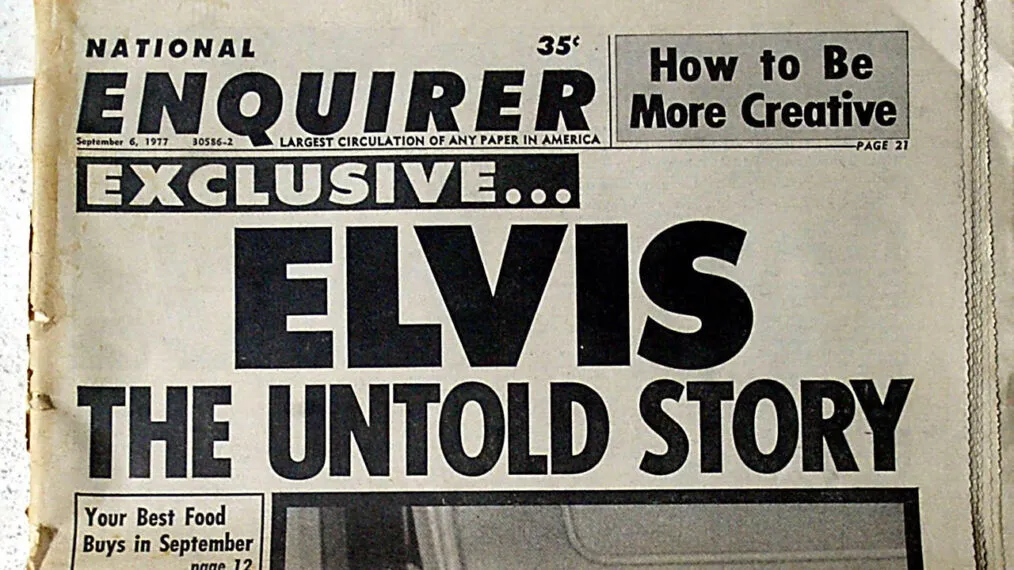
According to Calder’s memoir The Untold Story, the organization mobilized an “army” of reporters, editors, and freelancers. A field editor was stationed in Memphis, and a substantial cash fund was prepared to secure insider information. The effort reflected the extreme competitiveness of tabloid journalism in the 1970s, where exclusives defined circulation success.
Security at Graceland and Failed Attempts
Graceland during Elvis’s viewing was heavily guarded. Thousands of mourners passed through, but photography was strictly prohibited. Security personnel ensured that no images were taken, making the Enquirer’s mission extremely difficult.
Several creative but risky schemes were reportedly considered. One photographer allegedly disguised himself as a priest, hiding a camera inside a hollowed Bible. Another plan involved causing a distraction near the coffin to create an opportunity for a quick photograph. Despite these efforts, security remained too strong, and none of the plans succeeded.
These failed attempts highlight the intensity of competition in media coverage surrounding one of the most significant figures in Oldies Music history.
The Breakthrough Deal with Elvis’ Cousin
The turning point came unexpectedly. An Enquirer photographer identified a young man believed to be a member of the Presley family. After following him and building trust, the team discovered he was indeed a cousin of Elvis Presley.
A deal was struck: the cousin would be provided with a small camera and compensation in exchange for secretly photographing the body during a private moment. The arrangement would ultimately change tabloid history.
The Secret Photographs That Made History
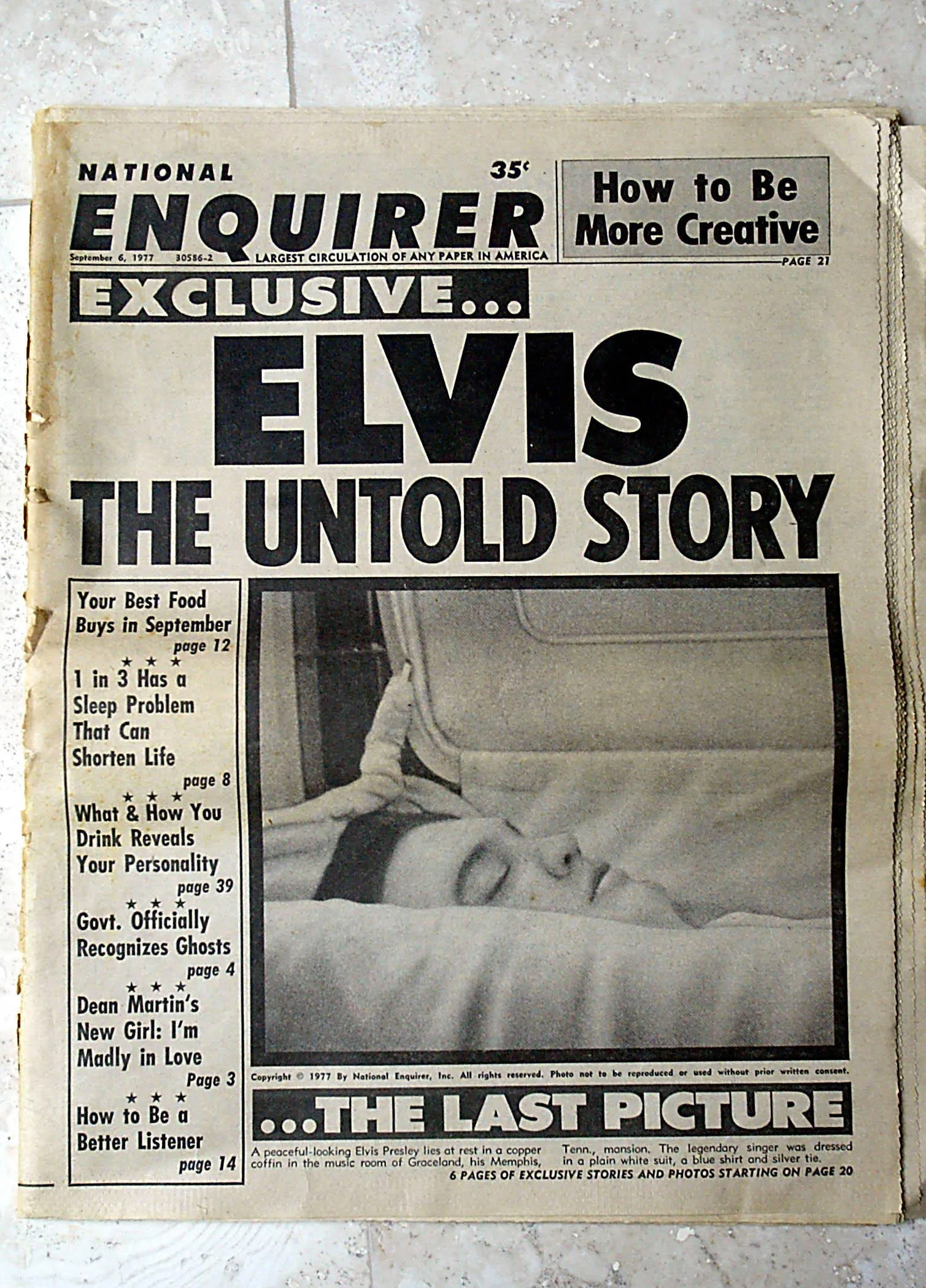
During the night, the cousin entered the dimly lit viewing area and took four photographs. These images were later developed under intense secrecy and pressure.
The results were a mix of failure and success:
- One frame captured a blurred self-portrait of the cousin
- Another showed only the chandelier above the coffin
- One frame revealed Elvis Presley lying in his coffin—clear and unmistakable
- The final image offered a side-angle view of the casket
That single usable photograph became one of the most infamous images in media history. The cousin and an accompanying relative were paid for their role, and the images were quickly transported for publication.
Publication, Controversy, and Massive Sales
When the issue was released on September 6, 1977, it created immediate shockwaves. The cover headline declared an “exclusive” look at Elvis Presley in his final resting moment. Demand exploded across the United States.
Newsstands sold out rapidly, particularly in the South, where Elvis’s cultural influence was strongest. Reports estimated millions of copies sold, making it one of the highest-selling issues in The National Enquirer’s history.
The publication sparked ethical debate across the media industry. Critics questioned whether publishing a coffin photograph violated privacy and dignity, while defenders argued that public figures like Elvis were already part of global cultural memory.
Impact on Journalism and Oldies Music Culture
The Elvis coffin photograph became more than a tabloid sensation—it became a symbol of how far media could go in pursuit of exclusives. It reshaped conversations about privacy, celebrity, and the boundaries of journalism.
Within Oldies Music culture, the event also reinforced Elvis Presley’s enduring presence. Even in death, his image continued to dominate headlines, proving his unmatched influence on American entertainment history.
Conclusion
The National Enquirer’s pursuit of Elvis Presley’s coffin photograph remains one of the most controversial and discussed moments in media history. It reflects both the power and the ethical complexity of celebrity journalism during the golden age of print tabloids.
Elvis’s legacy in Oldies Music continues to thrive decades later, and stories like this only deepen the fascination surrounding his life and death. His cultural impact remains unmatched, and the events following his passing continue to captivate audiences around the world.
For those interested in music history and media ethics alike, the story is a reminder of how powerful—and controversial—iconic moments can become. Explore more about the legends of Oldies Music and the stories behind them.