
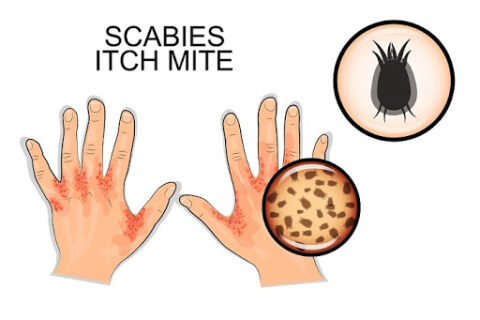
Scabies is a highly contagious skin infestation caused by tiny mites that burrow into the skin, causing intense itching and a rash. While the idea of mites living on your skin might be unsettling, understanding the available treatment options is crucial for effective management and to prevent its spread. It’s important to note that no over-the-counter, non-prescription products are approved by the FDA to treat human scabies. Therefore, consulting a healthcare professional for a proper diagnosis and prescription is essential.
Understanding Scabies Treatment
The medications used to kill scabies mites are known as scabicides. These are typically available only by prescription, underscoring the need for medical guidance. The choice of treatment often depends on the severity of the infestation, the age of the patient, and potential drug interactions.
First-Line Medications for Classic Scabies
For classic scabies, which is the most common form, several effective prescription treatments are available. These are considered the primary choices due to their proven efficacy and safety profiles when used as directed.
- Permethrin Cream 5%: This is a topical treatment approved by the U.S. Food and Drug Administration (FDA) for scabies in individuals aged 2 months and older. Permethrin is a synthetic pyrethroid, similar to natural pyrethrins found in chrysanthemum flowers. The cream should be applied to all areas of the body from the neck down and washed off after 8–14 hours. While a single application is often sufficient, two or more applications, spaced about a week apart, may be necessary to completely eliminate all mites.
- Ivermectin Oral Tablet: Although not FDA-approved specifically for scabies treatment, oral ivermectin has demonstrated similar efficacy to topical permethrin. If prescribed for classic scabies, two doses are typically recommended, taken 7 to 14 days apart. It’s important to note that the safety of ivermectin in children weighing less than 15 kg and in pregnant women has not been established. While standard guidelines suggest taking ivermectin on an empty stomach, scabies experts often recommend taking it with a meal to enhance its absorption.
The decision between permethrin cream and oral ivermectin may be influenced by patient preference for topical versus oral therapy, potential drug interactions with ivermectin, and cost.
Alternative Medications for Scabies
When first-line treatments are not suitable or effective, healthcare providers may consider alternative prescription medications. These options are chosen based on availability, efficacy, cost, potential adverse effects, and patient preferences. However, it’s worth noting that the data directly comparing these alternative treatments is often limited.
- Crotamiton Lotion and Cream 10%: Crotamiton is FDA-approved for scabies treatment in adults and is generally considered safe when used as directed. However, it is not FDA-approved for use in children, and there have been reports of frequent treatment failures.
- Sulfur Ointment 5%-10%: In the U.S., this ointment typically needs to be compounded. Sulfur in an ointment base is considered safe for topical use in children, including infants under 2 months. Its distinct odor can make it less pleasant to use.
- Malathion Lotion 0.5%: While not FDA-approved for scabies, malathion is recommended in scabies treatment guidelines from other countries. However, published data on its efficacy for scabies is limited.
- Spinosad Topical Suspension 0.9%: Approved by the FDA in 2021, this topical treatment is indicated for scabies infestations in patients aged 4 years and older. Efficacy data is primarily based on two randomized controlled trials.
- Lindane Lotion 1%: Although FDA-approved, lindane is generally not recommended as a first-line therapy due to potential toxicity to the brain and nervous system if overused, misused, or accidentally ingested. It is typically reserved for patients who have not responded to or cannot tolerate other, less risky medications. Lindane has specific contraindications, including in premature infants, individuals with uncontrolled seizure disorders, crusted scabies, and those with skin conditions that may increase systemic absorption. It should also be avoided in pregnant or breastfeeding women, individuals with very irritated skin or sores, infants, children, the elderly, and those weighing less than 110 pounds.
Managing Crusted Scabies
Crusted scabies, a more severe and contagious form of the infestation, requires a more aggressive treatment approach, typically involving both oral and topical agents.
- Ivermectin Oral Tablet: For crusted scabies, ivermectin is administered alongside a topical agent. There isn’t a universal consensus on the optimal frequency of ivermectin administration; some experts recommend multiple doses over several weeks, depending on the severity of the infection. As with classic scabies, safety in certain populations has not been established, and taking it with a meal is advised for better absorption.
- Permethrin Cream 5%: Topical permethrin is also a key component in treating crusted scabies, applied to the entire body in conjunction with oral medication. The frequency of application can vary, with experts suggesting anything from daily application to every 2-3 days for the initial weeks.
- Keratolytic Cream: To help reduce the thick crusting characteristic of this form of scabies and improve the penetration of topical treatments, a keratolytic cream may be used. This cream can be applied to crusted areas on days when permethrin is not administered, until the crusting resolves.
Effectively treating scabies requires adherence to medical advice and proper use of prescribed medications. If you suspect you or a loved one has scabies, seek professional medical attention promptly to ensure accurate diagnosis and appropriate treatment.