
Sarcoptic mange, a highly contagious and intensely pruritic skin disease in dogs caused by the mite Sarcoptes scabiei var. canis, poses a significant concern for both veterinary and public health. Its contagious nature, coupled with the difficulty in diagnosis due to clinical similarities with other conditions and the low sensitivity of diagnostic tests, often necessitates therapeutic trials to confirm the disease. This review critically examines the available evidence comparing various systemic treatments for canine scabies to identify the most effective options.
Understanding Canine Sarcoptic Mange
Canine sarcoptic mange is a non-seasonal disease that can affect dogs of any breed, age, or sex. Transmission occurs through direct contact with infected animals or contaminated fomites, as the mites can survive in the environment for up to three weeks. The primary clinical signs include intense itching, hair loss, redness, and scaly or crusted skin lesions. Secondary bacterial infections are common, complicating the clinical presentation and diagnosis.
Diagnostic Challenges
Diagnosing sarcoptic mange can be challenging for several reasons. Skin scrapings, a common diagnostic method, only yield positive results in 20-50% of infested dogs, especially in early or low-parasitemia cases. Serological tests also have limitations, with a delay in seroconversion meaning false negatives can occur if samples are taken too early. Furthermore, cross-reactivity with other mite allergens can lead to inaccurate results. Consequently, a therapeutic trial, evaluating the response to treatment, is frequently employed to confirm a diagnosis in cases with suggestive clinical signs but negative test results.
Treatment Options: Systemic vs. Topical
While topical acaricides have historically been used, their efficacy can be limited by various factors. Systemically acting acaricides, administered orally or topically, are generally considered more effective for treating sarcoptic mange. This review focuses on these systemic treatments, evaluating their efficacy based on current scientific literature.
Clinical Scenario and PICO Question
A typical clinical scenario involves a dog presenting with chronic, severe itching and skin lesions, potentially affecting other dogs in close contact. A thorough dermatological examination and diagnostic tests may confirm sarcoptic mange. The key question for practitioners is: “In dogs with sarcoptic mange, which systemic treatment is the most efficacious?” This PICO (Population, Intervention, Comparison, Outcome) question guides the literature search for clinical trials comparing different systemic molecules, assessing both clinical and parasitological resolution.
Search Strategy and Evidence Quality
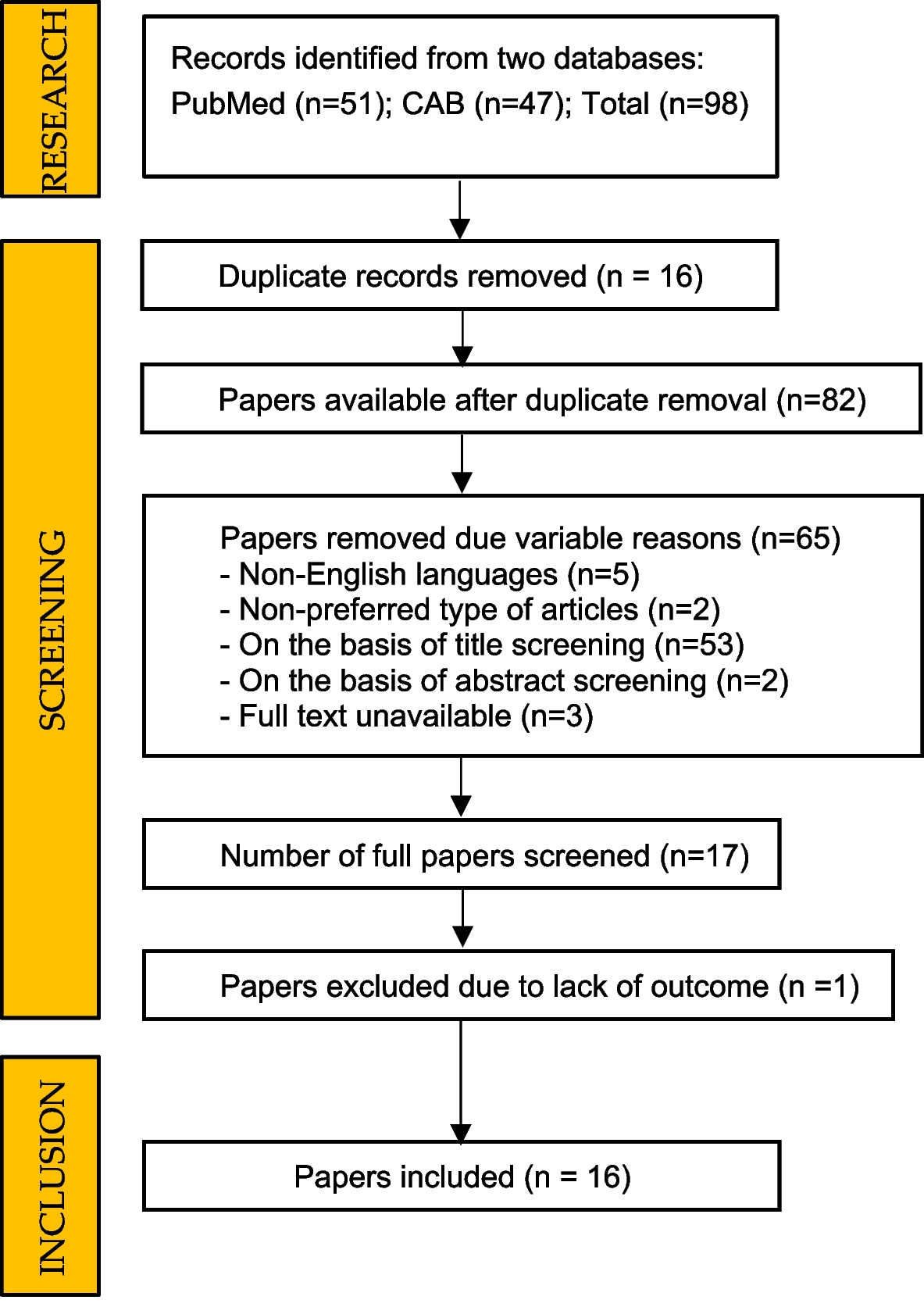
A comprehensive literature search was conducted across PubMed and CAB databases to identify studies on canine sarcoptic mange treatments. Following the PRISMA guidelines, 16 eligible articles were included in this review. The quality of evidence varied across the studies, influenced by factors such as the number of subjects enrolled and the study design. However, the data collectively provided sufficient information to draw conclusions about treatment efficacy.
Review of Systemic Treatments
The reviewed studies evaluated various systemic treatments, primarily focusing on macrocyclic lactones and isoxazolines.
Macrocyclic Lactones
Several studies examined the efficacy of macrocyclic lactones, including milbemycin oxime, ivermectin, selamectin, and moxidectin.
- Milbemycin Oxime: Oral administration showed significant improvement in pruritus and skin lesions, with clinical cure reported in some studies. However, relapses were noted in one instance, and controlled studies with consistent evaluation are needed.
- Ivermectin: While effective when administered subcutaneously, potential side effects in certain breeds and reported refractory cases warrant caution. Adding vitamin E and selenium to ivermectin treatment reportedly improved efficacy.
- Selamectin and Imidacloprid + Moxidectin: Monthly applications of these spot-on products demonstrated both parasitological and clinical cure, though the time to parasitological cure varied.
Isoxazolines
The isoxazoline class of drugs, including fluralaner, afoxolaner, and sarolaner, has emerged as a highly effective treatment option.
- Fluralaner: A single oral or topical dose of fluralaner achieved rapid parasitological cure by day 14 and significant clinical improvement within 21 days, making it one of the fastest-acting treatments identified.
- Afoxolaner: Oral administration of afoxolaner, either alone or in combination with milbemycin oxime, resulted in high efficacy and parasitological cure within two months.
- Sarolaner: Oral sarolaner demonstrated high efficacy, with parasitological cure rates reaching 100% in some studies by day 60. When compared to imidacloprid plus moxidectin, sarolaner showed slightly greater effectiveness.
Key Findings and Efficacy Comparison
Across the reviewed studies, several systemic treatments demonstrated high efficacy in achieving parasitological and clinical cure for canine sarcoptic mange.
- Rapid Resolution: Oral fluralaner appeared to offer the quickest resolution of clinical signs.
- High Efficacy: Isoxazolines (afoxolaner, fluralaner, sarolaner) and certain macrocyclic lactones (milbemycin oxime, moxidectin, selamectin) are highly effective.
- Treatment Regimens: Most effective treatments involved monthly administrations (e.g., isoxazolines) or two monthly applications (e.g., imidacloprid plus moxidectin, selamectin). Single doses of fluralaner were also effective.
It is important to note that while treatments effectively eliminate mites and improve clinical signs, negative serum Sarcoptes-IgG tests may take longer to achieve.
Conclusion and Implications for Practitioners
Systemic treatments, particularly those in the isoxazoline class and certain macrocyclic lactones, are highly effective for managing canine sarcoptic mange. Oral fluralaner stands out for its rapid action. However, the choice of treatment should also consider other factors such as:
- Breed Safety: Potential adverse reactions to macrocyclic lactones in specific breeds.
- Product Availability: Licensed products in the local region.
- Administration Method: Owner compliance and convenience with topical versus oral administration.
- Severity of Lesions: Extent and severity of skin lesions can influence the ease of topical product application.
The scientific evidence supports the efficacy of these modern systemic treatments, offering practitioners a range of options to effectively manage this challenging parasitic disease. Future comparative studies with standardized designs are needed to definitively identify the single most efficacious product.