
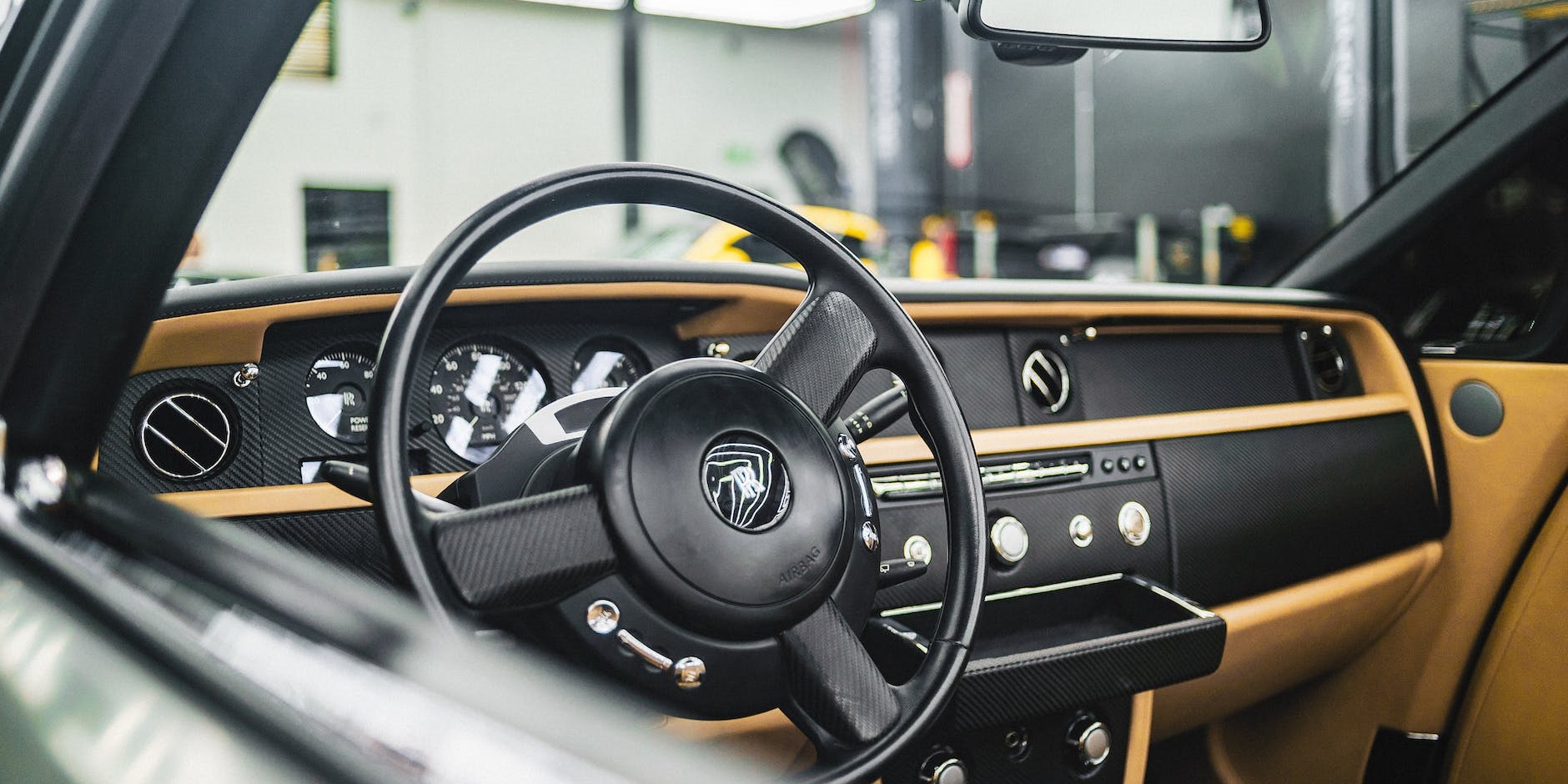
Rolls-Royce, a name synonymous with unparalleled luxury and engineering prowess, boasts a rich history dating back to the dawn of the automotive age. From its humble beginnings in Manchester, England, to its evolution into a global icon of prestige, the brand has consistently set benchmarks for quality and performance. This article delves into the storied past of Rolls-Royce cars, tracing their development through distinct eras and highlighting the innovations that cemented their reputation as “the Best Car in the World.”
The Genesis of a Legend: Early Innovations (1904-1920s)
The foundation of Rolls-Royce was laid in 1904 through a pivotal meeting between Henry Royce, an accomplished engineer, and the Honorable C.S. Rolls, a visionary motorist and entrepreneur. Their shared vision was to create a superior quality automobile. The initial offerings, based on Royce’s 1.8-liter vertical-twin engine, quickly evolved. By 1906, Rolls-Royce embarked on a one-model policy with the introduction of the 40/50hp six-cylinder model, which would soon gain legendary status as the “Silver Ghost.” This vehicle, with its 7-liter engine, pressure lubrication, and dual ignition, established a new standard for refinement and reliability. The Silver Ghost’s reputation was further solidified by a remarkable 15,000-mile RAC-observed trial in 1907, proving its exceptional durability. Production of the Silver Ghost, initially in Manchester and later in Derby from 1908, saw continuous refinements, including a longer-stroke engine and, by 1924, the adoption of four-wheel brakes inspired by Hispano-Suiza. The brand’s commitment to excellence was not just in engineering but also in customer experience, with an unparalleled inspection scheme backing their vehicles.
Expanding the Horizon: New Models and International Presence (1920s-1940s)
The post-World War I era saw Rolls-Royce expand its model range to cater to evolving market demands. In 1922, the company introduced the “Twenty,” a more accessible 3.1-liter six-cylinder model, which, despite initial skepticism from purists, offered the same inherent quality as its larger counterparts. Concurrently, the formidable “Phantom I,” featuring a 7.7-liter overhead-valve engine, replaced the Silver Ghost in 1925, signaling a move towards more powerful and sophisticated powertrains. The brand’s global aspirations led to the establishment of an American factory in Springfield, Massachusetts, in 1920. This facility produced iconic models like the American Silver Ghost and the Phantom I, adapting to local preferences with coachwork often supplied by Brewster, a firm later acquired by Rolls-Royce. A significant milestone occurred in 1931 with the acquisition of Bentley Motors, integrating another legendary British marque into the Rolls-Royce fold. The passing of Sir Henry Royce in 1933 was marked by a subtle change in the brand’s iconic radiator emblem, with the intertwined ‘R’s shifting from red to black. The company continued to innovate, introducing the V12-powered Phantom III in 1935, the first Rolls-Royce to feature independent front suspension.
Post-War Evolution and the Dawn of Unitary Construction (1940s-1970s)
Following World War II, Rolls-Royce operations were consolidated in Crewe. The post-war lineup included the Silver Wraith, featuring a 4.25-liter engine and hydraulic front brakes. While the Phantom III was not revived, a limited series of V8-powered Phantom IV models were produced for heads of state, including one for Queen Elizabeth II, underscoring the brand’s association with royalty and global leadership. The introduction of the factory-bodied Silver Dawn in 1949, initially for export markets, marked a shift towards integrated vehicle production. The 1950s saw the emergence of the Silver Cloud, available with larger engines and optional luxury features like power-assisted steering and air conditioning. A significant departure from tradition came in 1965 with the launch of the Silver Shadow. This model embraced unitary construction, a self-leveling suspension system, and a triple-circuit hydraulic braking system, all while retaining the distinguished V8 engine and the iconic, albeit now symbolic, radiator grille. The Phantom V and later Phantom VI continued as ceremonial limousines for dignitaries. The 1970s witnessed further evolution with larger engines and a new automatic gearbox, ensuring Rolls-Royce cars remained at the pinnacle of automotive luxury.
The Modern Era and Enduring Prestige (1970s-Present)
The 1971 bankruptcy of the parent company led to the separation of the car division, establishing Rolls-Royce Motors. Despite this upheaval, the company continued to produce prestigious vehicles, including the high-performance Corniche, a two-door variant of the Silver Shadow. Throughout the subsequent decades, Rolls-Royce has navigated ownership changes, including periods under Vickers and, since 1998, under the BMW Group. This transition has allowed the brand to leverage advanced technology and global manufacturing capabilities while steadfastly upholding its core values of craftsmanship, luxury, and performance. Today, models such as the Phantom, Ghost, Wraith, Dawn, and the Cullinan SUV continue to embody the spirit of Sir Henry Royce and C.S. Rolls, offering discerning customers an automotive experience that remains, for many, the ultimate expression of automotive excellence.
Source: Georgano, Encyclopedia of Motorcar; MCS, GNG