
Potty training a dog or puppy is rarely a one-size-fits-all process. While many dogs quickly grasp the concept of eliminating outdoors, some present a unique and frustrating challenge: they absolutely refuse to go outside. These dogs will often wait patiently while outdoors, only to rush inside and relieve themselves the moment they return.
This behavior, commonly known as reverse housetraining, can be one of the most difficult issues for pet owners to tackle. Understanding that this behavior isn’t defiance but rather a misunderstanding—your dog simply doesn’t realize that indoors is not an acceptable bathroom—is the first step toward a solution.
Dogs exhibiting reverse housetraining behaviors often come from specific backgrounds. They may have spent their entire lives outdoors and developed negative associations with outside spaces, or conversely, they may have been raised entirely indoors and feel uncomfortable or anxious outside. Dogs initially trained on potty pads or litter boxes frequently struggle with this transition, as do those coming from compromised situations like puppy mills or hoarding environments. While these circumstances don’t apply to every case, they significantly increase the likelihood of housetraining difficulties.
The good news is that solving this problem is entirely achievable. It requires patience, consistency, and a commitment to following a structured approach. Here’s how to successfully housetrain a dog that refuses to eliminate outdoors.
Step 1: Create a Small Outdoor Confinement Area
The most critical step in reversing this behavior is establishing a small, designated outdoor confinement area. This space serves as a controlled environment where your dog can learn to associate outdoor elimination with safety and rewards. If you have a yard, choose a small section and set up a secure pen. For those in apartments or without direct yard access, a patio or balcony works perfectly, or you can bring a lightweight, foldable playpen to a nearby fenced area.
Start this training first thing in the morning when you know your dog’s bladder is full. Immediately take your dog outside and place them into their new pen. Then, take a few steps back, ignore your dog completely, and set a timer for 10 minutes. You may give an initial cue like “go potty,” but avoid repeating it. The goal is to let your dog explore the space without pressure.
Most dogs will eliminate within this 10-minute window. When they do, offer immediate praise and a high-value food reward the moment they finish. This creates a powerful positive association with eliminating in that specific outdoor space.
If your dog does not go within 10 minutes, bring them back inside. However, they must remain tethered to you with a leash, confined in a crate, or under your direct supervision. If they attempt to eliminate indoors, interrupt them calmly and immediately return them to the outdoor confinement area. Repeat this cycle until success is achieved in the pen.
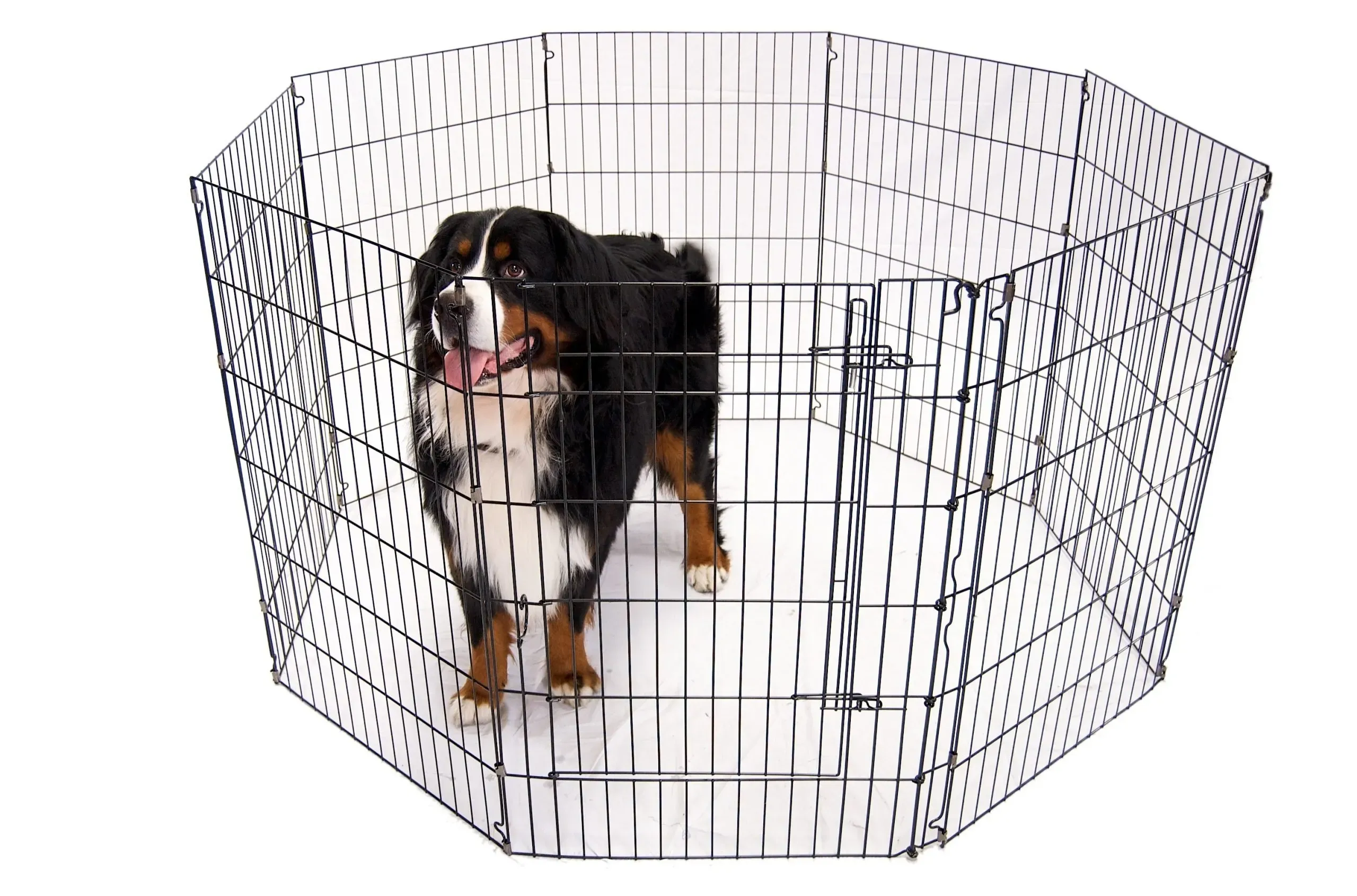
For dogs that continue to struggle, consider these adjustments. If your dog is uncomfortable with grass, place potty pads inside the pen to encourage elimination. As a last resort, you can temporarily add a small strip of carpet or laminate flooring to mimic indoor surfaces. Most importantly, avoid scaring your dog when accidents happen indoors. Your role is to interrupt and redirect, not to punish. Punishment only creates fear and anxiety, which further complicates the training process.
Step 2: Wean Your Dog Off the Confinement Area
Once your dog reliably eliminates in the outdoor pen, it’s time to gradually expand their freedom. If using a permanent confinement area suits your lifestyle—for example, if you live in an apartment and plan to continue using a balcony setup—you can maintain this system indefinitely. However, if your goal is to transition to a larger outdoor space or a yard, a gradual weaning process is essential.
Begin by slowly removing any flooring, pads, or carpet strips you placed inside the pen. Start by cutting them into smaller pieces over several days, then remove them entirely once your dog consistently eliminates without them. Next, leave the pen door open during potty breaks, allowing your dog to choose whether to enter. Finally, remove the pen structure altogether, and continue rewarding your dog for eliminating in the general area where the pen once sat.
Throughout this phase, continue using the same verbal cue and reward system. Your dog should now understand that eliminating in that specific outdoor spot results in praise and treats, regardless of whether the pen is present.
Step 3: Complete the Process
Long-term success depends on preventing indoor accidents from going unnoticed. Every accident that occurs without interruption reinforces the unwanted behavior and extends the training timeline. Consistency is non-negotiable during this final stage.
Continue supervising your dog closely indoors, using a tether or crate when you cannot provide direct attention. Maintain the routine of frequent outdoor trips to the established elimination area, and always reward successful outdoor potty breaks. If an accident does occur indoors, interrupt it immediately—without anger—and redirect your dog outside to the designated area.
With diligent adherence to these steps, most owners achieve complete housetraining success within a few weeks, often sooner. The key lies in understanding that reverse housetraining is not a sign of stubbornness but a communication gap. By creating a positive, predictable outdoor elimination experience and maintaining consistent supervision indoors, you bridge that gap and establish a lasting habit.
References
- Overall, K. (2013). Manual of Clinical Behavioral Medicine for Dogs and Cats. Elsevier Health Sciences.
- Dunbar, I. (2004). Before & After Getting Your Puppy. New World Library.
- American Kennel Club. (2024). Housetraining Your Puppy. Retrieved from akc.org
- Yin, S. (2009). Low Stress Handling, Restraint and Behavior Modification of Dogs & Cats. CattleDog Publishing.