
Oldies Music is more than a collection of timeless songs—it is a window into the cultural spirit of America during the mid-20th century. Among the most beloved musical films of this golden era is Anchors Aweigh (1945), a dazzling Hollywood production that combines unforgettable music, energetic dance performances, and the star power of some of the most celebrated entertainers of the time.
Released during the final years of World War II, Anchors Aweigh captures the optimism, romance, and entertainment values that defined American popular culture in the 1940s. Featuring Frank Sinatra, Gene Kelly, and Kathryn Grayson, the film remains a treasured example of classic American musical cinema and continues to fascinate audiences interested in the history of Oldies Music and the golden age of Hollywood.
The Story Behind Anchors Aweigh
Anchors Aweigh follows the adventures of two sailors on leave in Hollywood. The film centers on Joseph Brady (Gene Kelly) and Clarence Doolittle (Frank Sinatra), who find themselves caught up in romance and unexpected situations during their time ashore.
The movie represents one of the finest examples of MGM’s legendary studio system at its peak. During the 1940s, Metro-Goldwyn-Mayer became famous for producing lavish musicals filled with elaborate sets, colorful cinematography, and memorable songs. Anchors Aweigh stands as one of the studio’s most successful achievements in this genre.
The chemistry between Frank Sinatra and Gene Kelly became one of the film’s greatest strengths. Their on-screen friendship reflected a genuine lifelong friendship off-screen, creating a natural camaraderie that audiences immediately embraced. The success of their partnership eventually led MGM to cast them together again in the celebrated musicals Take Me Out to the Ballgame and On the Town in 1949.
Frank Sinatra’s Breakthrough in Technicolor
For Frank Sinatra, Anchors Aweigh represented a significant milestone in his film career. A passionate movie enthusiast, Sinatra considered working for MGM a dream opportunity. In the film, he portrays Clarence Doolittle, a shy sailor struggling with romance, a role that allowed him to display both his acting and singing talents.
One particularly important aspect of the production was Sinatra’s first appearance in Technicolor. At a time when color filmmaking was still a major attraction, audiences were captivated by the vivid presentation. The rich colors transformed Southern California into a vibrant visual spectacle, while Sinatra’s famous blue eyes became even more striking on the big screen.
As his popularity among female fans continued to soar, many moviegoers returned multiple times to watch the film, helping to solidify Sinatra’s status as one of Hollywood’s brightest stars.
George Sidney’s Direction and MGM Excellence
Director George Sidney expertly guided the production, demonstrating the talent that would later make him one of Hollywood’s respected musical filmmakers. Before directing feature films, Sidney had developed his skills in MGM’s short-subject department, learning the technical precision necessary for large-scale musical productions.
Sinatra himself maintained great respect for Sidney throughout his career. Years later, he enthusiastically supported Sidney’s selection as director for Pal Joey (1957), a testament to the positive working relationship established during Anchors Aweigh.
The film’s production team included numerous accomplished artists:
- Producer: Joe Pasternak
- Screenwriters: Isobel Lennart and Natalie Marcin
- Cinematographers: Robert Planck and Charles Boyle
- Editor: Adrienne Fazan
- Art Directors: Cedric Gibbons and Randall Duell
- Music Contributors: George Stoll, Jule Styne, and Sammy Cahn
Their combined expertise helped create a polished musical experience that continues to be admired by fans of classic American entertainment.
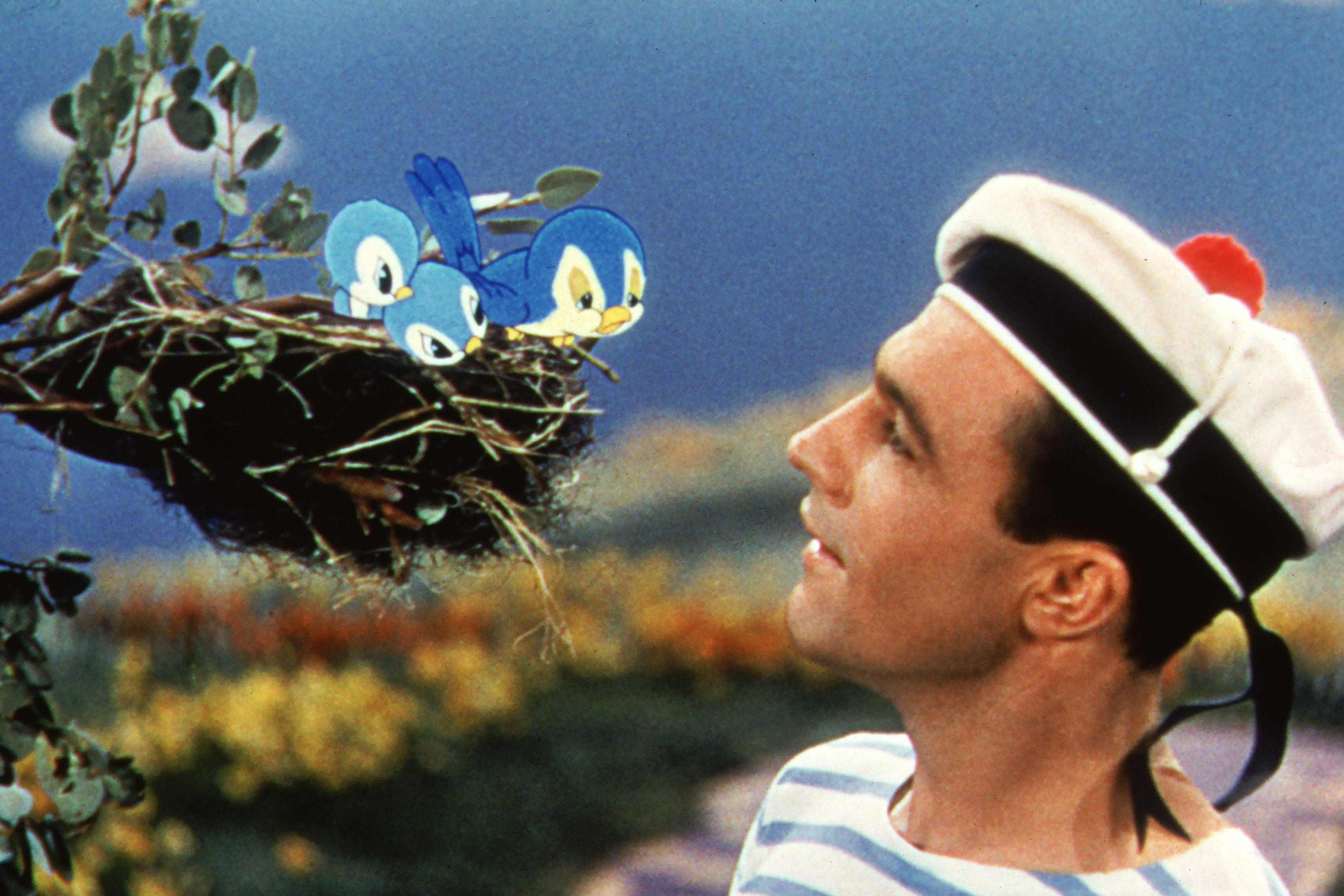
The Revolutionary Dance with Jerry the Mouse
One of the most famous moments in Anchors Aweigh is Gene Kelly’s groundbreaking dance sequence with Jerry the Mouse from the Tom and Jerry cartoons.
Today, audiences may take digital effects for granted, but in 1945 this combination of live-action performance and animation was an extraordinary technical achievement. The sequence required approximately two months of work and involved meticulous planning from Gene Kelly and choreographer Stanley Donen.
According to Kelly’s recollections in The Films of Gene Kelly by Tony Thomas, the idea emerged during creative discussions with Donen. Initially, MGM executives doubted the project could be completed successfully. Producer Joe Pasternak, however, supported the concept and secured a substantial budget of $100,000 to develop the sequence.
Kelly and Donen even consulted Walt Disney, who was experimenting with live-action and animation himself. Although Disney’s studio was too busy to participate directly, his encouragement helped convince MGM’s animation department that the ambitious project was achievable.
The result became one of the most innovative scenes in movie musical history. The challenge was particularly demanding because the camera crew had to film movements and interactions with animated characters that did not yet exist on screen. The precision required remains impressive even by modern standards.
Memorable Songs from the Golden Era of American Music
While the animated dance sequence is often highlighted, many fans consider the film’s music its greatest achievement.
The songs written by Jule Styne and Sammy Cahn contribute significantly to the movie’s enduring popularity. Their compositions showcase the elegance and emotional depth characteristic of classic American songwriting.
Notable songs include:
- “What Makes the Sunset”
- “I Begged Her”
- “I Fall in Love Too Easily”
Among these, “I Fall in Love Too Easily” stands out as a defining moment of both the film and Sinatra’s career. Performed in the empty Hollywood Bowl, the song’s simplicity and emotional vulnerability create one of the most memorable scenes in musical cinema.
For enthusiasts of Oldies Music, the performance remains a masterclass in vocal interpretation. Sinatra’s understated delivery captures themes of loneliness, romance, and longing that continue to resonate with listeners decades later.
Cast and Performances
The film assembled an impressive cast of performers whose talents helped elevate the production:
- Frank Sinatra as Clarence Doolittle
- Gene Kelly as Joseph Brady
- Kathryn Grayson as Susan Abbott
- Jose Iturbi as Himself
- Dean Stockwell as Donald Martin
- Rags Ragland as the Police Sergeant
Kathryn Grayson brought her renowned vocal abilities and screen presence to the role of Susan Abbott, while Dean Stockwell delivered a charming performance as her younger brother. Together, the ensemble contributed to the warmth and entertainment value that define the film.
Why Anchors Aweigh Remains Important Today
More than eighty years after its release, Anchors Aweigh continues to hold a special place in the history of Oldies Music and American cinema. The film showcases many elements that define the golden era of American music and entertainment: exceptional songwriting, charismatic performers, technical innovation, and optimistic storytelling.
Its influence extends beyond the musical genre. The groundbreaking animation sequence inspired future filmmakers, while the songs remain beloved standards among fans of traditional American popular music.
For international audiences seeking to understand American cultural history, Anchors Aweigh offers a valuable glimpse into the entertainment values, artistic ambitions, and musical traditions that shaped the United States during the 1940s.
Conclusion
Anchors Aweigh remains one of the finest examples of Oldies Music brought to life on film. Through the remarkable talents of Frank Sinatra, Gene Kelly, Kathryn Grayson, and the creative team behind the production, the movie captures the charm and artistry of Hollywood’s golden age.
From its unforgettable songs and pioneering dance sequences to its enduring cultural significance, the film continues to inspire generations of music lovers and cinema enthusiasts. If you are exploring the rich heritage of classic American entertainment, Anchors Aweigh is an essential experience that reveals why these timeless melodies and performances still resonate today.
Take the opportunity to discover more of these unforgettable classics and immerse yourself in the enduring magic of Oldies Music.
References
Thomas, T. (1974). The Films of Gene Kelly. Citadel Press.
Neuhaus, M. (2003, July 28). Anchors Aweigh. Turner Classic Movies (TCM).
Metro-Goldwyn-Mayer. (1945). Anchors Aweigh [Motion Picture]. Produced by Joe Pasternak. Directed by George Sidney.