
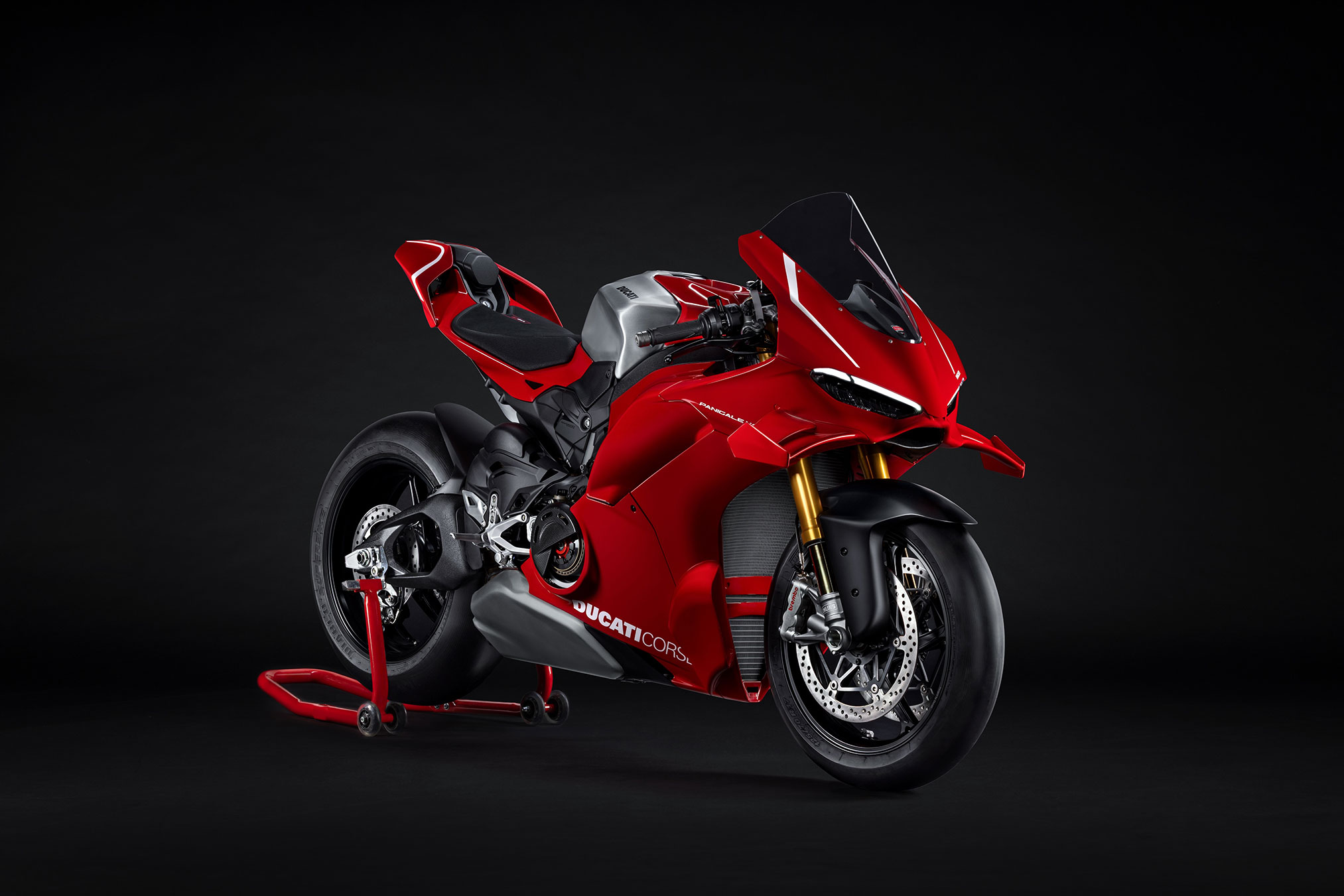
When Carl Benz introduced the Benz Victoria in 1893—the first four-wheeled vehicle powered by an internal combustion engine—he envisioned an exclusive automobile that projected elite economic status to a high-income audience. Over a century later, the landscape of high-end automakers has expanded dramatically. Yet, the core philosophy remains unchanged: delivering status, exclusivity, and peerless manufacturing quality.
These elite automotive manufacturers have elevated design, speed, track-bred power, and technology to the next level to captivate the most demanding clients. While some marques focus on class and sophistication, others specialize in motorsport-derived performance. They all command a unique, almost mythical aura that fuels the fantasies of automotive enthusiasts worldwide, remaining a privilege reserved for a fortunate few.
To understand this industry, one must distinguish between companies specializing in true luxury cars and those operating as premium brands. While both convey prestige, their market positions are vastly different:
- Premium Brands: Positioned below the hyper-exclusive tier, premium marques are aspirational. They target a broader segment of the public willing to pay a higher price tag for superior build quality, technology, and badge appeal. Mainstream automotive groups often deploy premium sub-brands or specialized models to compete here. Representative examples include Audi, BMW, Mercedes-Benz, Lexus, Tesla, and Land Rover.
- Luxury Brands: These hyper-exclusive manufacturers cater to a niche at the very peak of the economic pyramid. They build limited-production vehicles featuring nearly unlimited bespoke customization options and astronomical prices. Buying such a vehicle is not just an automotive investment; it is a profound declaration of personal status and distinction.
Globally, over a hundred low-volume, highly artisanal manufacturers are considered luxury brands. Today, the absolute pinnacle of this segment consists of a few elite names: Ferrari, Porsche, Lamborghini, Maserati, Aston Martin, Rolls-Royce, Bentley, Lotus, McLaren, Bugatti, Pagani, and Koenigsegg.
Ferrari
Ferrari stands as the undisputed global icon of luxury and performance. For most people, the concept of an exotic supercar automatically evokes the imagery of a Ferrari. The name itself represents racing pedigree, visceral raw power, and Italian elegance. Founded in 1929 by the legendary Enzo Ferrari—originally in Modena and later relocated to Maranello—the company has served as the definitive benchmark for motorsport excellence from its inception.
The greatest racing drivers in history, including Alberto Ascari, Juan Manuel Fangio, Niki Lauda, Alain Prost, Michael Schumacher, and Fernando Alonso, have steered the iconic Prancing Horse to victory on historic circuits like Monte Carlo, Silverstone, and Monza. In Formula 1, the absolute pinnacle of global motorsport, Scuderia Ferrari boasts an unparalleled record of 16 constructor championships, 15 driver championships, over 230 race victories, and more than 700 podium finishes, alongside 9 outright victories at the grueling 24 Hours of Le Mans. Ferrari’s road-going sports cars fuse cutting-edge aerodynamic technology with striking bodywork. Historic milestones like the 250 GTO, Testarossa, F40, Enzo, and the hybrid LaFerrari have each left an permanent mark on technological excellence and automotive history.
Porsche
Based in Stuttgart, Porsche represents the absolute pinnacle of German engineering, seamlessly blending highly refined aesthetics with serious sports car performance without relying on ostentatious design. Renowned for powertrains forged in high-level racing competition, Porsche models offer a unique combination of extreme performance, daily reliability, and advanced chassis tech that ensures a confident and engaging driving experience.
From the rear-engined 911 sports car to the elegant Panamera sedan and highly functional luxury SUVs like the Cayenne, Porsche possesses the most versatile product portfolio in the luxury market. By offering clients high-performance sports cars capable of seamless transitions between racetrack duties, daily commutes, and family road trips, Porsche has cemented its status as the ultimate everyday luxury vehicle. Notably, Porsche remains a dominant force across diverse motorsport disciplines, having conquered the 24 Hours of Le Mans, supplied dominant turbo engines to McLaren in Formula 1 (1984–1986), and secured victories in the World Rally Championship (WRC) and the legendary Paris-Dakar Rally.
Lamborghini
True to its aggressive emblem of an untamed bull, Lamborghini entered the exotic sports car arena furiously following a historic dispute between its founder, Ferruccio Lamborghini, and Enzo Ferrari.
Ferruccio Lamborghini was a highly successful tractor manufacturing entrepreneur and an avid sports car collector. When the clutch on his personal Ferrari 250 GTB repeatedly failed, he dismantled the mechanism only to discover that the components were identical to those utilized in his agricultural machinery—though Ferrari charged a massive premium for them. Ferruccio confronted Enzo Ferrari to demand an explanation, but Enzo famously dismissed him, stating that a mere tractor manufacturer knew nothing about handling high-performance sports cars. Enraged by this arrogance, Ferruccio resolved to build his own exotic sports cars to eclipse Ferrari’s quality and break Maranello’s dominance. This rivalry forever transformed automotive history. Since that pivotal moment, Lamborghini has built wild machines defined by angular, cab-forward styling and roaring, high-revving naturally aspirated engines. Honoring Ferruccio’s profound passion for Spanish bullfighting, iconic models like the Diablo, Islero, Murciélago, and Huracán were named after legendary fighting bulls, while the historic Miura paid homage to a prominent breeder of championship bulls.
Maserati
In contrast to the loud exuberance of its neighbors Ferrari and Lamborghini, Maserati carves out its niche by offering a highly restrained, sophisticated form of Italian luxury. From its elegant exterior body lines to its signature, operatic exhaust notes, Maserati embodies the artistic passion of Italian culture. Every details is styled with meticulous precision, from the prominent trident emblem adorning the front grille to the deep, mechanical symphony of its engines. Founded in Bologna in 1914 by the Maserati brothers, the company has navigated numerous financial shifts throughout its long history. Nevertheless, its decades-long legacy of building prestigious grand tourers and high-performance luxury cars keeps it securely positioned among the elite names of the automotive world.
Aston Martin
Representing the quintessential blend of British sophistication and sports car engineering, Aston Martin operates on a philosophy closely aligned with Maserati: matching elegant design with grand touring performance. Throughout more than a century of operation, Aston Martin has continuously fought for survival, overcoming numerous changes in corporate ownership and severe financial crises that brought the historic marque to the brink of insolvency multiple times. Its persistent ability to reinvent itself stands as a testament to the enduring power of the brand. Aston Martin’s cultural legacy extends far beyond car enthusiast circles into cinema history. The silver Aston Martin DB5, which served as James Bond’s gadget-laden companion on the silver screen, remains one of the most famous cars in the world. This iconic cinematic partnership elevated Aston Martin from a niche British automaker into a global symbol of timeless pop-culture cool.
Rolls-Royce
Rolls-Royce represents the absolute pinnacle of ultra-luxury motoring. The sheer prestige conferred by the British automaker and its iconic Spirit of Ecstasy hood ornament remains completely unmatched by mainstream luxury brands. Founded in 1906 by Charles Rolls and Henry Royce, the marque has captivated royal families, heads of state, global dignitaries, and billionaires for over a century. Each vehicle is treated as a commissioned piece of fine art, constructed by hand with flawless bespoke craftsmanship, hand-stitched leathers, and mirror-matched wood veneers. While Rolls-Royce prioritizes a silent, isolated cabin experience that effortlessly glides over road imperfections, these massive vehicles also possess state-of-the-art engineering, utilizing powerful twin-turbocharged V12 engines to deliver effortless acceleration.
Bentley
If there is one brand capable of matching Rolls-Royce in sheer presence while injecting a potent dose of motorsport performance, it is Bentley. The historic trajectory of this British manufacturer can be summarized by three pillars: engineering elegance, racing glory, and a modern resurgence. Founded in 1919 by W.O. Bentley, the company established its reputation on the concept of high-end engineering integrity and heavy-duty performance.
In its early days, Bentley was the direct sporting rival to Rolls-Royce, backed by a group of wealthy British playboys and racing enthusiasts known as the “Bentley Boys.” These affluent investors funded consecutive racing entries and continuous powertrain development, leading to dominant victories at the 24 Hours of Le Mans during the 1920s. However, following the economic devastation of the 1929 Great Depression, Bentley fell into deep financial distress. Rolls-Royce acquired its rival in 1931, initiating a corporate partnership that fused the two brands for nearly seven decades. This lasted until 1998, when the Volkswagen Group acquired Bentley and BMW took control of Rolls-Royce. Under modern Volkswagen stewardship, Bentley has evolved towards highly dynamic, muscular exterior design lines and an engaging, high-speed driving experience. While retaining its classic hand-crafted wood and leather cabins, contemporary Bentleys represent a balanced harmony of ultra-luxury, high-speed grand touring capability, and everyday all-weather usability.
Lotus
Defined by exceptional aerodynamics, ultra-lightweight construction, and pure mechanical feedback, Lotus occupies a unique, purist space within the sports car segment. Founded in 1951 by the visionary engineer Colin Chapman, the company began as a dedicated racing car manufacturer. Lotus went on to dominate Formula 1 racing throughout the 1960s and 1970s, pioneering ground-effect aerodynamics and capturing 6 driver’s world championships and 7 constructor’s titles, while simultaneously launching iconic lightweight sports cars like the Elan, Seven, and mid-engined Esprit.
Following Colin Chapman’s untimely passing in 1982, the company cycled through various corporate owners. General Motors acquired the automaker in 1986, followed by a transfer in 1993 to the A.C.B.N. Group (whose owner also controlled Bugatti), before the Chinese automotive giant Geely acquired a majority stake in 2017. Since the 1996 debut of the raw Lotus Elise—the brand’s most critical modern milestone—alongside its hardcore derivatives, the Exige and Evora, Lotus successfully sold over 50,000 sports cars worldwide. Today, Lotus is transitioning into a new era while maintaining its core principles of advanced composite construction and focused chassis tuning. The current lineup includes the mid-engined Emira, which serves as the final internal-combustion sports car successor to the Elise and Evora; the Eletre, a high-performance all-electric luxury SUV; and the Evija, a limited-production, all-electric hypercar utilizing four independent electric motors to produce an astonishing 2,000 horsepower.
McLaren
McLaren Automotive is a premier powerhouse in the modern supercar industry, drawing directly from an elite motorsport legacy. As the third-oldest and second-most successful active team in Formula 1 history, McLaren boasts 183 Grand Prix victories, 499 podium finishes, 8 constructor championships, and 12 driver championships.
In 1969, the company developed the gorgeous McLaren M6 GT as its very first road-going project, seeking to homologate a street-legal variant of their successful M6B Can-Am racing car. This ambitious project laid the foundations for McLaren Automotive. However, following the tragic testing death of founder Bruce McLaren in 1970, the company shelved its road car ambitions to focus exclusively on Formula 1 competition. The brand experienced a legendary road-car rebirth in the 1990s with the launch of the McLaren F1. Designed by Gordon Murray, this central-seat, naturally aspirated V12 masterpiece shattered production car speed records and became the ultimate automotive benchmark. In the 21st century, McLaren Automotive re-established itself as a standalone high-performance manufacturer, releasing advanced supercars like the hybrid P1, the 720S, and the track-focused Senna. The brand remains distinct for its commitment to lightweight carbon-fiber monocage chassis structures, active hydraulic suspension systems, and functional, wind-tunnel-tested aerodynamics.
Bugatti
In the high-stakes world of ultimate luxury hypercars, Bugatti reigns as the undisputed king of top speed, raw power, and structural engineering. Its multimillion-dollar hypercars deliver radical performance figures paired with meticulously tailored interior luxury. While the historic French brand founded by Ettore Bugatti was a dominant force in pre-war Grand Prix racing and coachbuilding, the marque lay dormant for decades following World War II due to financial ruin.
Bugatti’s definitive modern renaissance began in 1998 when the Volkswagen Group purchased the rights to the historic brand. Backed by the massive engineering and financial resources of the German automotive giant, Bugatti set out to build a vehicle that would redefine the limits of internal combustion engineering. The result was the 2005 Bugatti Veyron, a technological tour de force that eclipsed the entire automotive industry. Powered by a unique 8.0-liter, quad-turbocharged W16 engine sending power to all four wheels, the Veyron shattered the 400 km/h barrier while maintaining the refined drivability of a luxury grand tourer. Bugatti followed this success with the Chiron, the corner-carving Divo, the retro-inspired Centodieci, and the ultra-exclusive coachbuilt La Voiture Noire, cementing its status as a limited-production automotive masterpiece.
Pagani
While the name Pagani might be less familiar to the general public compared to historic luxury brands, it represents the absolute holy grail of automotive craftsmanship for supercar collectors. Founded in 1992 in the performance-rich Italian province of Modena by the visionary Argentinean-born designer and engineer Horacio Pagani, the brand has established itself as an elite benchmark in the boutique hypercar space. Despite its relatively short history, Pagani has earned global renown for creating rolling sculptures that double as high-speed engineering marvels.
Every Pagani hypercar is powered by a bespoke, twin-turbocharged V12 engine hand-built explicitly for them by Mercedes-AMG. What truly sets Pagani apart is Horacio Pagani’s relentless dedication to the Renaissance philosophy of blending art and science. Each car is assembled with watchmaker-like precision, utilizing advanced proprietary materials such as carbo-titanium—a lightweight weave of carbon fiber and titanium strands. The brand first stunned the automotive world in 1999 with the launch of the Pagani Zonda C12, an exotic mid-engine machine inspired by Group C endurance race cars. This was followed in 2011 by the active-aerodynamic Huayra, and more recently in 2022 by the gorgeous, manual-transmission Utopia hypercar, showcasing a dedication to pure mechanical art.
Koenigsegg
Alongside Pagani, Koenigsegg stands as a highly exclusive, engineering-driven hypercar manufacturer operating away from mainstream automotive paths. Founded in 1994 by Christian von Koenigsegg in Ängelholm, Sweden, the essence of this boutique Scandinavian brand lies in its revolutionary technical innovations and pursuit of the ultimate power-to-weight ratio.
Koenigsegg builds its vehicles around ultra-lightweight carbon fiber and Kevlar monocoques to minimize mass. The company operates as a hotbed for advanced powertrain engineering, developing in-house technologies like the revolutionary Freevalve system—which eliminates traditional camshafts to provide independent, electronic control over intake and exhaust valves for maximized engine efficiency. Koenigsegg’s historic line of record-breaking hypercars began with the CC8S, followed by the blistering Jesko, named in honor of Christian’s father. They also pioneered hybrid performance with the Regera, which utilizes a direct-drive system that completely eliminates a conventional multi-gear transmission, and the groundbreaking Gemera, a four-seater mega-GT that shatters traditional supercar constraints by allowing four adults to experience mind-bending hybrid acceleration simultaneously.
Overall Review
The unique identity, mechanical pedigree, and engineering excellence of these high-end automotive manufacturers represent more than just advanced transportation; they embody an uncompromising dedication to human ingenuity and artistic expression. Their historical racing backgrounds and constant pursuit of top-speed records are reflected in the precision and luxury of every vehicle they hand-assemble. This creates an intense emotional bond with collectors, turning owners into passionate, lifelong brand loyalists.
In our exclusive rental fleet, we offer an extensive selection of high-performance models from these benchmark luxury car manufacturers. Whether you desire the hybrid performance of the Ferrari 296 GTB, the razor-sharp track precision of the Porsche 911 GT3 (992), the classic open-top elegance of the Aston Martin Vantage V8 Roadster, the aggressive V10 roar of the Lamborghini Huracán EVO Spyder, or the extreme lightweight acceleration of the McLaren 765LT Spider, we invite you to experience the raw passion, heritage, and engineering excellence that define these luxury automotive icons.
References
- Aston Martin Lagonda Global Holdings PLC. (2024). The evolution of British grand touring. Aston Martin Media.
- Ferrari S.p.A. (2023). Scuderia Ferrari: Formula 1 history and statistics. Ferrari Corporate Racing Archives.
- Porsche AG. (2024). Engineering excellence: The history of the Porsche 911 and motorsport development. Porsche Newsroom Stuttgart.
- Rolls-Royce Motor Cars. (2023). Strive for perfection: The craftsmanship and engineering of the modern Phantom. Rolls-Royce PressClub.
- Volkswagen Group & Bugatti Automobiles S.A.S. (2022). From Veyron to Chiron: A decade of W16 hypercar engineering. Volkswagen Corporate History.