
The McLaren F1 is widely regarded as one of the greatest automobiles ever built — a no-compromise supercar that redefined what a road car could be. With a top speed of 241 mph and a Gordon Murray-designed carbon fiber monocoque chassis, the F1 held the title of the world’s fastest production car for over a decade. For collectors and enthusiasts searching for a McLaren F1 for sale today, understanding the car’s history, variants, and market dynamics is essential before taking the plunge.
The Origins of the McLaren F1
McLaren’s story with road cars began earlier than most people realize. Company founder Bruce McLaren — the New Zealand-born racing driver who gave the brand its name — envisioned a road-going machine that could capitalize on the team’s dominant Can-Am series success. His pet project, the McLaren M6 GT, was developed at the Colnbrook factory near London in 1968 and 1969. Though Bruce’s untimely death in 1970 cut that dream short, it planted a seed that would eventually bloom into something extraordinary.

Two decades later, in 1992, McLaren returned to road car production with a vengeance. The result was the F1 — a vehicle conceived with a singular purpose: to be the ultimate driving machine, without compromise. Designed by Gordon Murray and developed with BMW for its naturally aspirated 6.1-liter V12 engine, the F1 produced 618 horsepower and weighed just 1,138 kg. It was, and remains, an engineering masterpiece.
What Makes the McLaren F1 So Special?
Several characteristics distinguish the F1 from every other supercar of its era — and most that came after.
The Central Driving Position
Perhaps the most iconic design feature is the three-seat cabin with the driver positioned in the center, flanked by two passengers set slightly further back. This layout provided superior visibility and a driving experience unlike anything else on the road.
Carbon Fiber Construction
The F1 was among the first road cars to use a full carbon fiber monocoque chassis, a technology borrowed directly from Formula 1 racing. This gave the car exceptional rigidity and an incredibly low curb weight.
The BMW S70/2 V12 Engine
McLaren partnered with BMW Motorsport to produce a bespoke 6.1-liter V12 engine that was naturally aspirated — a deliberate choice by Gordon Murray, who wanted no electronic driver aids or forced induction to dilute the purity of the experience. The result was 618 bhp and a spine-tingling soundtrack that no turbocharged car can replicate.
Gold-Lined Engine Bay
In a detail that has become legendary, the engine bay was lined with gold foil — not for aesthetics, but for its superior heat-reflective properties. It remains one of the most striking examples of form following function in automotive history.
McLaren F1 Variants: Road Car, GTR, and LM
Only 106 McLaren F1s were ever produced between 1992 and 1998, making each example exceptionally rare. The family of cars includes several distinct variants:
- McLaren F1 Road Car: 64 examples built, making it the most attainable variant (relatively speaking). These are the cars most likely to appear when searching for a McLaren F1 for sale on the collector market.
- McLaren F1 GTR: The race-ready version, homologated for GT racing. The GTR achieved legendary status when it won the 1995 24 Hours of Le Mans outright on its first attempt — a feat that shocked the motorsport world.
- McLaren F1 GTR ‘Longtail’: An evolved version of the GTR featuring an extended rear bodywork for greater aerodynamic downforce, developed for the 1997 racing season.
- McLaren F1 LM: Just five examples were built to celebrate the Le Mans victory, featuring the highest power output of any F1 variant at 680 bhp.
The McLaren F1 at Auction: What Can You Expect to Pay?
When a McLaren F1 does appear at auction, it invariably makes headlines. Values have climbed dramatically over the past decade, reflecting the car’s legendary status and extreme scarcity. Road-specification examples have sold for between $15 million and $20 million USD at major auction houses, with particularly rare variants — the LM and GTR ‘Longtail’ — commanding even higher prices.
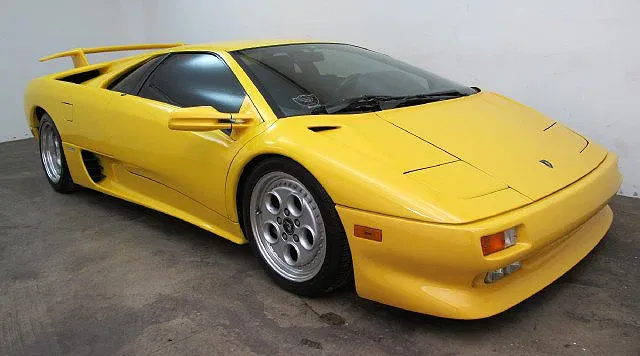
Notable recent sales have included a Silicon Valley example that generated significant speculation about its final hammer price, a near-delivery-mileage F1 that emerged from a Japanese collection in pristine condition, and a factory-fresh example that had been carefully stored since new. Each sale reinforces the F1’s reputation not just as a driver’s car, but as one of the most important collectible automobiles in history.
McLaren’s Motorsport Legacy and the F1 GTR
The McLaren Group has always been deeply committed to motorsport at the highest levels, competing in Formula 1, Can-Am, Indycar, and Le Mans. The F1 GTR embodied this philosophy perfectly, translating McLaren’s racing DNA directly into a competition machine that also served as the inspiration for some of the era’s most exciting road cars from rival manufacturers.
The GTR’s 1995 Le Mans victory — finishing first, third, fourth, fifth, and thirteenth overall — is one of the defining moments in endurance racing history. It cemented the McLaren F1’s reputation as not just a fast road car, but a genuine racing champion.
What to Look for When Buying a McLaren F1
Given the values involved, due diligence when purchasing a McLaren F1 is absolutely critical. Prospective buyers should consider the following:
- Full documented history: Every F1 should have its service history traceable back to McLaren Special Operations (MSO), which continues to support and maintain these cars.
- Provenance and ownership records: Low ownership numbers and well-documented histories command significant premiums.
- Chassis number verification: With only 106 cars built, each is well-documented; buyers should verify chassis numbers against McLaren’s factory records.
- Condition of the carbon fiber tub: The monocoque is central to the car’s value and integrity; any repairs or damage must be fully disclosed and assessed.
- Engine condition and mileage: The BMW V12 is robust but expensive to rebuild; a full service history from a qualified specialist is essential.
Prospective buyers are strongly advised to commission an independent pre-purchase inspection from a recognized McLaren F1 specialist before committing to any purchase.
The Future of the McLaren F1 Legacy
Rumors of a McLaren F1 successor have circulated for years. While McLaren has produced extraordinary successors in spirit — the P1 hybrid hypercar, the Senna, and the Speedtail — none has yet attempted to recreate the pure, analog, driver-centric philosophy of the original F1. Whether a true spiritual successor will ever be built remains one of the most tantalizing questions in the supercar world.
Conclusion
The McLaren F1 is more than a car — it is a statement about what happens when engineers are given the freedom to pursue perfection without compromise. From its central driving position and gold-lined engine bay to its Le Mans victory and record-breaking top speed, every detail of the F1 tells the story of a machine built to be the greatest road car ever made. For those fortunate enough to find a McLaren F1 for sale and acquire one, they are not merely buying a vehicle; they are becoming custodians of automotive history.
Have you had the chance to experience a McLaren F1 in person, or do you have thoughts on what a true successor should look like? Share your perspective in the comments — and explore our latest listings and editorial coverage for more on the world’s most extraordinary collector cars.
References
- Classic Driver. (n.d.). McLaren F1 for sale. ClassicDriver.com. https://www.classicdriver.com/en/cars/mclaren/f1
- Classic Driver Magazine. (2023). How much will this Silicon Valley McLaren F1 sell for? ClassicDriver.com.
- Classic Driver Magazine. (2023). Delivery-mileage McLaren F1 emerges from Japanese time capsule. ClassicDriver.com.
- Classic Driver Magazine. (2022). Storming the Swiss Alps with a McLaren F1 GTR ‘Longtail’. ClassicDriver.com.
- Classic Driver Magazine. (2012). 1997 McLaren F1 GTR ‘Longtail’ to star at Bonhams’ 2012 Quail Lodge sale. ClassicDriver.com.
- Classic Driver Magazine. (n.d.). A Match for McLaren? Classic Driver picks 5 top supercars of the 90s. ClassicDriver.com.