
If your organization is juggling dozens of APIs, a growing list of AI agents, and an expanding web of real-time data streams, you’ve probably felt the strain of fragmentation. An AI connectivity platform is designed to solve exactly this problem — bringing API management, AI gateway capabilities, event streaming, and monetization together under a single, unified system. Instead of stitching together separate tools for security, governance, and cost control, teams can secure, manage, accelerate, and monetize every LLM call, MCP request, event, and API transaction from one place. For platform engineering teams operating in the agentic era, this shift isn’t optional — it’s becoming the baseline for staying competitive.
From the API Call Economy to the Token Economy
For more than a decade, the API call was the fundamental unit of digital business. Companies that became “API-first” gained a competitive edge by exposing services, managing endpoints, and enforcing rate limiting and dynamic caching across their infrastructure. That world revolved around API gateways, payloads, and predictable request patterns.
Today, a new unit of value has emerged: the token. Agentic AI systems don’t just call APIs — they consume context, manage token budgets, rely on semantic caching, and operate within constrained context windows. This transition from an API call economy to a token economy means the tools and governance models that worked for traditional APIs aren’t automatically sufficient for agents and large language models. An AI connectivity platform bridges both worlds, letting organizations manage legacy API traffic and modern AI traffic side by side.
The Real Cost of Fragmentation
Fragmentation is quietly one of the biggest drivers of AI project failure. When agent traffic, API traffic, and event streams are managed through separate, disconnected tools, security posture becomes inconsistent, cost visibility disappears, and risk multiplies across every integration point. Teams end up duplicating effort — one group securing APIs, another trying to bolt governance onto agent deployments, and a third managing event brokers with entirely different tooling.
Unifying these functions changes the equation. With a consolidated approach, organizations gain a single view of cost, security, and risk across their entire AI and API estate rather than needing to reconcile fragmented dashboards and policies after the fact. That consistency is often the difference between an AI initiative that scales smoothly and one that stalls under its own operational complexity.
Building and Shipping Agents Safely
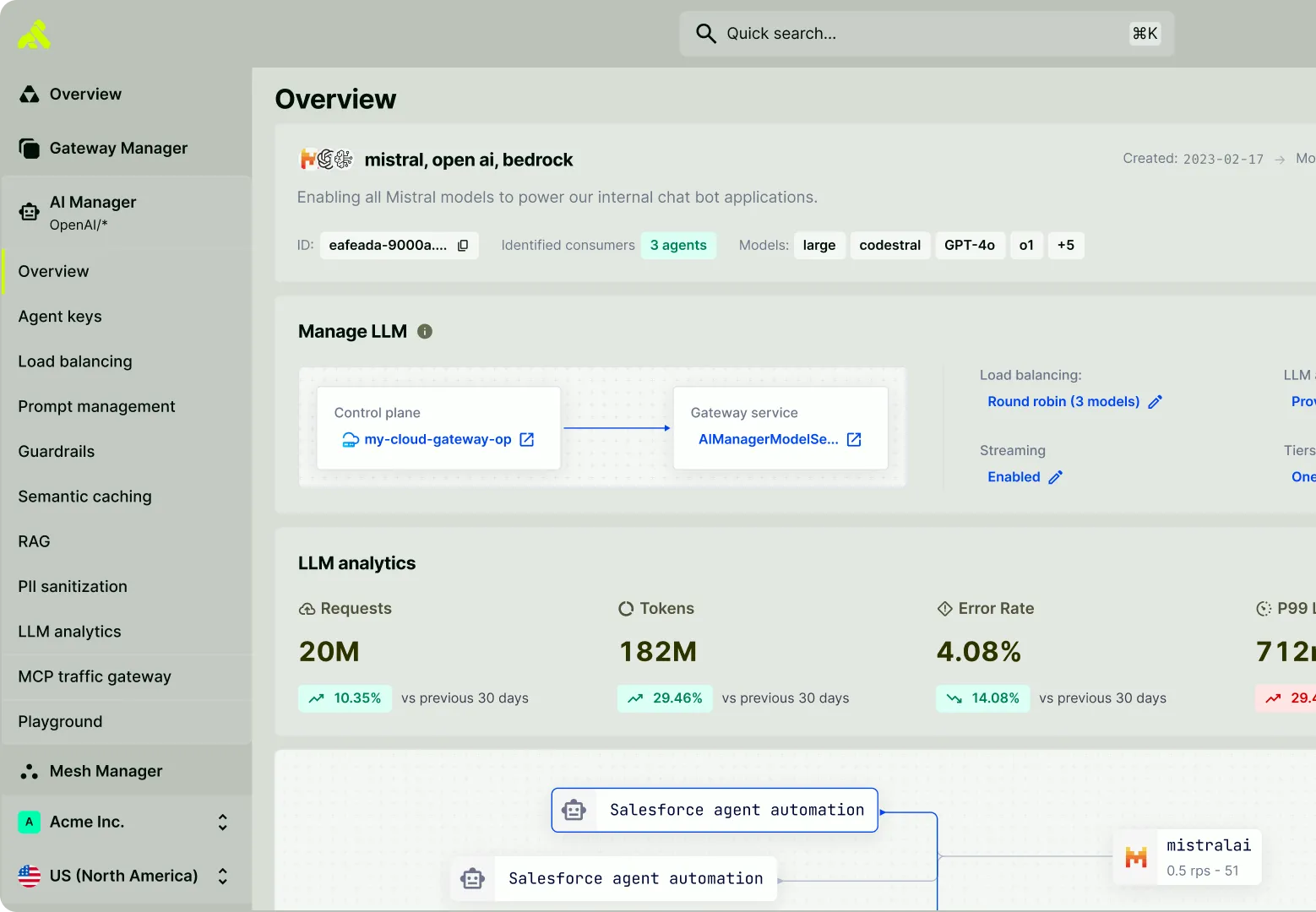
Agentic AI management sits at the center of a modern connectivity platform. The goal is to let teams build and test agents quickly while connecting them to enterprise context and intelligence in a governed way. Pre-built policies help standardize how agents access data and services, optimizing context handling and token consumption so costs stay predictable even as usage scales. Just as importantly, standardized approaches to agent resilience and access control reduce the operational risk that comes with deploying autonomous systems into production environments.
Managing the Full API Lifecycle
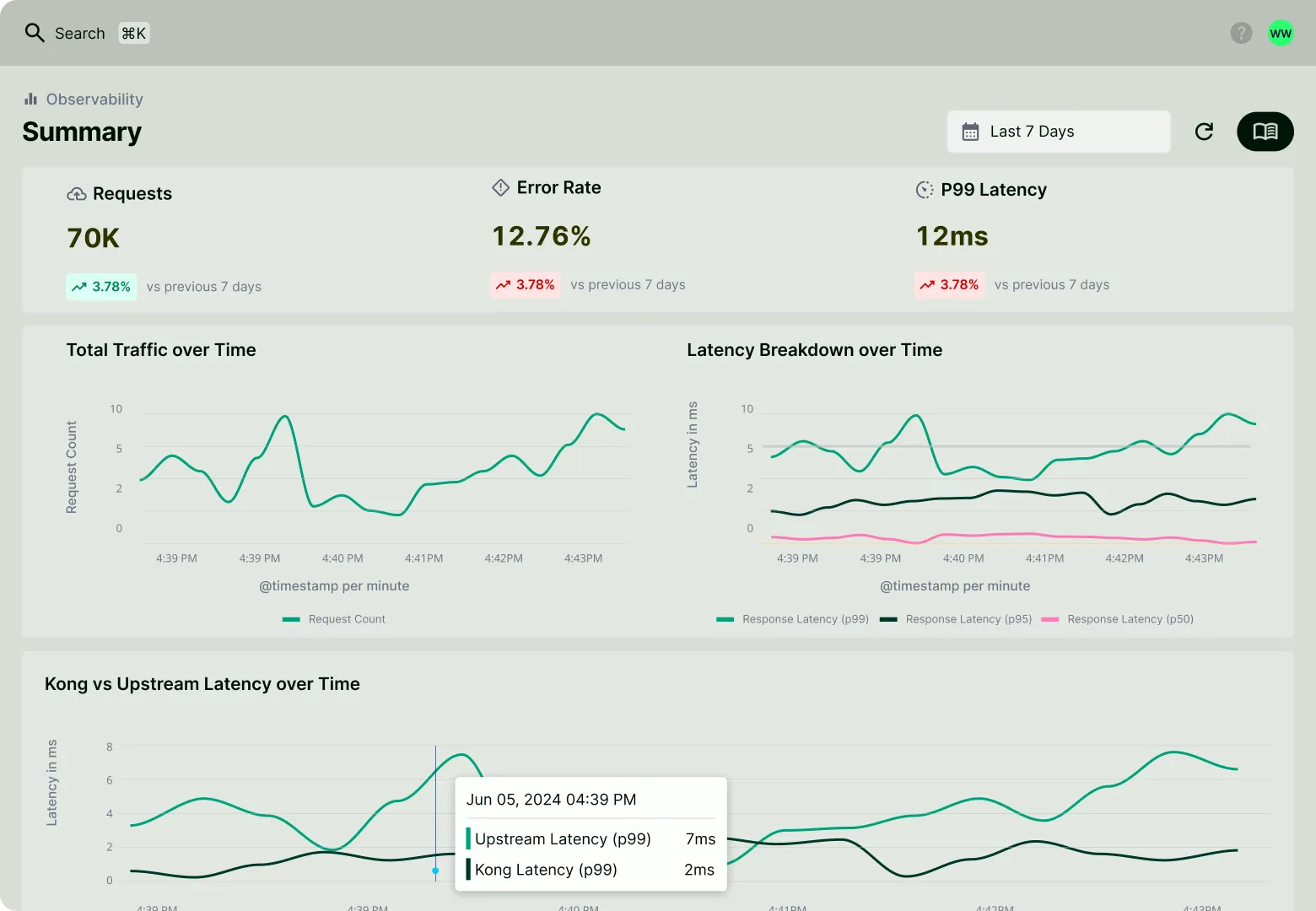
Alongside agent management, traditional API lifecycle management remains critical. This covers everything from initial API design and testing through publishing and monetization. A strong platform reduces the time it takes to onboard new APIs and encourages reuse across teams, which in turn supports internal API chargeback models and better cost efficiency. Enforcing consistent access control and threat protection across every API — regardless of where it’s deployed — helps close security gaps that often appear when governance is applied unevenly.
Governing Real-Time Data for Real-Time Agents
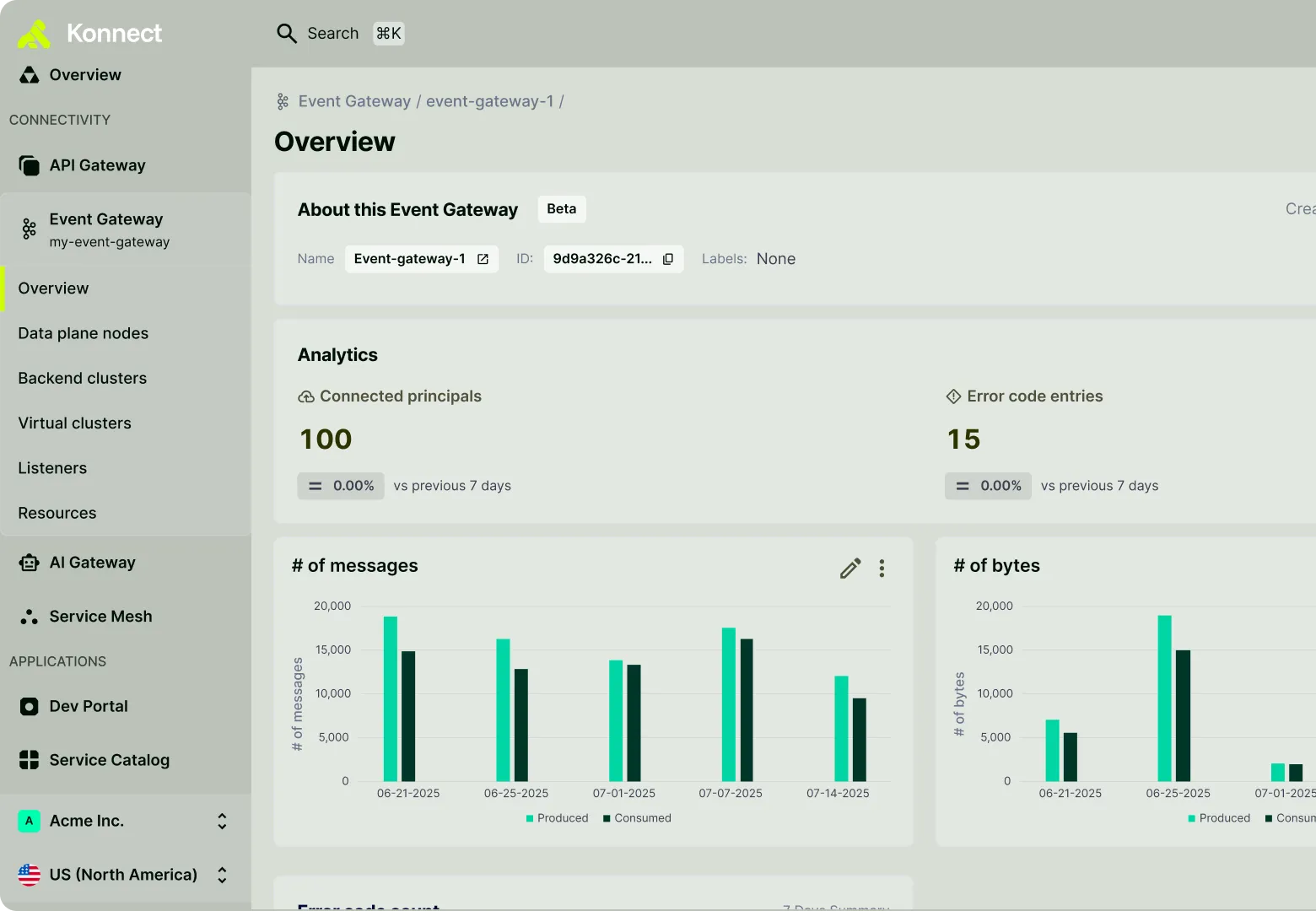
Agents increasingly depend on live, real-time data streams rather than static API responses. Event management standardizes how agents and applications integrate with these streams, giving developers self-serve access that speeds up development cycles. It also eliminates redundant broker infrastructure, which lowers overall infrastructure costs, and offloads functions like authentication, encryption, and failover to a centralized gateway layer rather than requiring custom solutions for every integration.
Turning APIs and AI Into Revenue
Governance and cost control naturally lead to monetization opportunities. A unified platform makes it possible to optimize token consumption and monetize the consumption of intelligence and context itself, not just traditional API calls. Pricing changes that once took weeks to implement can be launched in minutes, entitlements can be enforced at runtime, and organizations can set clear limits so that runaway AI costs don’t stifle continued innovation.
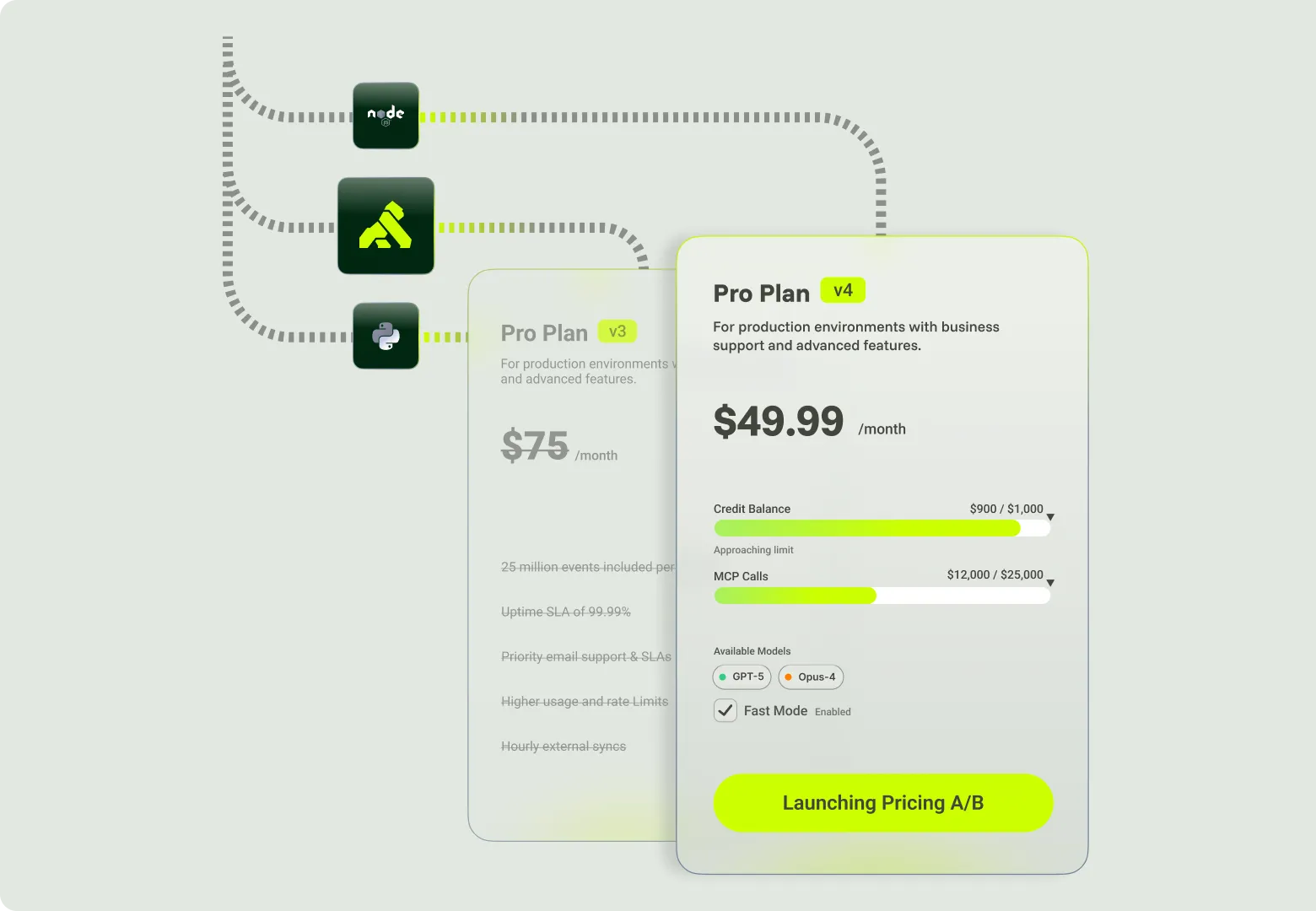 Diagram showing API and AI monetization model with usage-based billing controls
Empowering Developers and AI Builders
None of this works without strong developer productivity tools. Designing, testing, and producing agentic workflows requires packaging high-quality, high-trust digital assets that both developers and AI agents can discover and consume. Self-serve API and MCP discovery accelerates agentic development, while a developer portal that supports monetized API and AI products gives teams a direct path from build to revenue. Testing for quality, security, and resilience risk before deployment further reduces the chance of costly failures in production.
Proven Results Across Industries
Enterprises across airlines, banking, automotive, telecom, and ticketing have reported measurable improvements after consolidating their API and AI infrastructure — including faster development cycles, faster time-to-market, shortened migration timelines, and significant reductions in development costs. These outcomes reflect a broader pattern: when security, governance, and cost control are unified rather than fragmented, teams spend less time reconciling tools and more time shipping features. Organizations processing over a trillion API and AI requests per day rely on this kind of consolidated infrastructure to maintain high availability while keeping latency low and throughput high.
Bringing It All Together
The shift from an API-first world to an agent-first one doesn’t mean starting over — it means extending proven API governance principles to cover tokens, context, and autonomous agents. An effective AI connectivity platform lets organizations build and ship agents quickly, manage APIs across their full lifecycle, govern real-time data access, monetize both APIs and AI consumption, and equip developers with self-serve tools — all without fragmenting security, cost, and risk management across disconnected systems.
For any team currently managing agents, APIs, and event streams through separate tools, the practical next step is to evaluate where fragmentation is creating hidden costs or security gaps, and to consider how a unified approach could close those gaps before they turn into larger operational problems. Explore how a consolidated API and AI platform could fit into your organization’s infrastructure roadmap.