
The dream of an Australian-built supercar capable of rivaling European exotics captured imaginations when the JOSS supercar emerged at the 2004 Melbourne Motor Show. What followed was a decade-long saga of ambition, innovation, and ultimately, financial heartbreak that left Australia’s hypercar aspirations unfulfilled. The JOSS story represents both the pinnacle of Australian automotive engineering prowess and a cautionary tale about the challenges of breaking into the exclusive supercar market.
The Birth of an Australian Dream
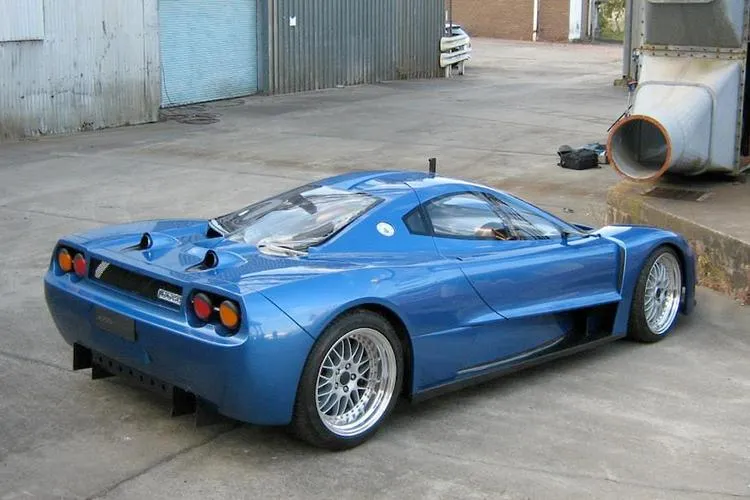
Matthew Thomas founded JOSS Developments in 1999, naming his venture after a historic gold miner from Gippsland, Victoria. His vision was audacious: create a genuine Australian hypercar that could compete with established Italian and European manufacturers. Five years of intensive development culminated in 2004 when the JOSS JT1 prototype was unveiled to an astonished automotive press.
The Australian-built and engineered supercar promised to take on the heavyweight champions of the performance car world. The reveal generated significant excitement, with journalists and enthusiasts alike marveling at the prospect of homegrown talent challenging the established order.
Technical Specifications and Performance
At the heart of the low-slung sports car sat an all-alloy 6.8-liter V8 engine connected to a five-speed Porsche gearbox. The powerplant produced an impressive 328kW and 570Nm of torque. With a featherweight curb weight of just 940kg, the performance figures were nothing short of spectacular.
Industry rumors suggested the JT1 could accelerate from 0-100km/h in under three seconds, complete the quarter-mile in 11.9 seconds, and reach a top speed of 300km/h. These figures would have placed the Australian contender firmly in supercar territory, rivaling offerings from Ferrari, Lamborghini, and Porsche.
Years of Silence and Virtual Revival
Following the initial excitement, both Matt Thomas and his JOSS supercar project disappeared from public view until 2011. That year, a mysterious dark image surfaced unexpectedly, reigniting hopes that the Australian supercar dream was still alive.
During this period, the JT1 found new life in the digital realm, appearing in popular racing simulation games including Forza Motorsport and Project Gotham Racing. This virtual presence kept the JOSS name alive among automotive enthusiasts worldwide, even as the physical project remained dormant.
Evolution to JP1 and Production Plans
In 2011, the project underwent a significant transformation. The car was renamed the JP1, with plans to enhance performance beyond the original JT1 specifications. The production version was scheduled for release in 2013 with a price tag of $580,000 AUD.
This substantial price reflected major changes from the original concept to something closer to production reality. While the engine remained a V8 configuration, plans shifted to sourcing it from Europe, possibly from Mercedes-AMG (though the actual supplier was never officially confirmed). The transmission was to be supplied by Albins, the respected Australian company that provides gearboxes to V8 Supercar racing teams.
Production plans were modest but exclusive: only 25 units of the JP1 were planned annually, positioning it as a rare and desirable collector’s item.
The Vanguard Era and Funding Crisis
As 2013 arrived, the anticipated production launch failed to materialize. The project, now renamed the Vanguard, faced mounting challenges that would ultimately prove insurmountable. A major investor withdrew from the project, leaving Matthew Thomas without the critical funding necessary to advance production plans.
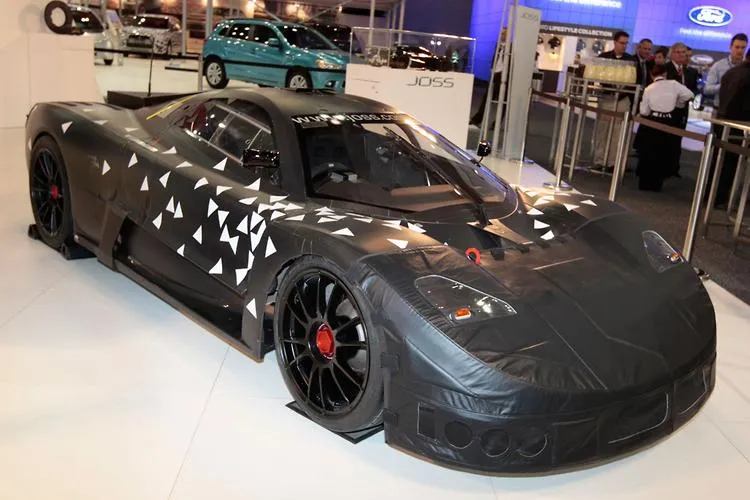
Desperate to keep the dream alive, Thomas turned to crowdfunding through Kickstarter, seeking to raise $480,000 to complete a vehicle for the 25th anniversary of the Targa Tasmania rally. The ambitious plan included taking the completed car to Germany to tackle the legendary Nürburgring Nordschleife.
Unfortunately, the crowdfunding campaign fell dramatically short, failing to generate even a quarter of the target amount. This left Thomas with virtually no options to continue development.
The Final Chapter
In early 2016, the sole prototype that had been constructed was sold, marking the definitive end of Australia’s most promising supercar venture. The sale effectively buried hopes of Australia becoming a major player in the exclusive supercar manufacturing arena.
The JOSS story remains a bittersweet chapter in Australian automotive history—a testament to local engineering talent and ambition, but also a stark reminder of the immense capital requirements and market challenges facing newcomers to the hypercar segment. While the dream never became reality, the JOSS supercar proved that Australian designers and engineers possessed the skill and vision to create world-class performance vehicles.
Lessons from the JOSS Legacy
The failure of the JOSS project highlights several critical challenges in the supercar industry:
Capital Requirements: Developing a production-ready supercar demands hundreds of millions of dollars in investment—far beyond what most independent developers can secure.
Market Competition: Breaking into a market dominated by established brands with centuries of heritage and massive marketing budgets requires exceptional differentiation and financial backing.
Production Complexity: Moving from prototype to production involves navigating regulatory compliance, manufacturing infrastructure, supply chain management, and quality control systems.
Despite its ultimate failure, the JOSS supercar project demonstrated that Australian automotive engineering could compete on the world stage. The dream may have ended, but the legacy of innovation and ambition continues to inspire future generations of Australian automotive entrepreneurs.
References:
Carsales.com.au. (2004-2016). JOSS Supercar Development History. Retrieved from https://www.carsales.com.au/editorial/
Forza Motorsport & Project Gotham Racing. (2011). JOSS JT1 Virtual Appearance. Microsoft Studios.
Targa Tasmania. (2013). 25th Anniversary Rally Documentation.