
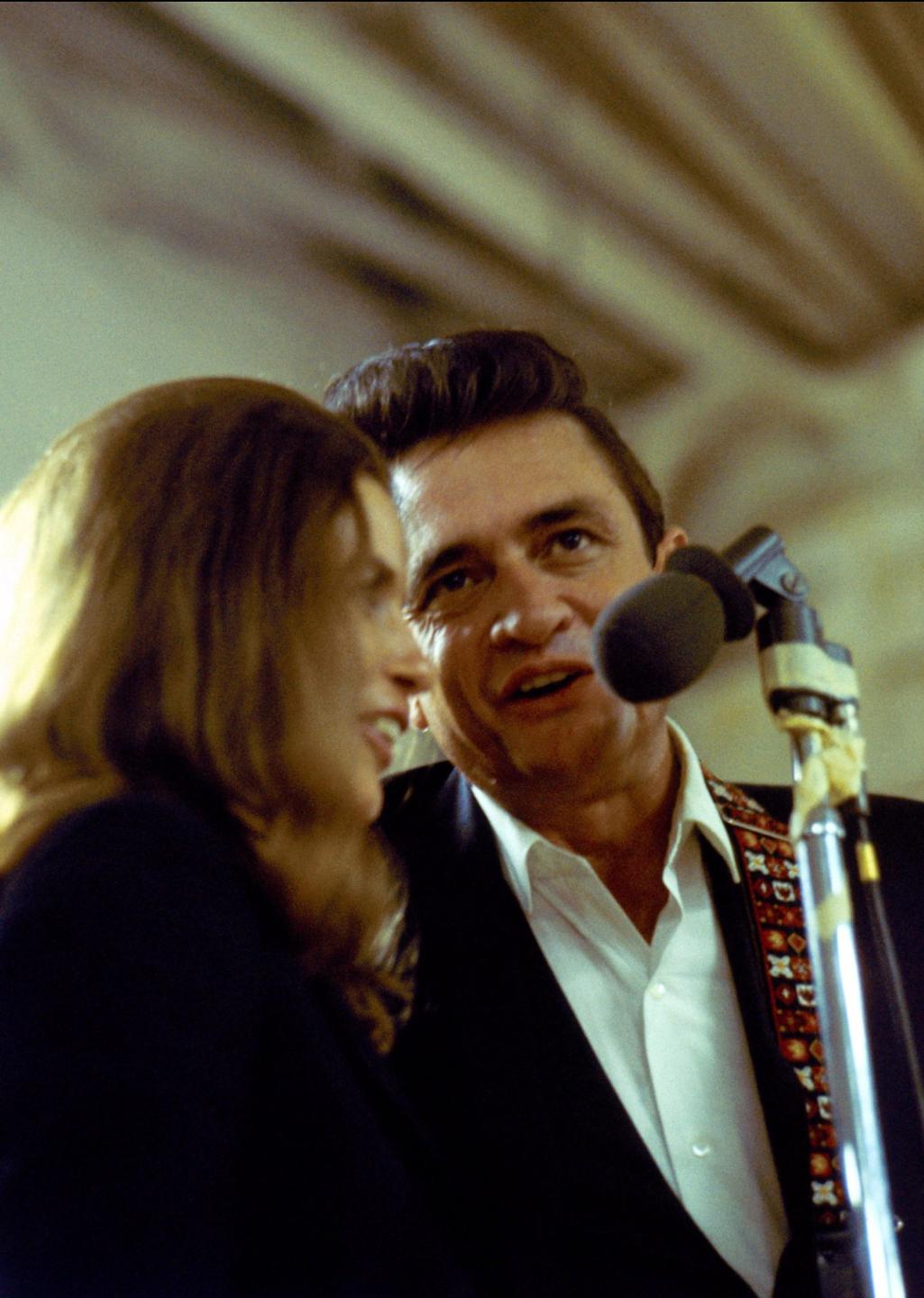
Sixty-five years ago today, on January 1, 1959, Johnny Cash embarked on a journey that would redefine his career and leave an indelible mark on music history. On that New Year’s Day, he performed at the renowned San Quentin State Prison in California, marking the beginning of a significant series of concerts held at correctional facilities throughout the remainder of his life.
Cash, an artist who had experienced arrests but never imprisonment, felt a deep sense of compassion for those who had faced difficult choices, mirroring his own past. It was this empathy that fueled his decision to perform. Among the audience during his New Year’s Day show was Merle Haggard, then an inmate serving time for burglary. Haggard himself credited Cash’s performance with being a pivotal moment that helped turn his life around. He later recalled, “He had the right attitude. He chewed gum, looked arrogant and flipped the bird to the guards — he did everything the prisoners wanted to do. He was a mean mother from the South who was there because he loved us. When he walked away, everyone in that place had become a Johnny Cash fan.”
This profound experience led Cash to perform at numerous other prisons. His commitment culminated in the release of two seminal live albums: Johnny Cash at Folsom Prison in 1968 and Johnny Cash at San Quentin in 1969. The Folsom Prison album featured a live rendition of his iconic song “Folsom Prison Blues,” originally from his debut album With His Hot and Blue Guitar, which soared to become a number-one hit. Similarly, Johnny Cash at San Quentin included two versions of Cash’s title track “San Quentin,” alongside “Folsom Prison Blues” and “A Boy Named Sue.” The latter became Cash’s sole Top 10 single on the Billboard Hot 100 chart.
Beyond his performances, often delivered for free, “The Man in Black” was a dedicated advocate for prisoners’ rights. He tirelessly campaigned and spoke out on behalf of those incarcerated. Cash’s younger brother, Tommy Cash, explained, “He always identified with the underdog. He identified with the prisoners because many of them had served their sentences and had been rehabilitated in some cases but were still kept there the rest of their lives. He felt a great empathy with those people.”
Johnny Cash’s prison concerts were more than just musical events; they were powerful demonstrations of empathy, understanding, and a commitment to social justice, cementing his legacy as an artist who truly connected with the marginalized.
Johnny Cash at San Quentin is available for streaming and purchase on Amazon.
This story was originally written by Gayle Thompson, and revised by Angela Stefano and Annie Zaleski.