
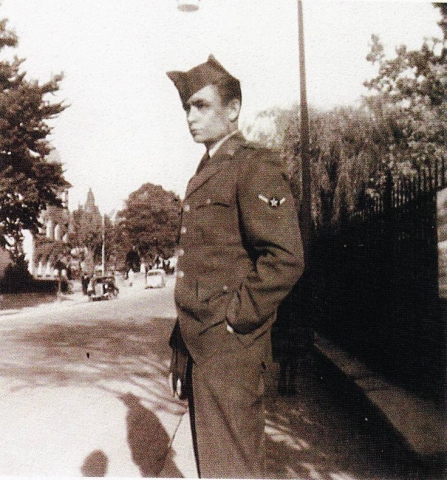
Johnny Cash, widely recognized as the “Man in Black,” stands as a monumental figure in American music. His illustrious career was adorned with numerous accolades, including fifteen Grammy Awards, induction into the Rock and Roll Hall of Fame, and the prestigious Kennedy Center Honors in 1996. Beyond his musical achievements, Cash’s life was deeply shaped by his service in the U.S. Air Force, a period that profoundly influenced his character and artistic output.
Early Life and Humble Beginnings
Born J.R. Cash in 1932, his early life unfolded amidst the economic hardships of a cotton-farming family in Kingsland, Arkansas. The family relocated to the Dyess Colony in Dyess, Arkansas, a government resettlement project established in 1934. This New Deal-era community provided a modest but structured environment for struggling farmers. The Cash family, including young J.R., settled into one of the colony’s five-room farmhouses. It was in Dyess, during his formative years, that J.R. Cash experienced both the simple joys of rural life and profound loss, most notably the death of his brother Jack in a sawmill accident. His early exposure to country music through battery-operated radios, featuring performers from the Grand Ole Opry and the Carter Family, laid the groundwork for his musical journey. Many of his later songs, such as “Five Feet High and Rising,” drew direct inspiration from his experiences in Dyess.
Military Service and the Dawn of a Career
Following his high school graduation in 1950, amidst the backdrop of the Korean War, Cash enlisted in the U.S. Air Force. He completed basic training at Lackland Air Force Base, Texas, and later attended technical training at Brooks Air Force Base, also in Texas, and a radio intercept class at Keesler Air Force Base, Mississippi. His service included a three-year assignment with the 12th Radio Squadron Mobile (USAFSS) in Landsberg am Lech, West Germany, where he worked as a Morse Intercept Operator. During this time, Cash acquired his first guitar and taught himself to play, forming his first band, the Landsberg Barbarians. A significant moment during his service occurred in March 1953 when Cash intercepted a Soviet communique announcing the death of Stalin, reportedly making him the first American to learn of the news. He was honorably discharged as a Staff Sergeant.
Transition to the Recording Studio
Upon his return to Texas and subsequent move to Memphis, Tennessee, Cash transitioned from his job as an appliance salesman to pursuing his musical ambitions. He auditioned for producer Sam Phillips at Sun Records, initially in a gospel style, but it was his rockabilly sound that impressed Phillips. His first recordings at Sun Records in 1955 quickly found success on the country charts. This period also saw the birth of his first daughter, Rosanne, followed by three more daughters. In 1956, Cash was part of the historic jam session that would later be known as the Million Dollar Quartet, alongside Elvis Presley, Carl Perkins, and Jerry Lee Lewis. His first number-one hit, “I Walk the Line,” was also released that year. In 1958, seeking a more lucrative deal, Cash moved to Columbia Records, and the family relocated to Southern California.
The “Airman in Black”: Artistic Evolution and Advocacy
At Columbia Records, Johnny Cash’s career flourished. He began touring and met June Carter, an encounter that would significantly influence his personal life and music. Alongside the burgeoning pressures of his career and personal relationships, Cash grappled with addiction to alcohol and drugs. Despite these challenges, he continued to produce hit songs like “Ring of Fire” and released numerous albums for Columbia. His 1964 album, Bitter Tears: Ballads of the American Indian, was a landmark release, bringing attention to the plight of Native Americans through powerful songwriting. Although later genealogical research disproved any Cherokee ancestry, Cash remained a staunch advocate for Native American causes, inspired by his early life observations of the disparities faced by indigenous communities.
The strain of Cash’s lifestyle and his relationship with June Carter led to his divorce from Vivian Liberto in 1966. He proposed to June Carter numerous times before they married in 1968. The success of The Johnny Cash Show on ABC, which aired from 1969 to 1971 and featured a diverse array of influential guests, further cemented his status. Cash’s commitment to his principles was evident when he rejected Richard Nixon’s request to perform songs denigrating certain groups at the White House, instead choosing to play protest songs, including “The Ballad of Ira Hayes.” His first autobiography, The Man in Black, was published in 1975.
A Voice for Peace: Anti-War Activism
Johnny Cash’s deep-seated opposition to war and his advocacy for peace were integral to his public persona. In 1971, he and June Carter performed for troops in Vietnam, a deeply personal mission for the veteran artist. His music resonated profoundly with soldiers, embodying themes of resilience and honesty. Following this tour, Cash became a vocal anti-war protester. His song “Man in Black” poignantly reflected his feelings about the loss of young lives in conflict, stating, “I wear the black in mourning for the lives that could have been. Each week we lose a hundred fine young men.” He penned another anti-war song, “Drive On”, in protest of the first Iraq War, explaining that the phrase was common among soldiers in Vietnam. Cash’s conviction in non-violence underscored his belief that “The only thing good to come out of a war is a song.”
Enduring Legacy
While the 1980s saw Cash form the successful supergroup The Highwaymen with Kris Kristofferson, Waylon Jennings, and Willie Nelson, he also faced a relapse with addiction. He appeared in the ABC miniseries North & South and published his second novel, The Man in White. Despite being dropped by Columbia Records, Cash found renewed critical acclaim with his 1994 album American Recordings, earning him his ninth Grammy. He continued to appear on television, including Dr. Quinn, Medicine Woman, and lent his voice to The Simpsons. His 1997 album, Unchained, produced by Tom Petty and the Heartbreakers, won another Grammy.
In his later years, Cash battled health issues, including autonomic neuropathy associated with diabetes. Nevertheless, he continued to record, releasing albums that featured powerful renditions of songs like Nine Inch Nails’ “Hurt,” which earned him his twelfth Grammy in 2003. Tragically, his wife June Carter Cash passed away in May 2003. Undeterred, Cash continued recording, completing 60 songs in the following four months. Johnny Cash passed away in September 2003 at the age of 71, and was laid to rest next to his beloved wife at Hendersonville Memory Gardens.
Johnny Cash’s multifaceted career, marked by his unwavering advocacy, profound humility, and extraordinary musical talent, has cemented his place as one of America’s most beloved cultural icons. His numerous hall of fame inductions—including the Nashville Songwriters Hall of Fame (1977), the Country Music Hall of Fame (1980), the Rock and Roll Hall of Fame (1992), GMA’s Gospel Music Hall of Fame (2010), and the Memphis Music Hall of Fame (2013)—attest to his enduring versatility and broad appeal. Together We Served proudly honors his remarkable achievements as an entertainer and his dedicated service in the Armed Forces.
Explore More
Discover the stories of other notable individuals who served in the military by visiting the TogetherWeServed.com blog. You’ll also find a wealth of content including military book reviews, veterans’ service reflections, and insights into famous military units. For veterans seeking to reconnect with former service members, view historic photos, and create a military service plaque, TogetherWeServed.com offers a comprehensive platform.