
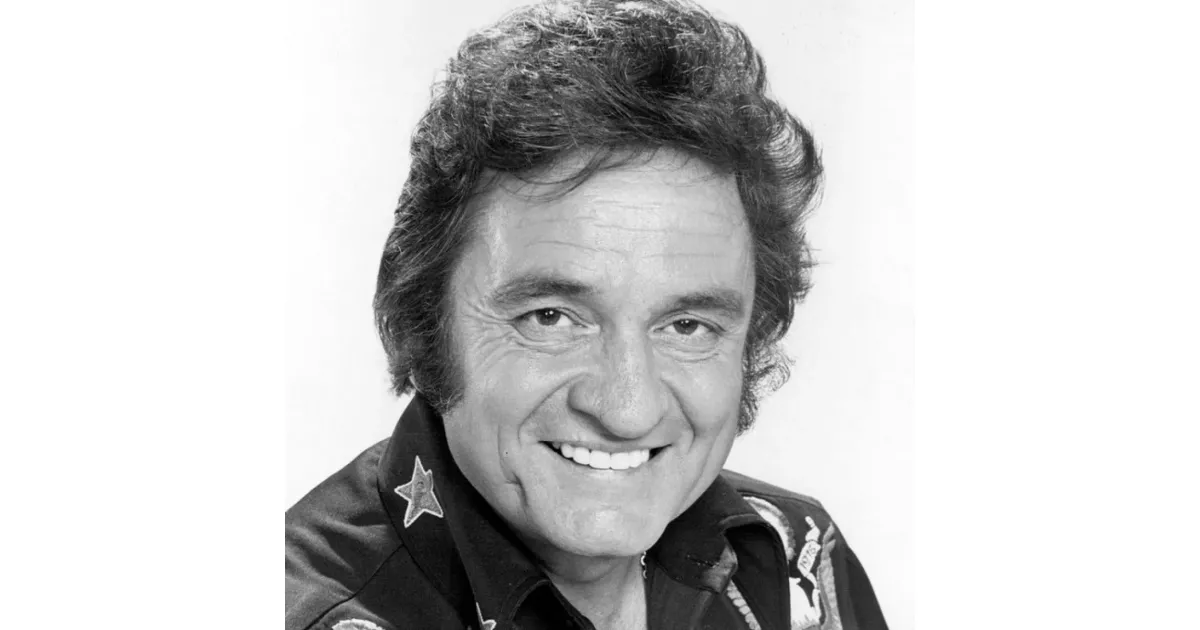
Johnny Cash’s enduring impact on American music is undeniable, a testament to a career that spanned decades and genres. From his raw, authentic sound to his compelling storytelling, Cash carved a unique niche, influencing countless artists and captivating audiences worldwide. His journey, marked by both triumphs and struggles, offers a profound glimpse into the evolution of American music and culture.
Early Career and Sun Records Stardom
Cash’s musical career ignited at Sun Records in Memphis, the same label that launched Elvis Presley. After auditioning for Sam Phillips, Cash, alongside his minimalist band, began releasing music that would soon make waves. His debut single, the double-sided hit “Cry! Cry! Cry!” b/w “Hey Porter,” released in 1955, marked the beginning of his ascent.
Cash quickly became one of Sun Records’ most promising talents. His early country hits, including “I Walk the Line,” “Ballad of a Teenage Queen,” and “Guess Things Happen That Way,” resonated deeply, achieving crossover success on the pop charts and establishing him as a leading figure in country music by the late 1950s. The distinctive rhythm-based sound he cultivated from the outset remained a hallmark of his music throughout his career, further solidified by the addition of drummer W. S. “Fluke” Holland in 1960.
The Columbia Years and Artistic Evolution
In 1958, Cash transitioned to Columbia Records, a move that ushered in a new era of artistic exploration. During this period, he delivered hit singles such as “Don’t Take Your Guns to Town” (1959) and the iconic “Ring of Fire” (1963). Simultaneously, Cash began to focus on developing concept albums, delving into themes that reflected his growing artistic curiosity. Works like Ride This Train (1960), Blood, Sweat and Tears (1962), Bitter Tears: Ballads of the American Indian (1964), and Ballads of the True West (1965) showcased his willingness to tackle diverse subject matter.
Under the guidance of producer Don Law, Cash embraced the burgeoning folk music revival, incorporating cowboy songs, gospel music, spirituals, and socially conscious protest songs into his repertoire. While these new directions sometimes met with resistance from the more traditional country music establishment, they also broadened his appeal and cemented his status as an innovative artist.
Overcoming Adversity and Achieving New Heights
The mid-1960s presented significant personal challenges for Cash, including struggles with prescription drug addiction and the dissolution of his first marriage. However, with the unwavering support of June Carter, a fellow musician and member of the renowned Carter Family, Cash was able to overcome his addiction. Their personal bond blossomed into a musical partnership, leading to several hit duets and culminating in their marriage on March 1, 1968.
This period of personal recovery coincided with a career resurgence. On January 13, 1968, Cash recorded his legendary live album, At Folsom Prison. The album featured a powerful new rendition of “Folsom Prison Blues,” which soared to #1 and reinvigorated his career. The success of At Folsom Prison was followed by the equally impactful 1969 live album, At San Quentin. From this album, “A Boy Named Sue” became Cash’s biggest-selling single, topping the country charts and reaching #2 on the pop charts, earning the Country Music Association’s Single of the Year award in 1969. That same year, Cash was honored as the CMA’s Entertainer of the Year.
A National Icon and Enduring Influence
From 1969 to 1971, Cash hosted The Johnny Cash Show, a highly successful prime-time television variety program. The show not only solidified his position as a national icon but also provided a platform for an eclectic array of musical talents, blending genres and introducing new songwriters to a wide audience. During this era, Cash continued to tour extensively with his renowned road troupe, which included legendary musicians such as Mother Maybelle Carter, the Carter Sisters, Carl Perkins, and the Statler Brothers.
Beyond his music, Cash also ventured into acting, appearing in the feature film A Gunfight (1971) and several made-for-television movies. While his chart success waned in the late 1970s and 1980s, his musical legacy remained strong. In 1985, he reunited with fellow country music titans Waylon Jennings, Willie Nelson, and Kris Kristofferson to record the #1 hit title track for the Highwayman album. This collaboration led to further successful albums and concert tours, underscoring the enduring camaraderie and artistic synergy among these legendary figures.
Johnny Cash’s music transcended genre boundaries, touching upon themes of love, loss, redemption, and the human condition. His distinctive voice, profound lyricism, and unwavering authenticity continue to resonate with audiences, cementing his place as one of the most influential and beloved artists in American music history. His work remains a vital part of the musical landscape, inviting new generations to discover the depth and power of his enduring legacy.
References
- (Original article content)