
Few songs capture romantic nostalgia the way “I Love Paris” does, and no version has done more to cement its place in the American songbook than Frank Sinatra’s classic rendition. Written by the legendary Cole Porter, this song belongs to that golden catalog of oldies music that continues to charm listeners decades after it was first recorded. For English-speaking audiences discovering vintage American and international standards, “I Love Paris” offers a perfect entry point into understanding how mid-century songwriting blended simple, heartfelt lyrics with sweeping melodic charm.
The Origins of “I Love Paris”
“I Love Paris” was penned by Cole Porter, one of the most celebrated American composers of the 20th century, known for his witty lyrics and sophisticated melodies. The song was originally written for the 1953 Broadway musical Can-Can, a production set in the Montmartre district of Paris during the 1890s. Porter’s gift was turning simple, universal emotions into elegant verse, and “I Love Paris” is a prime example: a love letter to a city, wrapped in the guise of a love song for a person.
The lyrics describe Paris across all four seasons — in the springtime, in the fall, in the winter “when it drizzles,” and in the summer “when it sizzles.” This seasonal structure gives the song its gentle, cyclical rhythm, evoking the idea that love, like the city itself, endures through every change of weather and mood. The final twist of the song reveals that the singer’s love for Paris is inseparable from love for a person who is “here” — turning a city ode into a deeply personal declaration.

Frank Sinatra’s Interpretation
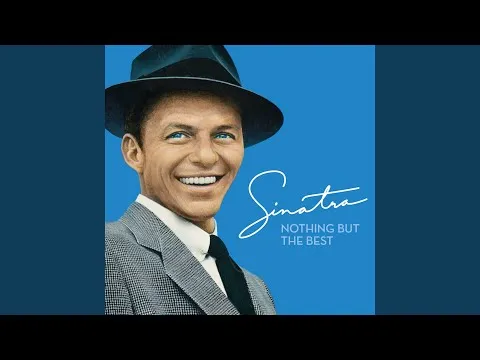
While Cole Porter wrote the song, it was Frank Sinatra who gave it one of its most enduring interpretations, alongside artists like Julio Iglesias and Renato Carosone, each bringing their own cultural flavor to Porter’s composition. Sinatra’s version carries his signature phrasing — smooth, unhurried, and emotionally direct — traits that defined his contribution to what is often called the era of “oldies” or “golden age” American music, roughly spanning the 1940s through the 1960s.
This period produced some of the most beloved standards in American music history, largely because artists like Sinatra treated a song not just as a performance piece but as a vehicle for storytelling. His approach to “I Love Paris” reflects this: rather than simply singing the melody, he interprets the emotional arc of longing and devotion embedded in Porter’s lyrics.
Sinatra’s catalog from this golden era includes many other tracks that remain touchstones of oldies music today, including his most iconic recording, “My Way,” a song about looking back on life with pride and acceptance — themes that resonate with the same reflective, nostalgic spirit found throughout his repertoire.
Why “I Love Paris” Still Resonates
For international listeners exploring vintage American and European musical traditions, “I Love Paris” serves as a cultural bridge. It reflects a mid-20th-century fascination with Paris as a symbol of romance, art, and sophistication — a theme that recurs throughout American popular music of that era. The song’s translation into multiple languages, including French, Italian, Russian, and Turkish, further demonstrates its universal emotional appeal, transcending borders in the same way the city of Paris itself has long captured global imagination.
Part of what makes this song — and oldies music broadly — so valuable to modern audiences is its simplicity paired with emotional depth. There are no elaborate production tricks, just a clear melody and honest lyrics, allowing the singer’s voice and interpretation to carry the emotional weight. This is a hallmark of the pre-1975 golden era of music: substance delivered through craftsmanship rather than spectacle.
Conclusion
“I Love Paris” stands as a shining example of the artistry that defined mid-century American songwriting, uniting Cole Porter’s compositional genius with Frank Sinatra’s unmistakable vocal delivery. It captures a timeless truth about love — for places, for people, for moments — expressed through simple, evocative verse. As part of the broader tradition of oldies music, this song reminds listeners why these classics endure: they speak to universal emotions in a way that feels as fresh today as it did generations ago. For anyone eager to explore more of this golden era, there is a rich world of melodies waiting to be rediscovered — one timeless song at a time.