
Teaching your dog to walk nicely on the lead is one of the most rewarding skills you can develop together — and one of the most practical. Whether you’re heading to the park, navigating a busy street, or simply enjoying a quiet evening stroll, loose lead walking transforms the experience for both of you. The core principle is straightforward: your dog needs to learn that not pulling is the fastest route to wherever they want to go. It takes time, patience, and above all, consistency — but the payoff is a calmer, more enjoyable walk every single day.
Many dog owners struggle with a dog that constantly strains against the lead, turning what should be a pleasant outing into an exhausting tug-of-war. The good news is that with the right approach to dog training, even the most enthusiastic pullers can learn to walk calmly at your side.
Understanding Why Dogs Pull on the Lead
Before diving into the training steps, it helps to understand why dogs pull in the first place. Dogs naturally walk faster than humans, and the world around them — full of exciting smells, sights, and sounds — is endlessly stimulating. When a dog pulls and still moves forward, they quickly learn that pulling works. The key to fixing this behavior is breaking that association entirely, so your dog discovers that pulling actually slows things down rather than speeding them up.
Step-by-Step: Teaching Loose Lead Walking
Consistent practice is the foundation of successful lead training. Follow these steps, keeping sessions short and positive so your dog stays engaged rather than frustrated.
Step 1: Start still and establish attention. Begin by standing quietly with your dog on their lead, giving them the full length of it. Don’t tug, call out, or try to redirect them immediately. The moment your dog glances back at you or shows any sign of paying attention — even briefly — praise them warmly and offer a treat. You’re teaching them that choosing to focus on you brings rewards.
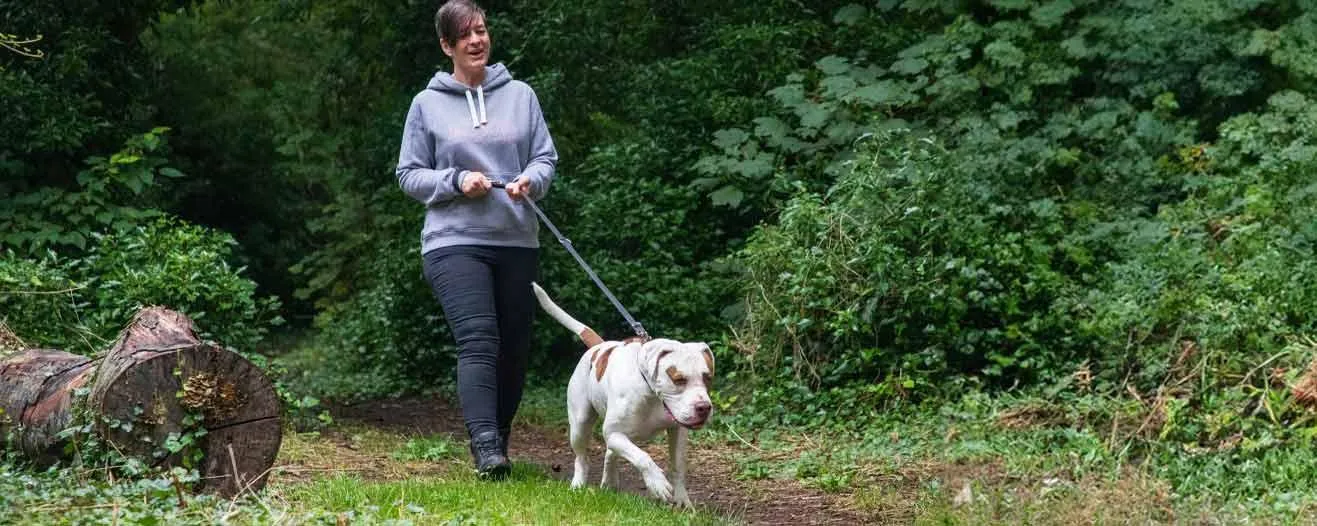
Step 2: Move off with encouragement. Once you have your dog’s attention, begin walking. Use your voice and small, high-value treats to encourage them to stay close to your side. Any time your dog is walking on a loose lead — meaning the lead hangs in a relaxed arc rather than pulling taut — reward that behavior immediately. Timing matters: the reward needs to come in the moment your dog is doing the right thing.
Step 3: Stop the moment pulling begins. If your dog starts to move too far ahead and the lead is about to go tight, stop completely. Stand still and quiet. Don’t pull back, don’t call out repeatedly — just wait. The moment your dog turns toward you and moves closer, reward them and start walking again. This stopping and restarting must happen every single time your dog pulls. Consistency here is non-negotiable; even one instance of allowing pulling to work will set the training back.
Step 4: Practice in short, regular sessions. Long training sessions can exhaust both you and your dog. Aim for several short sessions each day rather than one extended effort. Five to ten minutes of focused loose lead practice is far more effective than an hour of inconsistent training.
Step 5: Introduce distractions gradually. Once your dog is walking well in a quiet environment, it’s time to raise the challenge. Place something on the floor that your dog finds appealing — a favorite toy, for example. Walk your dog toward it on the lead. If they lunge forward and pull, stop immediately and call them back to you. When they return and walk calmly on a loose lead, allow them to reach the toy as their reward. This teaches a powerful lesson: pulling actually delays getting to the good stuff, while walking nicely speeds it up.
Making Yourself the Most Interesting Thing on the Walk
One of the most effective dog training strategies for lead work is making the area around you genuinely exciting. Dogs are social, curious animals — if being near you means praise, treats, playful talk, and positive attention, they have every reason to stay close rather than race ahead. Vary the treats you use to keep your dog engaged, and don’t be afraid to sound enthusiastic. A cheerful voice and genuine encouragement go a long way toward reinforcing the behavior you want.
Avoid the common mistake of relying solely on corrections. Stopping when your dog pulls is necessary, but it’s the rewards for good behavior that truly accelerate learning. The more often your dog experiences the satisfaction of loose lead walking leading to treats, praise, and forward movement, the more quickly the habit takes root.
When to Seek Extra Support
Some dogs — particularly those with strong prey drives, high energy levels, or a history of never having been taught lead manners — may need additional help. If you’re finding progress slow or your dog’s pulling is causing physical strain, consulting a qualified dog trainer can make a significant difference. A good trainer will assess your specific dog’s needs and tailor a training plan accordingly, often combining loose lead work with broader impulse control exercises.
It’s also worth considering the equipment you use. While no piece of equipment replaces proper training, well-fitted harnesses designed to discourage pulling can take some pressure off during the learning phase — particularly for larger, stronger breeds.
Conclusion
Teaching your dog to walk nicely on the lead isn’t about dominance or control — it’s about communication and mutual respect. By consistently rewarding your dog for choosing to walk close to you and stopping the moment pulling begins, you teach them that the lead is a tool for partnership, not a battle of wills. The process requires patience, but every walk is an opportunity to practice, and incremental progress adds up quickly.
With regular short sessions, a positive attitude, and the right rewards, most dogs can learn reliable loose lead walking within a matter of weeks. Start today, stay consistent, and look forward to walks that are genuinely enjoyable for both you and your dog. If you’d like further guidance, consider reaching out to a certified dog trainer or exploring additional resources on positive reinforcement training techniques.