
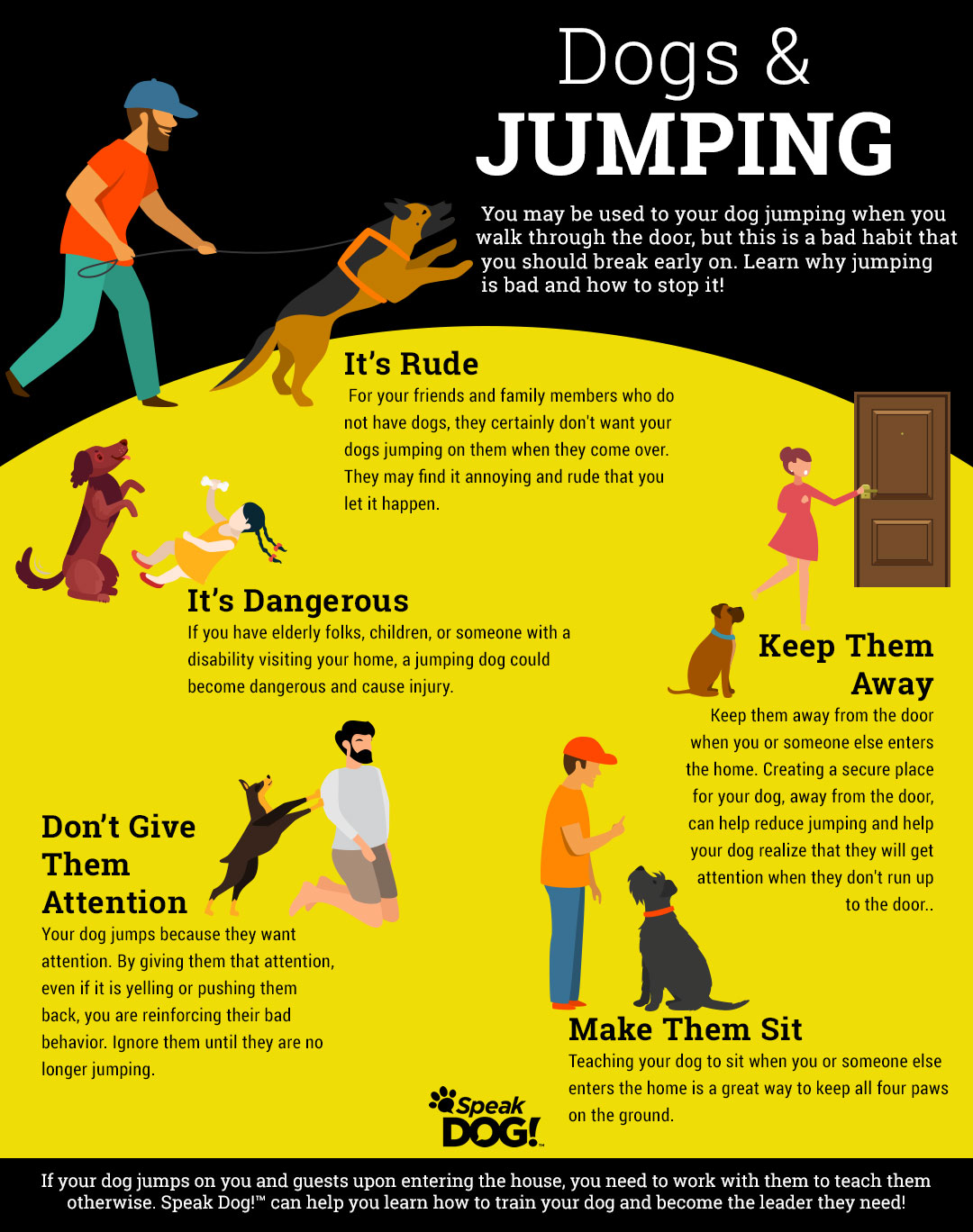
Dogs jump for a variety of reasons, including seeking attention, expressing excitement, or simply not knowing what else to do when they greet someone. While a puppy’s jumping may be perceived as cute, this behavior can become a significant nuisance as the dog matures. Allowing a dog to jump on people can also lead to dangerous situations, resulting in scratches, bruises, or even serious injury to children or frail adults. Addressing this common behavior problem requires a combination of effective management strategies and consistent training.
Managing the Situation to Prevent Jumping
Management involves controlling your dog’s environment to prevent them from practicing the unwanted jumping behavior. Implementing management techniques is crucial while your dog is learning and being trained. For instance, when expecting visitors, you can manage your dog’s jumping by:
- Placing your dog in their crate.
- Confining them to a separate room.
- Keeping your dog on a leash and asking them to sit as guests enter, rewarding them for good behavior.
These methods ensure that your dog does not have the opportunity to jump while they are being taught more appropriate greeting manners.
Training Your Dog to Stay Grounded
The core of training your dog not to jump is to ensure they receive no attention for jumping. When your dog jumps on you or anyone else, turn your back. Only offer praise and petting when all four paws are firmly on the ground.
A highly effective training method is to teach your dog an incompatible behavior, such as sitting. A dog cannot simultaneously jump up and sit. If your dog is not sitting when greeting someone, they should receive no attention.
Consistency is paramount in this training process. Every member of your household must adhere to the training program without exception. Allowing your dog to jump in certain situations while prohibiting it in others will confuse them and hinder progress. Train dog not to jump on strangers.
Reinforcing Desired Behaviors
Beyond preventing jumping, actively reinforcing polite greetings is essential. When your dog approaches someone with all four paws on the floor, offer calm praise and gentle petting. This positive reinforcement teaches your dog that calm, grounded behavior is what earns them attention and affection.
Consider using a release cue, such as “okay” or “free,” after your dog has successfully performed a sit command for a visitor. This teaches them when it is appropriate to approach the guest. If your dog struggles with jumping, you might need to gradually reintroduce them to greetings, starting with very brief interactions and gradually increasing the duration as they show improvement. How to keep your dog from jumping on you.
Addressing Excitement-Related Jumping
For dogs who jump out of sheer excitement, managing their arousal levels is key. Before encountering triggers that might cause excitement, such as visitors or going outside, engage your dog in a calming activity. This could include a short training session focusing on simple commands or a brief, low-intensity game. The goal is to help your dog enter situations in a calmer state. How do I stop my puppy from jumping on me.
Conclusion
Teaching your dog not to jump on people is an achievable goal that significantly enhances the safety and enjoyment of interactions with your pet. By consistently applying management techniques and positive reinforcement training, you can help your dog develop polite greeting manners. Remember that patience and uniformity among all household members are critical for success. If you are facing persistent challenges with your dog’s jumping behavior, consider seeking guidance from a professional dog trainer to develop a personalized training plan. How to stop puppy jumping on couch.