
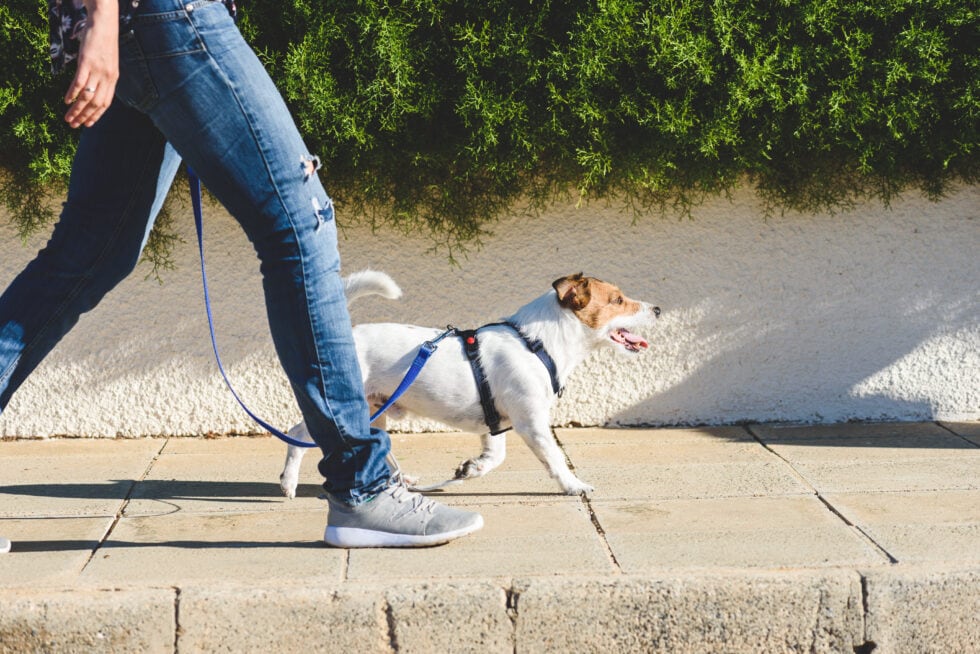
Leash pulling can turn a pleasant dog walk into a physically demanding and frustrating experience. Many misconceptions surround why dogs pull, but understanding the root causes is the first step toward a more enjoyable walk for both you and your canine companion. This guide delves into the reasons behind leash pulling and offers practical strategies to help your dog walk politely by your side.
Why Do Dogs Pull on the Leash?
A primary reason dogs pull is their natural inclination to move at a faster pace than humans. Dogs don’t inherently understand our slower gait, and to maintain a relaxed leash, they must alter their natural movement. This effort to keep the leash slack is not something that comes automatically to them.
Walks offer a vital opportunity for dogs to engage their senses, particularly through sniffing. The world is a rich tapestry of scents, sounds, and sights that dogs explore and learn from. Sniffing provides significant mental enrichment, a form of brain exercise that can be more satisfying for a dog than the physical act of walking itself. The leash, tethered to a slower-moving human, can feel like a barrier to these important sensory explorations. In essence, dogs have their own “dog business” to attend to, and they may feel we are holding them back.
Addressing Harness Myths
A common myth suggests that harnesses encourage or teach pulling. While a harness might be more comfortable to pull against than a collar, as it avoids pressure on the neck, harnesses are not the cause of pulling. In fact, harnesses are often recommended during loose-leash walking training precisely because they protect the sensitive neck structures. Ultimately, dogs can be taught to walk nicely regardless of the equipment used.
Effective Strategies to Stop Leash Pulling
To reduce leash pulling, consider these effective techniques:
- Use a Longer Leash: Standard leashes are often 6 feet long, but opting for a 10-foot or even a 15-foot leash can make a significant difference. A longer leash allows your dog to move at their natural, quicker pace and explore more freely within the boundaries of the leash, which can greatly enhance the enjoyment of the walk for both of you.
- Vary Your Walking Route: If your dog is pulling to reach specific environmental stimuli such as people, other dogs, or wildlife, try changing your walking environment. Modifying the surroundings can significantly reduce your dog’s intensity and lead to a much calmer walk. This simple adjustment can yield substantial positive results.
- Teach Proper Walking Etiquette: If you’re unhappy with how your dog walks, you need to communicate your expectations clearly. This doesn’t involve yelling or yanking the leash out of frustration. Instead, focus on teaching your dog how you want them to walk. Dogs are not born with an innate “heel” command, so it’s your responsibility to teach them a different way to walk. A useful approach is to teach your dog to walk with slack in the leash. This allows them to explore and even walk slightly ahead of you, as long as they aren’t creating tension on the leash. This way, your dog’s needs for exploration are met, while you avoid physical discomfort. Consider implementing a specific cue for this type of walking, such as “with me,” to help your dog understand when to stay close and pay attention, especially near distractions like busy roads. [how to get your dog to stop pulling leash]
Finding Balance on Your Walks
Achieving balance is key to a successful dog walk. Both owner and dog should have their needs met. Expecting a dog to maintain a rigid heel position with constant eye contact might fulfill exercise requirements but eliminates opportunities for sniffing and exploration. Conversely, allowing a dog to pull in any direction can leave you feeling frustrated, physically, and mentally drained. It’s essential to find a middle ground that respects both your needs and your dog’s.
Here are ways to ensure your dog can explore while still maintaining a manageable walk:
- Utilize a long line for “sniffy walks” in open fields or on trails.
- Teach your dog distinct cues for focused walking (“with me”) and freedom to explore (“break”). The “break” cue signals that your dog can explore at their leisure, while “with me” indicates it’s time to stay close and attentive. [how to get your dog to stop pulling]
By understanding the motivations behind leash pulling and implementing consistent training strategies, you can transform your walks into a more harmonious and enjoyable experience for everyone involved. Remember that patience and positive reinforcement are crucial elements in teaching your dog to walk politely by your side.