
Walking your dog should be a pleasant experience, not a tug-of-war. The “Heel” command is a game-changer for improving leash manners, ensuring safety, and fostering better communication between you and your furry companion. This command teaches your dog to walk closely by your side—typically on your left—with their head and shoulder aligned with your hip. Whether you’re strolling through a busy park or navigating a quiet neighborhood, mastering “Heel” will make your walks more enjoyable and controlled.
What Does the “Heel” Command Mean?
The “Heel” command is a specific type of controlled walking where your dog stays within your periphery, usually on your left side. When given the cue, your dog should come to your side and maintain a consistent position as you walk together. The ideal heel position allows for a 6-inch distance between you and your dog, though slight variations—such as a few inches ahead or behind—are acceptable as long as your movements remain synchronized.
Why Teach Your Dog to Heel?
Teaching your dog the “Heel” command offers numerous benefits that go beyond just improving leash manners:
- Enhances Self-Control: The command helps your dog manage impulses, making their behavior more predictable in various situations.
- Stops Leash-Pulling: A dog that walks calmly beside you is less likely to pull, making walks more comfortable for both of you.
- Enables Off-Leash Walking: Once mastered, the heel position allows your dog to walk off-leash while staying close and responsive.
- Serves as an Emergency Recall: In dangerous situations, the “Heel” command can act as an alternative to recall, bringing your dog back to your side quickly.
- Provides Mental Stimulation: Learning new commands like “Heel” engages your dog’s brain, fostering neural connections and keeping them mentally sharp.
Effective Techniques to Teach the “Heel” Command
Positive reinforcement is key to successfully teaching your dog to heel. Below are three proven techniques, each designed to encourage your dog to stay by your side willingly and consistently.
1. Clicker Training for Puppies
Clicker training is a popular and effective method for teaching puppies the “Heel” command. Here’s how to do it:
- Position your puppy on your left side while holding a clicker in your right hand.
- Give the “Sit” command and wait for your puppy to sit calmly beside you.
- Click the clicker to mark the desired behavior and immediately offer a treat.
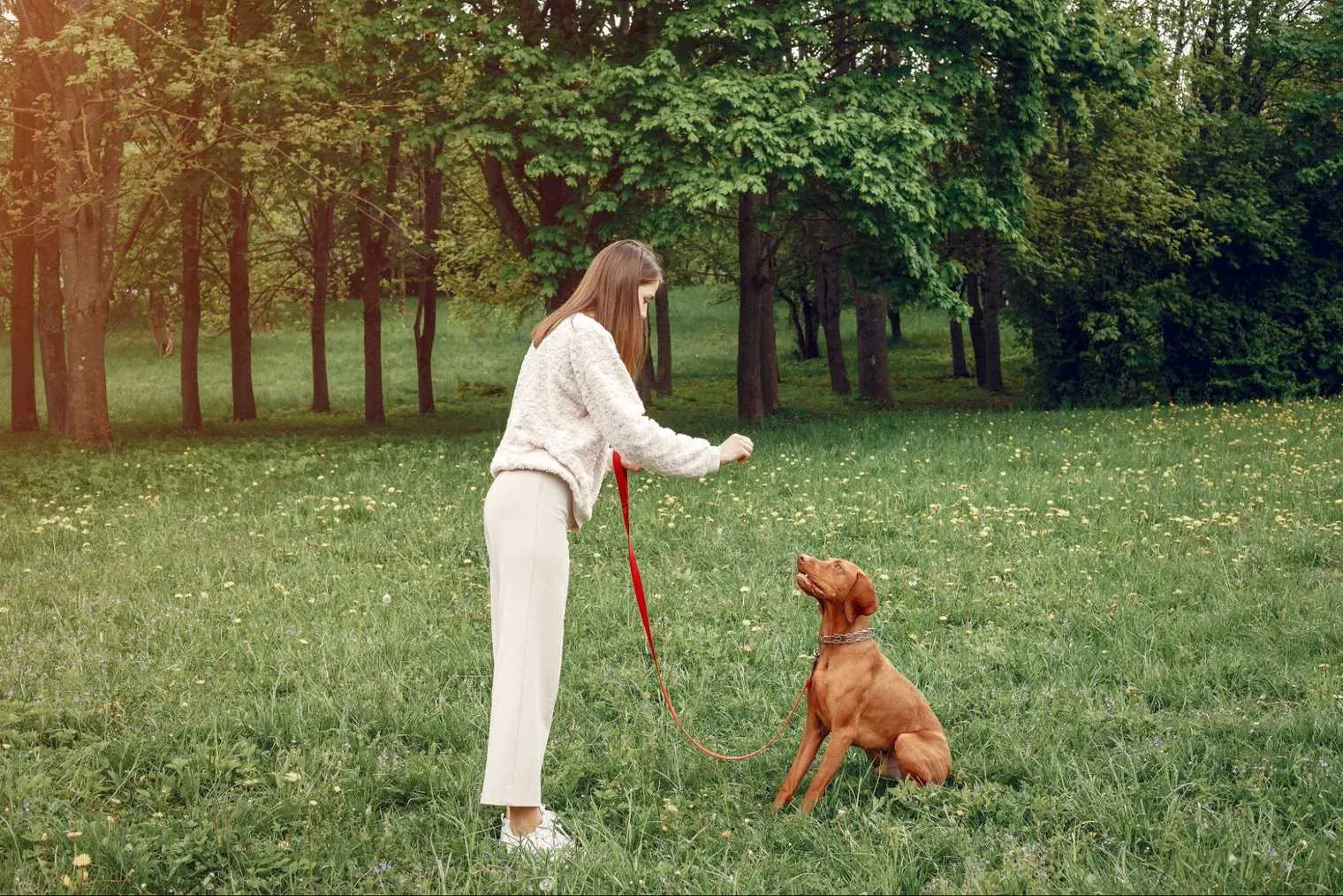
- Hold another treat in your hand and lure your puppy into walking while saying, “Heel!”
- Keep the treat close to your body so your puppy follows alongside you. After a few steps, click and reward them.
- Gradually reduce the lure, encouraging your puppy to walk beside you without the treat. Slowly increase the distance before clicking and rewarding.
2. The Wall Method
The wall method is ideal for dogs that need a little extra guidance to stay in the heel position. Here’s how to implement it:
- Choose a distraction-free area with a wall or fence.
- Position your dog between you and the wall, then ask them to sit.
- Give the “Heel” command and start walking along the wall. Your dog will naturally follow due to the barrier.
- After a few steps, praise and reward your dog for staying in position.
- Practice daily in short sessions, gradually increasing the distance.
- Once your dog consistently follows the command, move away from the wall and practice in open spaces.

3. Off-Leash Heel Training
For advanced training, you can teach your dog to heel without a leash. This method requires a safe, enclosed space:
- Start in a spacious but secure area, such as a fenced yard. Consider using a long leash for safety.
- Position your puppy to sit on your left side, facing forward.
- Hold a treat in your left hand and give the “Heel” command. Lure your dog into walking by keeping the treat near their nose.
- Stop after a few steps and encourage your dog to sit using a treat in your right hand. Praise and repeat this sequence.
- Gradually increase the pace and distance as your dog becomes more confident.
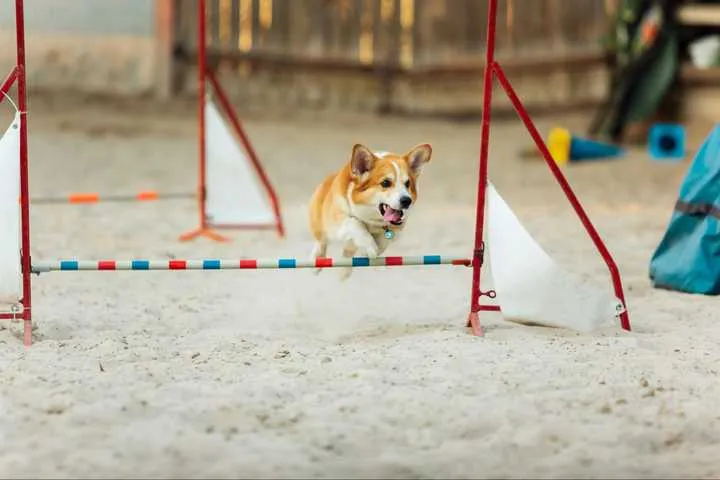
 A dog practicing off-leash heel training in a controlled environment
Choosing the Right Side for Heel Training
Traditionally, dogs are trained to heel on the left side. This convention stems from historical practices in hunting and military training, where handlers used their dominant (usually right) hand to manage tools or weapons. Today, this norm persists in professional dog training and competitions, where consistency is key.
However, if you don’t plan to participate in competitions or work with a professional trainer, you can choose the side that feels most natural for you and your dog. The goal is to ensure comfort and effectiveness during walks, especially in busy areas where positioning your dog on the left can prevent collisions with passersby.
The Importance of a Loose Leash
While the “Heel” command is often taught on a leash, the ultimate goal for many owners is to achieve the same behavior off-leash. A loose leash walk allows your dog to explore and sniff their surroundings, providing essential mental and sensory stimulation. However, always ensure the environment is safe and that you comply with local leash laws.
Proofing the “Heel” Command
Consistency is crucial for reinforcing the “Heel” command. To proof the training, practice in various environments—such as your backyard, a park, or a training class—with increasing levels of distraction. The goal is to ensure your dog responds reliably to the command, regardless of the setting. This step is especially important for using “Heel” as an emergency recall in potentially dangerous situations.
Essential Training Tools
To teach the “Heel” command effectively, gather the following tools in advance:
- Dog treats (high-value rewards work best)
- A clicker (to mark desired behavior)
- A leash (standard or long, depending on the training stage)
- A suitable training location (distraction-free for beginners)
- Patience and determination (consistency is key to success)
 A collection of training tools including a clicker, leash, and treats
When to Start Heel Training
You can begin teaching the “Heel” command as early as 8–10 weeks of age. Puppies at this stage are eager to learn and explore, making it an ideal time to introduce basic obedience commands. Starting early helps establish good walking habits, ensuring your puppy grows into a well-behaved adult dog.
Wrapping Up
While heel training isn’t mandatory, it offers invaluable benefits for both you and your dog. From improving leash manners to enhancing safety during walks, the “Heel” command is a versatile tool for managing your dog’s behavior. Choose a technique that suits your dog’s temperament and your training goals, and remember to stay consistent, patient, and positive. With time and practice, your dog will master the “Heel” command, making every walk a enjoyable experience.