
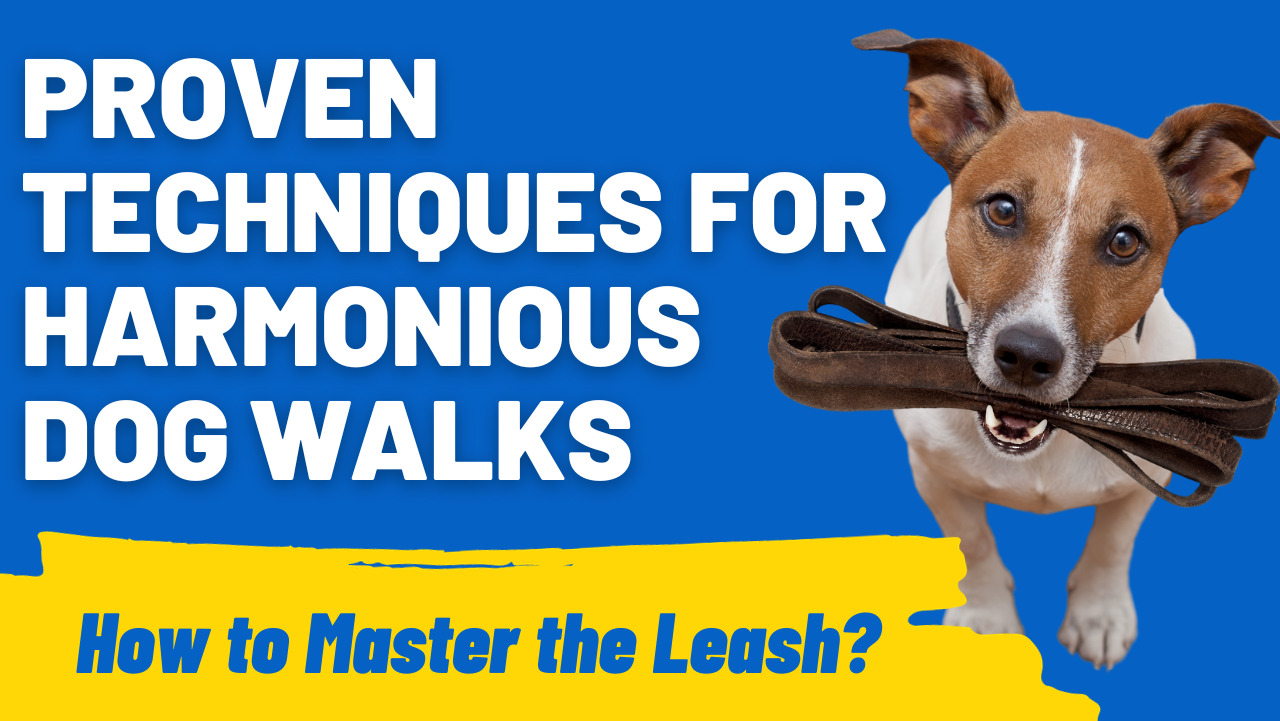
When your dog pulls while walking on leash, it can be frustrating and challenging for both of you! Fortunately, through loose leash dog training and positive reinforcement techniques—and with plenty of patience—you can teach your dog to want to walk by your side instead of dragging you down the street.
Invest in Proper Dog Training Equipment
There are many types of training tools available for teaching your dog not to pull. It is highly recommended to avoid the use of aversive training collars such as choke chains, prong collars, or shock collars. These types of collars are often used for “corrections,” also known as positive punishment, by inflicting pain any time the dog pulls, lunges, barks, or performs an undesired behavior.
These types of training tools require the dog to “fail” first and get punished for their “mistake,” which does not teach them what to do to be successful. Furthermore, aversive methods can damage your relationship with your dog and are known for increasing fear and aggression. What should be a pleasurable and rewarding experience for the dog turns into a scary, stressful, and painful one. Remember, dog training should be fun for both you and your pet!
Instead, try using training equipment that prevents your dog from pulling on leash without causing pain. Tools such as front-clipping harnesses (like the Sense-ation, Freedom, or Easy Walk models) cause your dog to turn back and look at you when they reach the end of the leash. This encourages “check-ins” and discourages pulling. Using proper training equipment can reduce pulling by 98%—the other 2% must be taught through consistent practice.
Practice Effective Loose Leash Walking Exercises
To achieve a perfect walk, you need to implement specific dog training exercises that reward the behaviors you want to see.
- Attention Exercise: Reward your dog for checking in with you and giving you eye contact voluntarily. If they aren’t offering eye contact, make an exciting sound to get their attention. Reward them for looking at you, orienting towards you, or even just an ear flick at first.
- Red Light/Green Light Exercise: Place a small pile of treats about 4-5 feet away from you and your dog, where they can’t get to it on leash. Wait until there is no tension on the leash and then move forward toward the treats. If your dog pulls and the leash is tight (Red Light), stop and wait for them to release the tension. Once the leash is loose (Green Light), start the game again. The goal is to reach the treats on a completely loose leash.
- Combine Attention with Movement: Once your dog understands the Red Light/Green Light concept, take the training out on the road. You will no longer need a pile of treats at the end; instead, you will reward your dog for making eye contact with you while walking. If your dog pulls, stop and wait for them to release the pressure. Then continue walking—the reward is the continuation of the walk itself.
- Enroll in Professional Classes: Sometimes, expert guidance is the best way to see results. Consider enrolling your pet in a basic obedience class or a specialized loose leash walking workshop to hone these skills in a controlled environment.
Conclusion and Training Philosophy
Mastering loose leash dog training is a journey that strengthens the bond between you and your companion. By focusing on positive reinforcement rather than punishment, you create a learning environment based on trust and clear communication. Training your pet using these behavioral science concepts will not only help them learn new behaviors more quickly but will also ensure that your daily walks become the highlight of your day.
If you are struggling with pulling or other behavioral issues, don’t hesitate to seek professional help. Many animal welfare organizations and training centers offer resources and schedules for classes designed to help you and your dog succeed together.
References
- San Diego Humane Society. (2024). Training Your Dog to Walk on a Loose Leash.
- Preventive Vet. (2023). Dog Training Aversives: Why to Avoid Them.
- Association of Professional Dog Trainers (APDT). Positive Reinforcement Training Guidelines.
Để dùng được toàn bộ chức năng của tất cả các ứng dụng, hãy bật chế độ Hoạt động trên Các ứng dụng Gemini.