
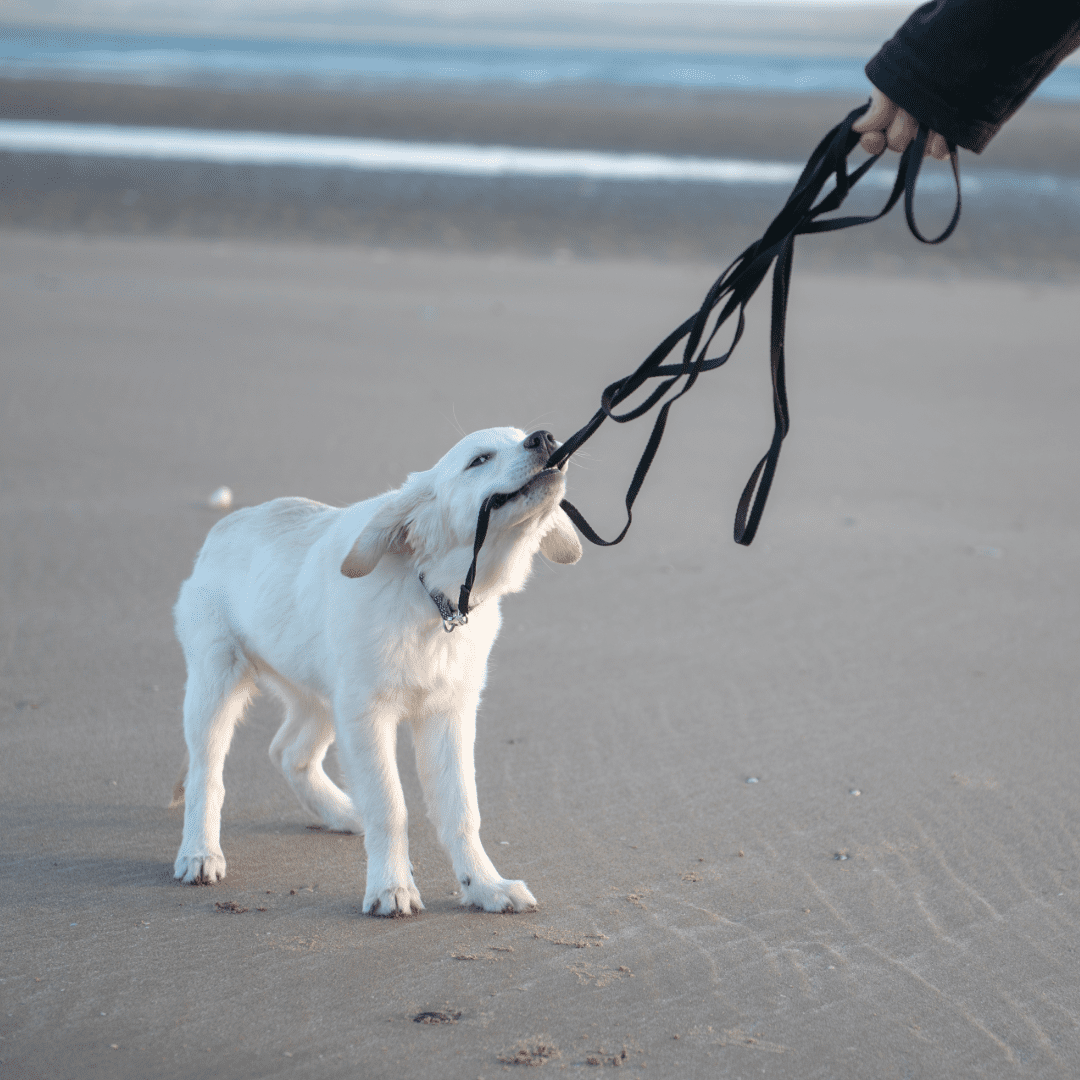
Convincing your dog that it’s time to head outside for a productive bathroom break is often a challenge in itself. However, once you are finally out the door, dealing with a dog that constantly tugs, bites, or “plays” with the leash can turn a relaxing stroll into a frustrating battle. This behavior—commonly referred to as leash biting—is a frequent phase for puppies, but it can also manifest in adult dogs at any stage of life.
While it may look like simple misbehavior or a lack of discipline, leash biting is usually a symptom of underlying issues. Often, it stems from a dog feeling frustrated, overstimulated, or simply not understanding the mechanics of leash walking. Whether you have a young, excitable puppy or an older dog who has picked up a bad habit, this behavior can be corrected through consistent training and a better understanding of canine psychology.
Why Dogs Bite the Leash While Walking
To effectively stop your dog from mouthing the leash, you must first identify the root cause of the action. Dogs rarely do this without a reason; it is usually a form of communication or an outlet for energy.
One of the most common reasons for this behavior is boredom or a lack of mental enrichment. For many dogs, the leash is a dangling object that looks remarkably like a toy. If they aren’t receiving enough engagement during the walk, they may bite the leash to grab your attention and initiate a game of tug-of-war.
In other cases, the issue is a lack of education. Many dogs simply do not understand what a leash represents or how to perform a proper “loose leash walk.” When expectations are set too high without proper training, the dog may react to the physical restraint by biting at the source of their confusion. Furthermore, in highly arousing or “busy” environments, a dog might bite the leash out of pure frustration because they are being held back from something they want to investigate.
Reward the Behavior You Want
The most effective way to eliminate leash biting is to focus on positive reinforcement. Instead of waiting for the bad behavior to happen and then reacting, you should proactively reward the behaviors you want to see.
Before you even step outside, ensure you are equipped with high-value treats. As soon as the leash is on, start praising and rewarding your dog for remaining calm. Throughout the walk, look for “wins” to reinforce:
- Staying close: Give a treat when your dog walks by your side rather than pulling ahead.
- Checking in: Reward your dog every time they look up at you to “check in.”
- Appropriate sniffing: Sniffing is a naturally calming activity for dogs. Encouraging your dog to stop and sniff the environment provides mental stimulation and reduces the urge to act out.
By frequently reinforcing these positive actions, you create a foundation for successful leash walking and make the act of biting the leash much less appealing compared to the rewards they get for walking nicely.
Offering Alternative Behaviors
Some dogs, particularly certain breeds with high “mouthiness,” have a natural drive to carry things. For these dogs, the leash is simply the most convenient object to grab.
If your dog falls into this category, a simple solution is to provide a “job” for their mouth. Carrying a ball or a favorite toy during the walk can satisfy their oral fixation and prevent them from redirected their energy toward the leash. For those who specifically love to tug, bring a dedicated tug toy along.
Integrating short, controlled play sessions with a toy as a reward for good walking can channel that high energy into a productive outlet. This teaches the dog that there is a time and place for tugging, and the leash is not the appropriate tool for it.
Mastering Leash Handling Skills
Sometimes, the way we handle the leash can accidentally trigger a biting response. If a leash is held too tight or is constantly dangled in front of a dog’s face, it can mimic the movement of a lure or prey, enticing them to pounce.
Improve your leash handling by keeping the line loose whenever possible and positioned behind the dog’s head or to the side. When a dog feels a sudden tension or “snap” on the leash, their natural instinct may be to spin around and bite it out of frustration. By maintaining a loose lead and rewarding your dog for staying in the “sweet spot” next to you, you minimize the physical triggers that lead to biting.
Reducing Conflict and Building Success
The goal of training should be to reduce conflict rather than escalate it. Punishing a dog for tugging on the leash often increases their frustration, leading to more intense biting. Instead, focus on being more interesting than the leash.
Proactively engage your dog before they have a chance to get bored or frustrated. If you know certain areas—like a busy park or a specific street corner—cause your dog to act out, avoid those high-stress environments until their training is more solid. With patience and consistent rewards, your dog will eventually learn that walking calmly by your side is the most rewarding part of their day.
References
- American Kennel Club (AKC): Training Tips for Loose Leash Walking.
- Understanding Canine Enrichment and Boredom, AKC Expert Advice.
- Positive Reinforcement and Operant Conditioning in Dog Training.