
When my family moved from Nashville to New York City, our beagle rescue, Phoenix, completely fell apart. The quiet, fenced yard he’d always known was suddenly replaced by Brooklyn’s relentless streets — and every walk turned into a battle, with Phoenix yanking us across the sidewalk like we were ship anchors. A local trainer quickly identified the problem: insecurity triggered by a major life transition. Her prescription wasn’t complicated, but it was precise — three targeted changes to his gear, backed by a broader philosophy of building predictable routines.
Those changes worked almost immediately. And after consulting two additional certified dog trainers, a veterinarian, and a pets writer, I’ve put together a practical guide on what tools and habits genuinely help anxious, reactive, or strong-pulling dogs feel safer — and behave better.
One important caveat first: what works for one dog may not work for another. If your dog’s behavior concerns you, always check in with your vet or a certified trainer before making changes.
Get the Harness Fit Right
If your dog pulls and you’re still using a collar, a harness is a worthwhile upgrade. Trainers consistently recommend harnesses because they distribute pressure more evenly, protect the neck, and give you better steering control. But even if your dog already wears a harness, fit is everything — and it’s the first thing worth reviewing.
A harness that’s too large will shift around during movement, interfere with your dog’s natural gait, and undermine your ability to communicate through the leash. One that’s too tight restricts movement, chafes the skin, and can cause joint problems over time. To check the fit: confirm the straps sit above your dog’s shoulder blades so they can take a full stride, and verify you can slide two fingers comfortably between the harness and your dog’s belly.
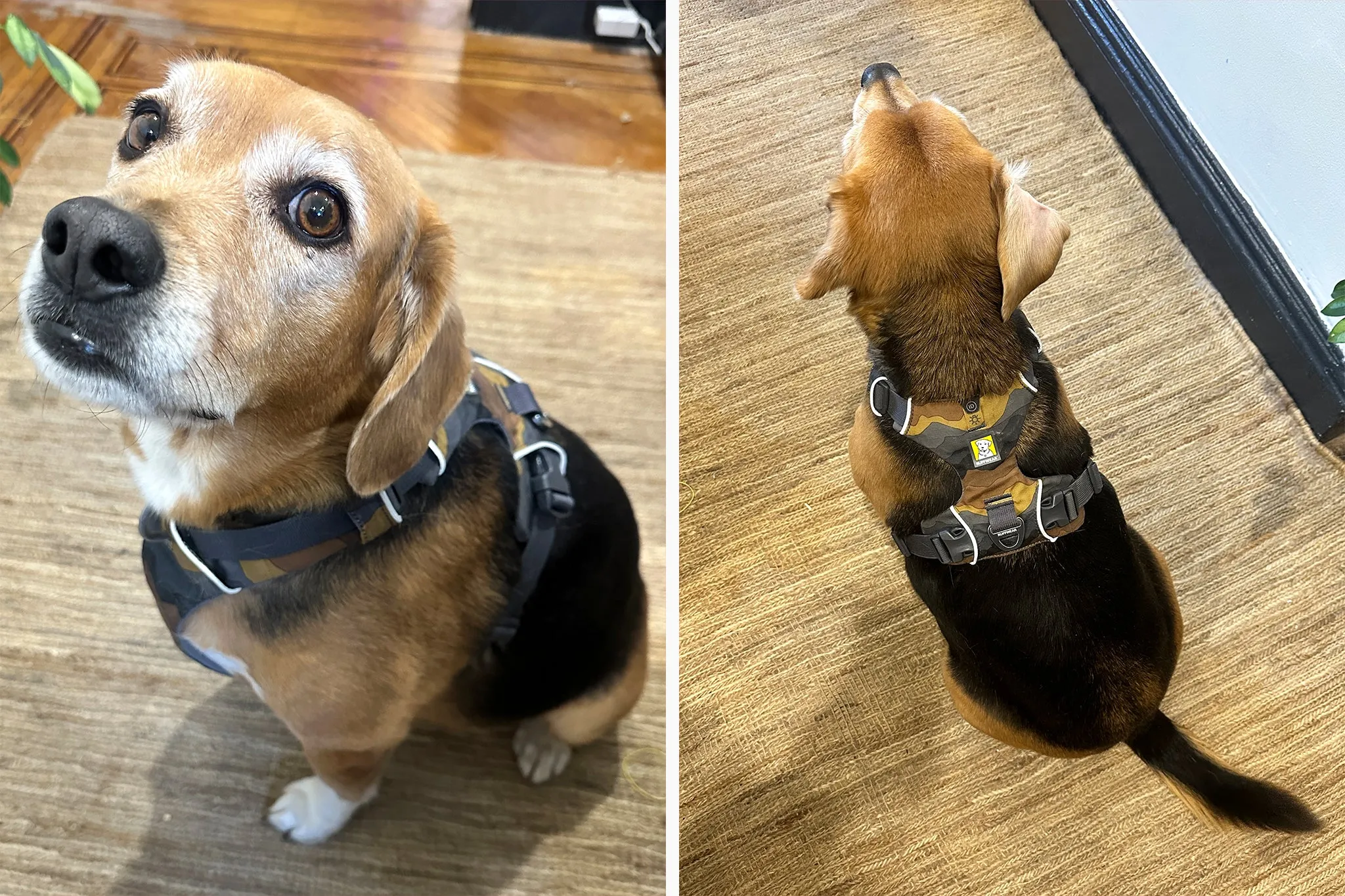
For dogs that pull, the Ruffwear Front Range Harness is a strong recommendation — it fits like a vest, and its foam padding minimizes pressure-point rubbing during longer walks. Importantly, it includes both a back clip and a front chest clip. That front clip is key: when the leash is attached to the back of a harness, dogs naturally have more forward-pulling power. Clipping to the front allows you to redirect your dog toward you and away from distractions — an especially useful tool for reactive dogs. For Phoenix, switching to a properly fitted harness with a front-clip leash attachment made an immediate difference.
If you’re unsure about sizing, Ruffwear offers a detailed video guide, and many independent pet supply stores will do in-person fittings.
Upgrade to a Double-Handled Leash
Equipment strength matters more than most people realize. A determined puller puts real mechanical stress on a leash connection, which is why certified professional dog trainer Drew Watson recommends looking for a leash with a locking carabiner rather than a standard spring-loaded clip. Carabiners are far less likely to fail under the sudden force of an abrupt lunge.
Beyond the clip, a two-handled leash is one of the most practical tools for managing dogs that pull or are prone to anxious, lunging behavior. The second handle — often called a traffic handle — sits lower on the leash, close to your dog’s body. It lets you draw your dog in quickly without having to gather up slack, and it gives you significantly more control during high-distraction moments like passing other dogs or cyclists. Trainer Andrea Smith notes that this setup can also reduce reactive behaviors like lunging, since you’re better positioned to intervene before the behavior escalates.
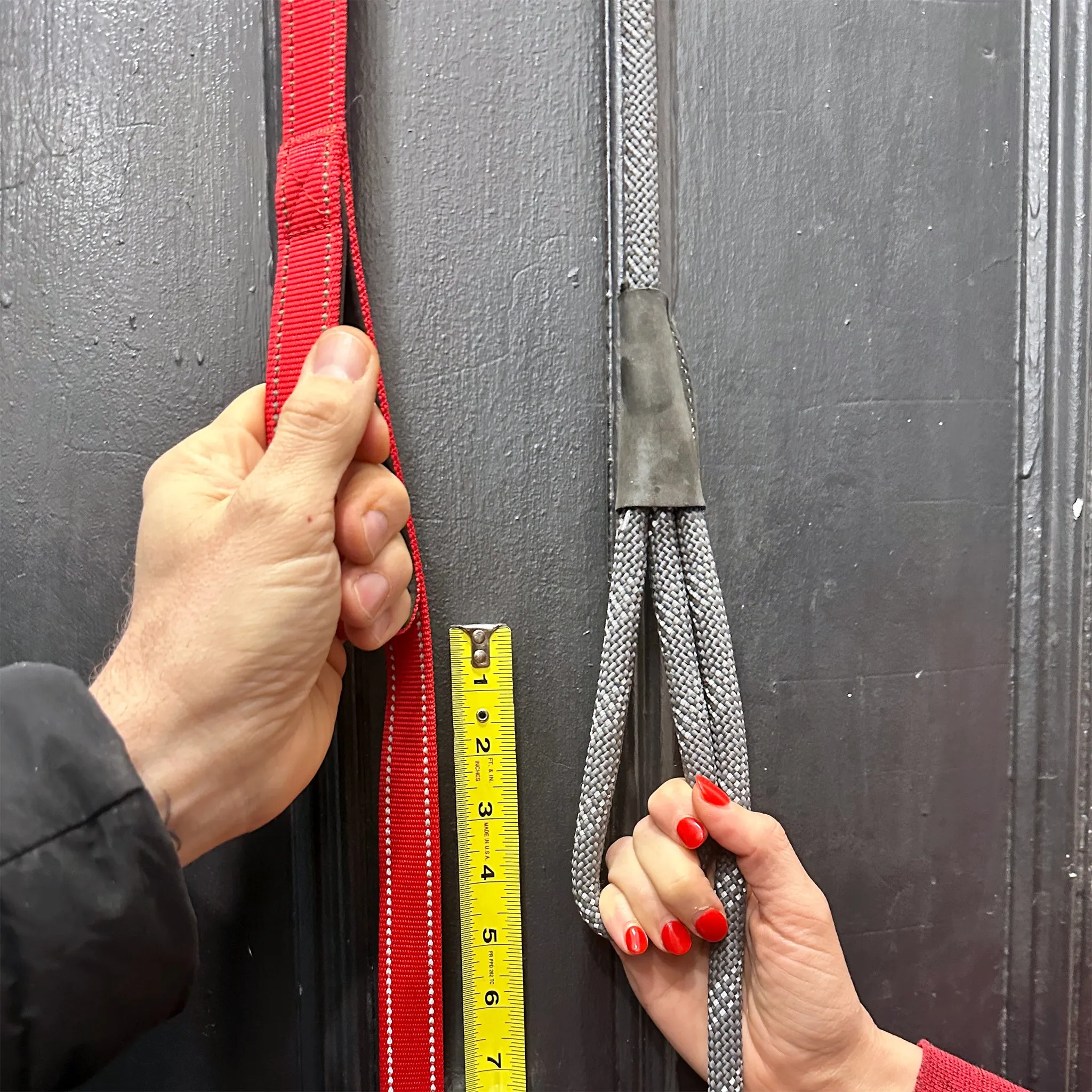
The Tuff Mutt Dual Handle Rope Dog Leash is the one our trainer recommended for Phoenix — it’s built for dogs between 30 and 150 pounds, with a locking carabiner, a reflective 5-foot rope rated to hold significant force, and two well-padded grips. The second handle sits about 22 inches from the clip, which works well for taller handlers. For those under 5-foot-7, or those walking taller dogs, the Max and Neo Double Handle Heavy Duty Reflective Leash offers similar benefits with a slightly shorter configuration and comfortable neoprene-padded handles.
Either option is a meaningful upgrade from a standard single-loop leash, particularly if you’ve been wrapping the leash around your hand to compensate for pulling — a habit that risks rope burns and actually reduces your control.
Give Your Dog a Crate
Every trainer I spoke with emphasized the same underlying principle: anxious dogs need predictability. One of the most effective ways to provide it is to give your dog a space that is entirely and consistently their own.
A crate, when introduced correctly, taps into a dog’s instinct for a den — a contained, secure place that signals safety. Trainer Andrea Smith particularly recommends crates for nervous dogs, because having that reliable retreat can reduce overall anxiety, which in turn improves behavior during walks and other challenging situations.
Reintroducing a crate to an adult dog requires patience and positive reinforcement. Start with the door open and let your dog explore on their own schedule. When they venture inside, reward them immediately with a treat. Gradually build up to closing the door for short periods, then leaving the room. Always remove collars and harnesses before crate time, and never use the crate as a punishment — its value depends entirely on your dog associating it with calm and comfort.
When we introduced a crate to Phoenix, we braced for a long adjustment. Instead, he walked straight in and settled down as if he’d been waiting for it. We started with the MidWest Ultima Pro Two Door Folding Crate, a straightforward wire crate with a thicker-gauge frame that keeps most dogs secure and a removable tray for easy cleaning. For households where aesthetics matter, the bentwood Fable Crate functions as both a den and a piece of furniture — though it comes at a considerably higher price point.
One caution: some dogs with separation anxiety will panic in a crate and may injure themselves trying to escape. If your dog shows signs of distress, consult a trainer. An intermediate step — confining them to a larger, gated area like a mudroom — may be a better starting point.
Put Mealtime to Work
Three pieces of gear will only take you so far. The trainers and veterinarian I consulted all came back to a broader point: addressing challenging behavior means addressing its root cause, not just managing it at the moment it occurs. As one pets writer put it, “Training is a 360-degree thing, not just at the point of friction.”
One of the simplest ways to deepen your connection with your dog — and reduce their anxiety over time — is to use mealtime as a training opportunity. If you’re just setting a bowl on the floor, you’re leaving a highly motivated learning moment on the table. Basic commands like “sit,” “look,” and “stay” can be practiced every single day during meals, building the kind of focused attention that pays off enormously when you’re out on a walk navigating distractions.
Veterinarian Erica Morgan put it well: training “can be a whole new way of bonding with your dog. You understand them on a different level.” After several months of consistent mealtime training, Phoenix can now hold a “stay” while I leave the room, and the “look” command reliably brings his attention back to me when we’re out in the chaos of Brooklyn streets.
The Gear Is a Bridge, Not a Fix
Phoenix arrived in New York City as a bundle of nerves. He’s not a finished project — no dog is — but he’s finding his footing, one walk at a time. What these changes taught me is that the right equipment doesn’t replace training or patience. It supports them. A well-fitted harness, a secure double-handled leash, and a crate give a dog clearer signals and more reliable structure, which is exactly what an anxious dog needs to begin feeling safe again.
If your dog is struggling with a big transition, or has always been reactive and uncertain on walks, these three adjustments are a practical place to start. Combine them with consistent routines and genuine engagement during training, and you’re not just managing behavior — you’re building a relationship your dog can actually count on.
Sources
- Andrea Smith, certified dog trainer, Drea’s Dog World
- Drew Watson, certified professional dog trainer, Drew Watson Dog Training
- Dre Habib, dog trainer
- Dr. Erica Morgan, veterinarian and owner, All Creatures Veterinary Hospital, Brooklyn, NY
- Mel Plaut, pets writer, Wirecutter/The New York Times