
Teaching your dog to walk nicely on the lead is one of the most rewarding skills you can develop together. Whether you have a boisterous puppy or a strong adult dog, loose lead walking is built on a simple principle: not pulling is the fastest way to reach any destination. With the right approach, patience, and consistency, you can transform every walk from a tug-of-war into a genuine pleasure for both of you.
Why Dogs Pull — and Why It Matters
Dogs pull on the lead because, in their experience, it works. Forward momentum when they strain ahead teaches them that pulling gets results. Breaking this habit requires flipping that logic entirely, so your dog learns that a tight lead actually slows everything down, while a loose lead keeps the adventure moving.
Pulling isn’t just uncomfortable — it can cause physical strain on your dog’s neck and shoulders, make walks stressful for both of you, and even become a safety hazard with larger or more powerful breeds. Investing time in proper lead training pays dividends across your dog’s entire life.
Step-by-Step Guide to Loose Lead Walking
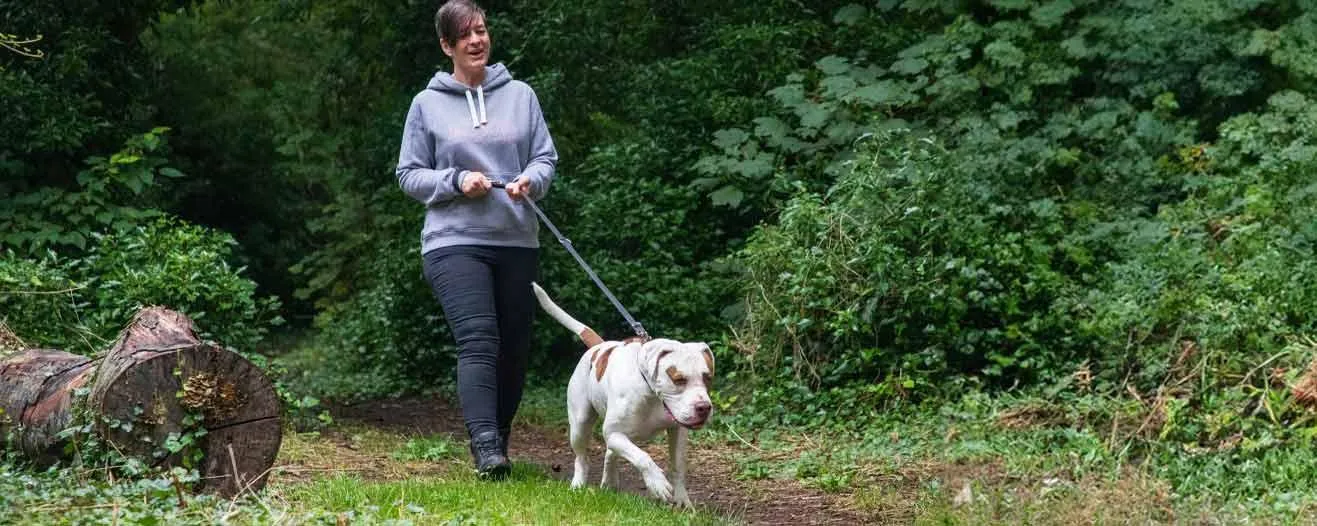
Follow these steps consistently and you will begin to see real progress:
1. Start still and silent. Stand quietly and let your dog have the full length of the lead. Do nothing while your dog is ignoring you. The moment they turn their attention toward you — even briefly — praise them warmly and offer a treat. That small moment of eye contact or orientation is exactly the behaviour you want to build on.
2. Move off with encouragement. Once you have your dog’s focus, begin walking. Use your voice — cheerful, upbeat tones — and treats to encourage your dog to stay close to your side. Reward generously whenever they are moving alongside you on a loose, relaxed lead.
3. Stop every time the lead tightens. If your dog begins to drift ahead and the lead is about to go taut, stop immediately. Stand still and quiet. Wait patiently until your dog notices, pauses, and moves back toward you. Reward that return, then set off again. This step must happen every single time — without exception — for the lesson to stick.
4. Keep sessions short and regular. Five to ten minutes of focused lead training is far more effective than a single long, exhausting session. Build the habit gradually, repeating brief practice sessions several times a day if possible.
5. Introduce distractions gradually. Place something your dog is motivated by — a favourite toy, for example — on the ground ahead of you. If your dog pulls toward it, stop and call them back to you. When they return and walk on a loose lead, let them reach the toy as their reward. This exercise teaches a powerful lesson: pulling delays getting what they want, while walking calmly makes it happen faster.
Making Yourself the Most Interesting Thing on the Walk
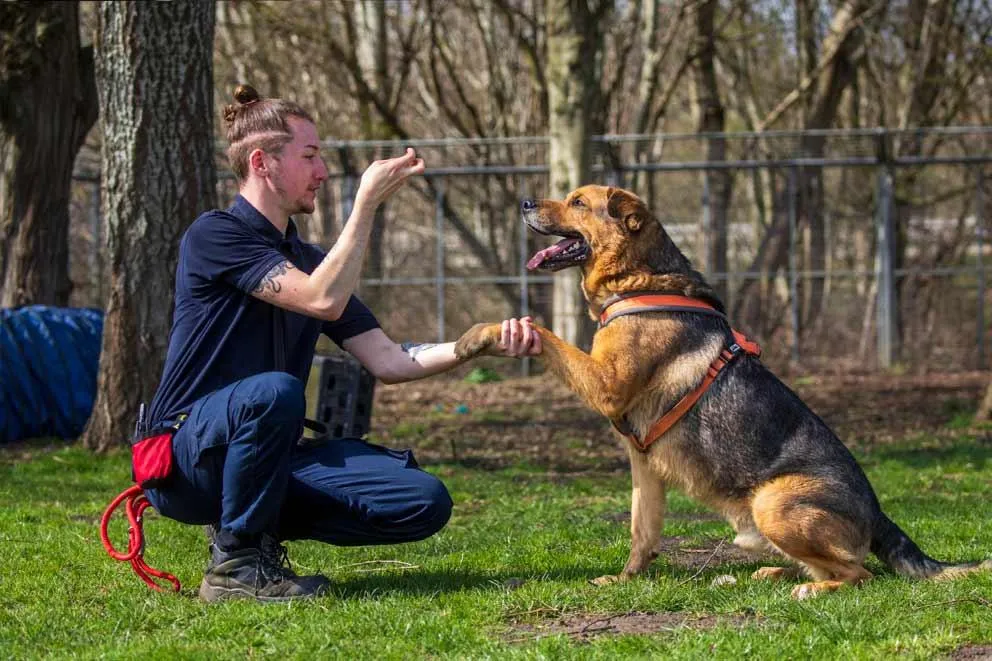
One of the most effective mindset shifts in dog training is understanding that you need to compete for your dog’s attention — and win. The world is full of fascinating smells, sounds, and sights. Your job is to make the space immediately around you rewarding enough that your dog genuinely wants to stay close.
Frequent praise, high-value treats, and playful interaction all help build this association. A dog who finds you engaging and rewarding will naturally gravitate toward you rather than straining away. Over time, this reduces the need for treats as the companionship itself becomes the reward.
Common Mistakes to Avoid
- Inconsistency: Allowing pulling even occasionally will reset your progress. Every person walking the dog must follow the same rules.
- Repeating commands: Saying “heel” or “walk nicely” repeatedly without consequences teaches your dog to ignore the words. One clear signal, then follow through.
- Moving forward while the lead is tight: Even a single step forward when your dog is pulling confirms that the strategy works. Stay firm.
- Skipping the reward: Dogs learn through immediate consequences. Delay the treat by even a few seconds and the connection between the behaviour and the reward weakens significantly.
Building Up to Real-World Walks
Once your dog is walking well in a quiet environment, begin introducing more challenging contexts — busier streets, parks, areas with other dogs. Each new environment will test what they’ve learned, and some regression is entirely normal. Return to basics, reward more frequently in difficult situations, and build up exposure gradually.
Agility and structured training classes can also be a wonderful complement to lead work, helping your dog develop focus, responsiveness, and confidence in stimulating environments.
When to Seek Professional Help
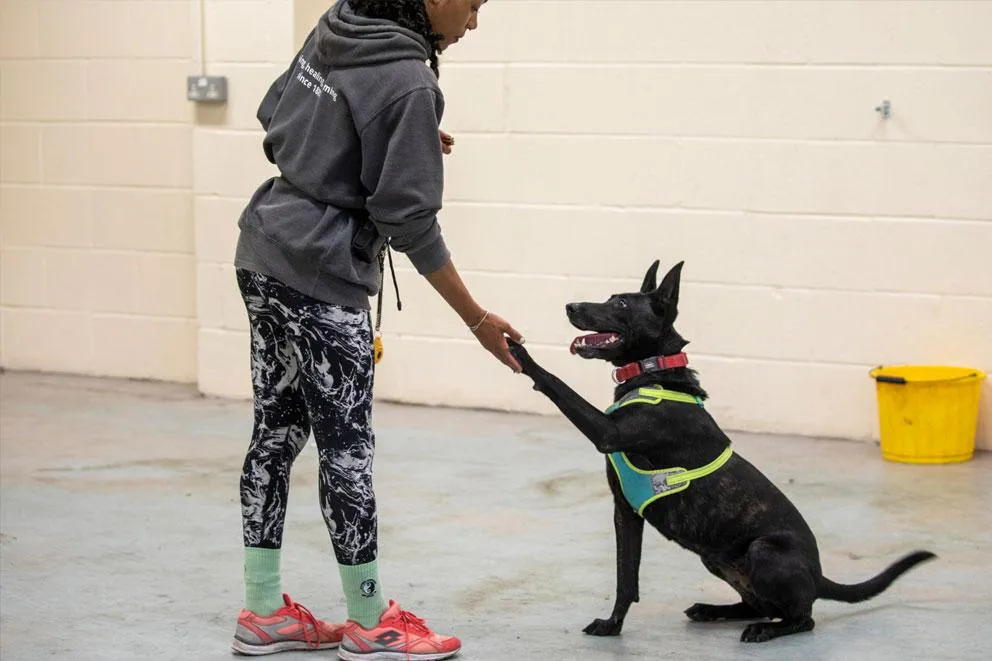
If your dog’s pulling is severe, linked to reactivity toward other dogs or people, or if you are struggling to make progress despite consistent effort, consulting a qualified dog trainer is a worthwhile step. A professional can assess your specific situation, identify what may be reinforcing the behaviour, and tailor a plan to your dog’s individual needs.
Look for trainers who use positive reinforcement methods and hold recognised qualifications. Avoid anyone who advocates punishment-based techniques, as these can damage your dog’s trust and create new behavioural problems.
Conclusion
Teaching your dog to walk nicely on the lead is not an overnight achievement — but it is absolutely within reach for any dog owner willing to invest the time. The core principle is straightforward: reward the behaviour you want, stop every time pulling occurs, and stay consistent across every single walk. Short, regular sessions build the habit far more effectively than occasional long ones.
With patience, positive reinforcement, and a clear structure, loose lead walking becomes second nature. The reward is a dog who walks beside you with ease, and walks that are genuinely enjoyable for you both. If you would like personalised guidance, consider reaching out to a certified dog trainer who can support you and your dog every step of the way.
References
- RSPCA. How to train your dog to walk nicely on the lead. Royal Society for the Prevention of Cruelty to Animals. https://www.rspca.org.uk/adviceandwelfare/pets/dogs/training
- RSPCA. Train your dog to leave ‘alone’. https://www.rspca.org.uk/adviceandwelfare/pets/dogs/training/leave
- RSPCA. Find a dog trainer. https://www.rspca.org.uk/adviceandwelfare/pets/dogs/training/trainer
- RSPCA. Toilet training your dog. https://www.rspca.org.uk/adviceandwelfare/pets/dogs/training/toilettraining