
Few things can turn a peaceful stroll into a shoulder-wrenching workout faster than a dog who pulls on the leash. One minute you’re enjoying the fresh air, the next you’re being dragged toward a squirrel, a fire hydrant, or a stranger’s dog. Beyond the frustration, constant pulling can be uncomfortable and even dangerous, especially on slick winter sidewalks. Dog leash pulling is one of the most common complaints dog trainers hear, and it’s tempting to label a puller as stubborn, dominant, or simply “bad.” But that assumption misses the point entirely. Dogs don’t pull because they’re trying to challenge you or take over the walk. They pull because of how their bodies and brains are built, and understanding that is the first step toward solving the problem. Unfortunately, the internet is full of leash-pulling advice, and not all of it is good. Some popular tips can actually be harmful or even abusive. This guide breaks down the common myths around dog leash pulling and offers a more humane, effective path forward.
Understanding Why Dogs Pull in the First Place
Before evaluating any training advice, it helps to see the world from your dog’s point of view. Behavior always happens for a reason, and leash pulling is no exception.
Dogs are simply built to move faster than humans. With the exception of small breeds, senior dogs, or dogs with mobility limitations, most dogs naturally walk at a brisker pace than we do. That physical difference alone accounts for a lot of the tension you feel on the leash.
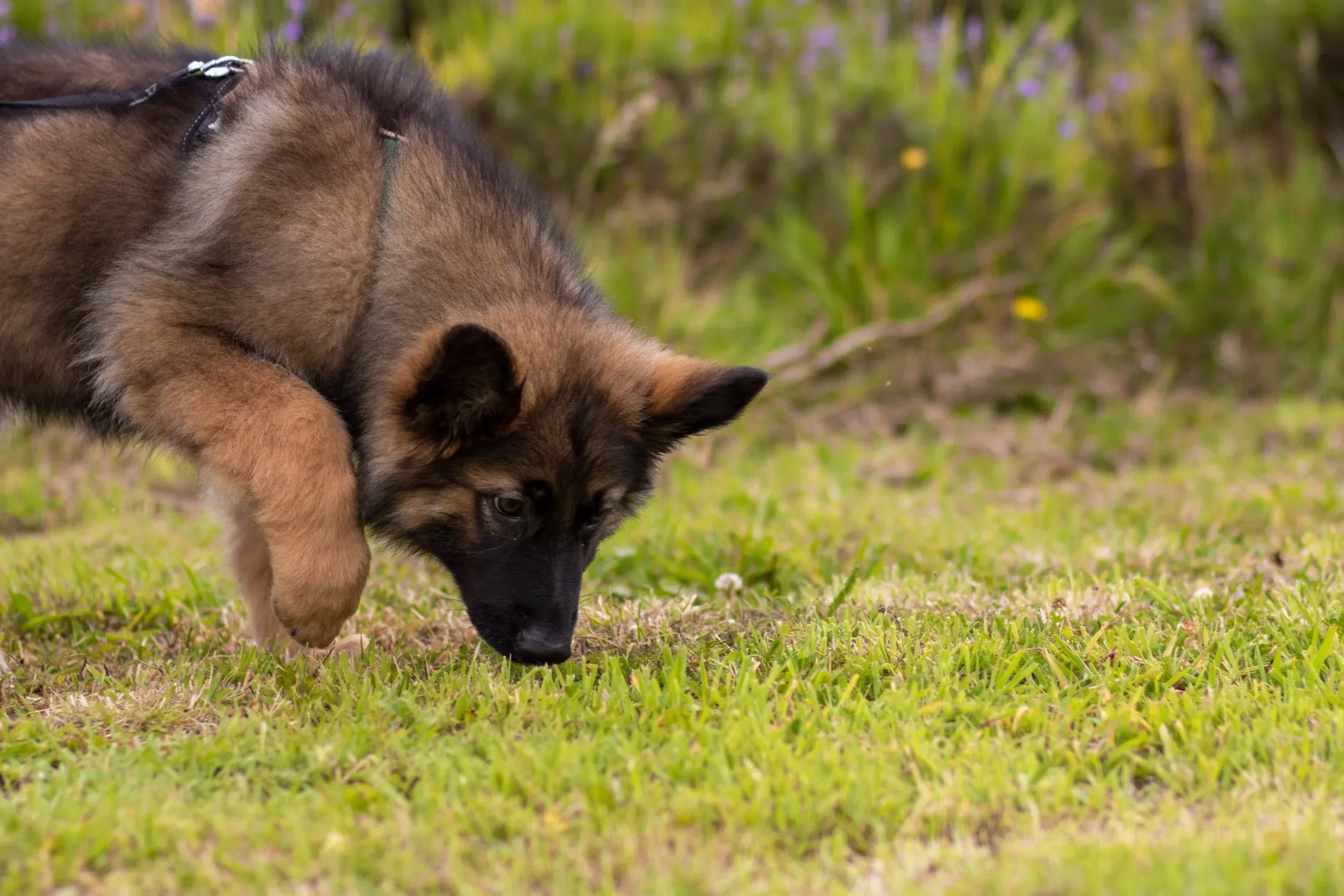
Scent also plays a massive role. A dog’s sense of smell is dramatically more powerful than ours, and dogs learn about their environment by sniffing everything, including things we’d rather not think about. Moving quickly from scent to scent isn’t misbehavior; it’s how a dog processes the world. That mental engagement during sniffing is also deeply satisfying for dogs, often making the walk more fulfilling for them overall.
Finally, dogs pull because they simply want to get somewhere. It doesn’t take long for a dog to learn that leaning into the leash results in forward movement, which is frequently rewarded with a new smell, sight, or social opportunity. Combine a faster natural pace with a strong desire to explore, and dog leash pulling becomes almost inevitable without training.
Popular Leash-Pulling Tips That Don’t Actually Work
Many well-meaning suggestions circulate among dog owners for stopping leash pulling. Most fall short because they either suppress the behavior without teaching an alternative, or rely on discomfort and punishment. Here’s a closer look.
Keeping the dog on an extremely short leash. The logic is that a dog with no leash length can’t pull. In practice, this requires constant micromanagement, restricts natural movement, and strips away any opportunity for the dog to sniff or explore. It may temporarily prevent pulling, but it teaches nothing and drains the enjoyment out of the walk for the dog.
Preventing the dog from sniffing or engaging with the environment. Some believe that letting a dog stop and sniff means losing control of the walk. In reality, denying a dog these natural outlets makes walks dull and unsatisfying, since dogs need mental engagement, not just physical movement, to feel fulfilled.
Never letting the dog walk ahead of you. This advice is often rooted in outdated “alpha” or dominance theory, the idea that a dog walking in front is asserting leadership. Modern behavioral science, including from the very researcher who originally proposed the theory, has debunked this framework. Dogs and wolves function within family-based social structures, not rigid dominance hierarchies.
Using leash corrections. A leash correction involves sharply jerking the leash to interrupt pulling. While punishment can suppress a behavior, it carries real risks, including trauma to the dog’s neck, trachea, and jugular vein. It also only teaches the dog what not to do, without offering any guidance on the desired behavior. Organizations like the American Veterinary Society of Animal Behavior have published position statements cautioning against punishment-based training methods for exactly these reasons.
Stopping every time the dog pulls. This approach uses the halted walk as a consequence, hoping the dog will associate pulling with the fun stopping. It’s less harmful than physical corrections, but only works if the dog actually finds the interruption unpleasant enough to change behavior, and it can be tedious for both dog and handler.
Using prong, pinch, choke, or slip collars. These tools tighten around the dog’s neck to discourage pulling. While punishers can technically stop a behavior, the potential for physical and emotional harm is significant, making this one of the more concerning recommendations still commonly given.
Wrapping the leash around the dog’s torso. This shifts pressure from the neck to the abdomen when the dog pulls. It removes some neck-related risk but still relies on discomfort rather than teaching, and it can be an awkward setup to manage.
Cueing a sit every time the dog pulls. This interrupts pulling with a specific behavior instead of just stopping. It’s gentler than many alternatives, but it’s time-consuming, easy to mistime, and only effective if the dog finds the interruption meaningful enough to change course.
A Better Way to Address Dog Leash Pulling
The starting point for real change is accepting that dog leash pulling is a normal behavior, not a sign of a difficult or dominant dog. From there, the most useful question to ask is simple: what is the dog trying to accomplish by pulling?
If a dog is pulling because they want to move quickly, a safe off-leash space to run might meet that need better than a structured walk. If a dog is pulling toward every scent post along the route, building in more dedicated sniffing time could reduce the tension. Once you understand the motivation behind the pulling, you can use that same motivation as a reward for the behavior you actually want, like walking with slack in the leash.
This is the core principle worth remembering: if you don’t like a behavior, you need to teach an alternative. It’s not enough to stop pulling; you have to define what polite walking looks like and then actively train it.
Training should start in a low-distraction environment, ideally indoors, where competing motivators like smells, people, and other dogs aren’t pulling your dog’s focus in every direction. Setting your dog up to succeed early makes the learning process faster and less frustrating for everyone. Once walking calmly indoors becomes consistent, gradually introduce more distractions, moving from the backyard to the front yard, and eventually out onto real walks.
Don’t Underestimate the Power of Management
No training plan is complete without management, which simply means preventing your dog from practicing the unwanted behavior while you teach the new one. Management sets the stage for training to succeed, particularly once you take things outside the house and into a more distracting world.
A few practical management strategies include:
- Choose walking routes strategically. If your dog tends to pull toward people or other dogs, opt for quieter routes or walk during less busy times of day to reduce triggers.
- Use a longer leash. This might sound counterintuitive, but giving your dog more physical room to explore, whether with a 10-foot leash or a 20 to 50-foot long-line during training, often reduces the need to strain against a short leash just to reach a nearby smell.
- Meet your dog’s needs before the walk. If your dog has a lot of energy, providing a chance to run or play beforehand can lead to a calmer, more relaxed walk. Working with your dog’s natural needs, rather than against them, tends to produce better results.
Ultimately, the goal isn’t total control over your dog during a walk. It’s finding a balance where your dog’s needs for enrichment, exercise, and exploration are met without sacrificing your own comfort and enjoyment. That balance will look different for every dog and owner, and that’s perfectly fine, as long as the dog’s wellbeing remains a priority.
Final Thoughts
Dog leash pulling isn’t a character flaw or a bid for dominance. It’s a natural byproduct of how dogs move and experience the world. Many of the most commonly shared fixes rely on restriction or discomfort rather than teaching, and several carry real risks to a dog’s physical and emotional wellbeing. A more effective approach starts with understanding what’s motivating the pulling, teaching a clear alternative behavior, and using thoughtful management to set your dog up for success along the way. With patience and the right training foundation, walks can become enjoyable for both ends of the leash. Dogs who pull aren’t bad dogs. They’re just dogs, and with the right guidance, they can absolutely learn to walk politely by your side.
References
- American Veterinary Society of Animal Behavior. “Position Statements on Humane Training.” https://avsab.org/resources/position-statements/