
If your dog has recently been diagnosed with diabetes, you’re probably feeling a little overwhelmed by all the new rules around feeding time. The good news is that managing this condition through diet doesn’t have to be complicated or stressful. With the right homemade diabetic dog food recipes, you can give your pup meals that are both nutritious and satisfying while keeping their blood sugar steady.
There isn’t a single universal diet that works for every diabetic dog, but veterinarians generally agree on a few core principles. Meals should avoid simple carbohydrates like sugar, white bread, and potatoes, since these cause rapid spikes in blood glucose. The food also needs to be nutritionally balanced, containing every nutrient your dog requires to thrive, and it should be served at consistent times and in consistent amounts every single day.
This consistency matters more than most owners realize. Feeding your dog the same portion at the same time daily is the only reliable way to manage blood sugar and adjust insulin doses if your dog has Type I (insulin-dependent) diabetes. A steady feeding schedule combined with a balanced diet also helps maintain a healthy body weight and keeps blood fat levels in check. In short, a diabetic dog does best on a low-fat, high-fiber diet — and below are five homemade recipes that fit the bill.
The 5 Vet-Approved Homemade Diabetic Dog Food Recipes
1. Chicken With Brown Rice and Vegetables
This is a straightforward, protein-forward meal that combines lean chicken with fiber-rich vegetables and whole grains. For a dog weighing 20–25 pounds, you’ll need ground chicken or turkey, brown rice, green beans, chopped carrots, a small amount of coconut oil, and a pinch of salt.
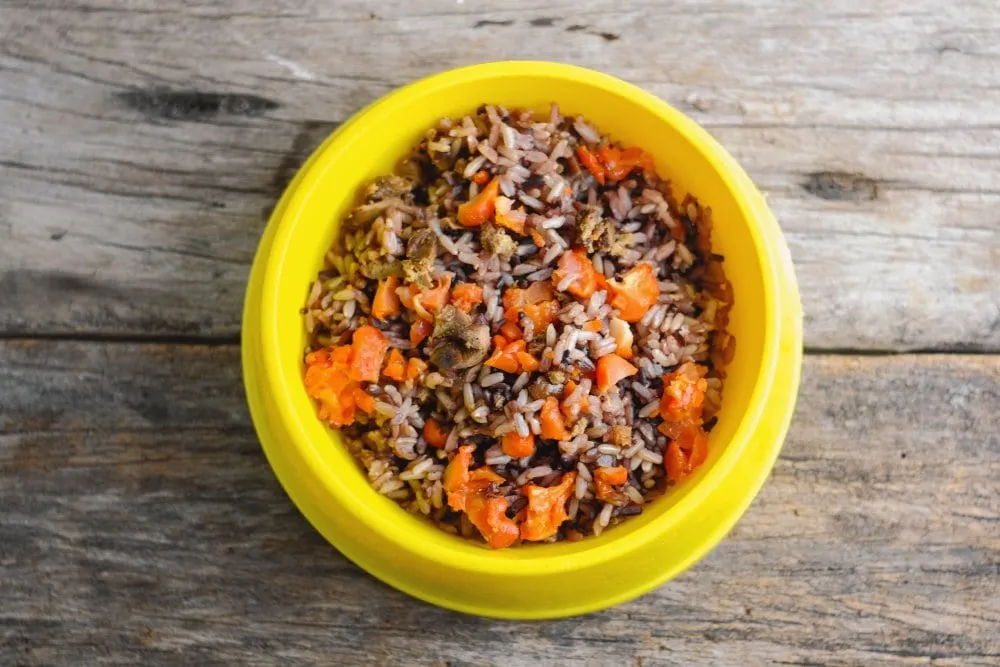
To prepare it, cook the rice according to the package instructions, adding the coconut oil and salt directly to the cooking water. Add the carrots and green beans and let everything simmer for another 10 minutes. Meanwhile, cook the ground chicken separately in a pan for 6 to 10 minutes until fully done. Combine all the ingredients and let them sit on low heat for 10 more minutes before serving. If you don’t have green beans on hand, broccoli or spinach make good substitutes.
2. Lean Ground Beef and No-Fat Cottage Cheese
Beef can absolutely be part of a diabetic dog’s diet, as long as it’s lean and any excess fat is drained during cooking. This recipe pairs quarter of a pound of lean ground beef with half a cup of no-fat plain cottage cheese, along with two cups each of green beans and carrots. A 20-pound dog should get about half a cup per serving.
Cook the meat in a pan and drain off the fat thoroughly. While that’s cooking, boil or steam the carrots and green beans separately until tender. Once everything has cooled, mix the vegetables and meat together in a bowl and stir in the cottage cheese for extra protein without the added fat.
3. Beef and Barley
Barley deserves a special mention here because of its impressive fiber content and low starch levels. It has been shown to help reduce cholesterol and improve how the body processes glucose. In fact, research comparing barley-based diets to corn-based ones found that dogs on barley had a lower average interstitial glucose reading overall.
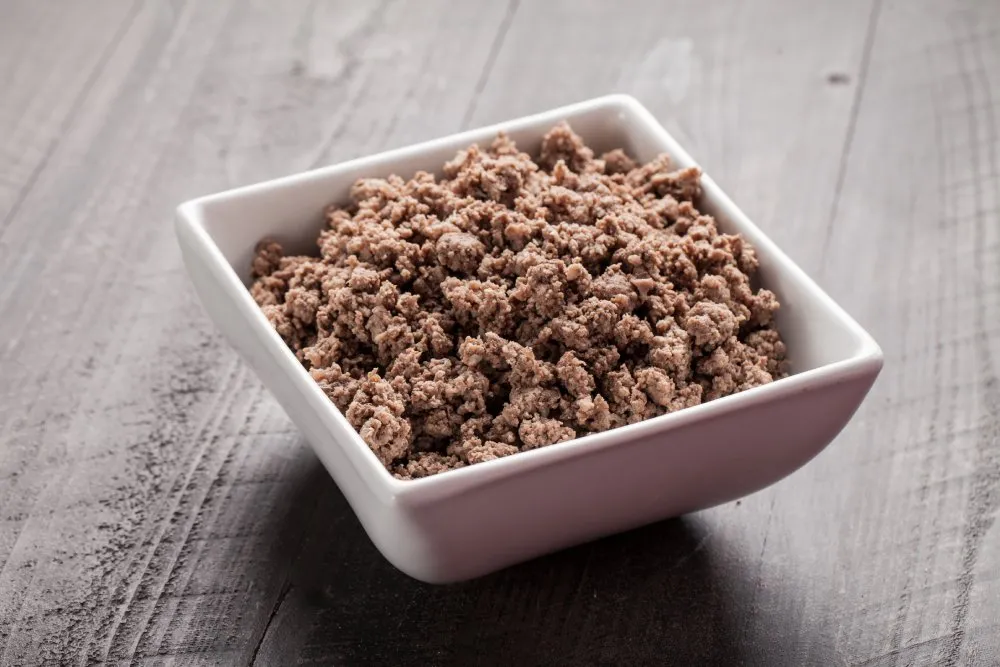
This recipe makes enough for a week of single daily servings. You’ll need two pounds of carrots, one pound of green beans or zucchini, two to three pounds of lean ground beef, one pound of dried pearl barley, half a bunch of celery, 12 to 14 cups of water, and a pinch of salt. Chop the carrots, celery, and green beans or zucchini and add them to a large pot with the water, bringing it to a boil. Cook the beef separately in a pan, or if you’re using beef pieces instead of ground meat, add them directly to the pot with the vegetables. Once everything reaches a boil, stir in the barley and cook for another 30 minutes, or according to the package directions. Combine the beef with the vegetables and barley, portion the mixture, and freeze what you won’t use right away.
4. Chicken, Asparagus, and Broccoli
Asparagus is an excellent vegetable choice for diabetic dogs because it’s naturally low in sugar, fat, and calories while still delivering plenty of fiber, vitamins, and minerals. This recipe calls for two 3-ounce pieces of chicken breast, a cup each of asparagus and broccoli, two cups of brown rice, three cups of low-sodium chicken soup, and a tablespoon of fresh curly parsley — note that other parsley varieties can be toxic to dogs, so stick with curly.
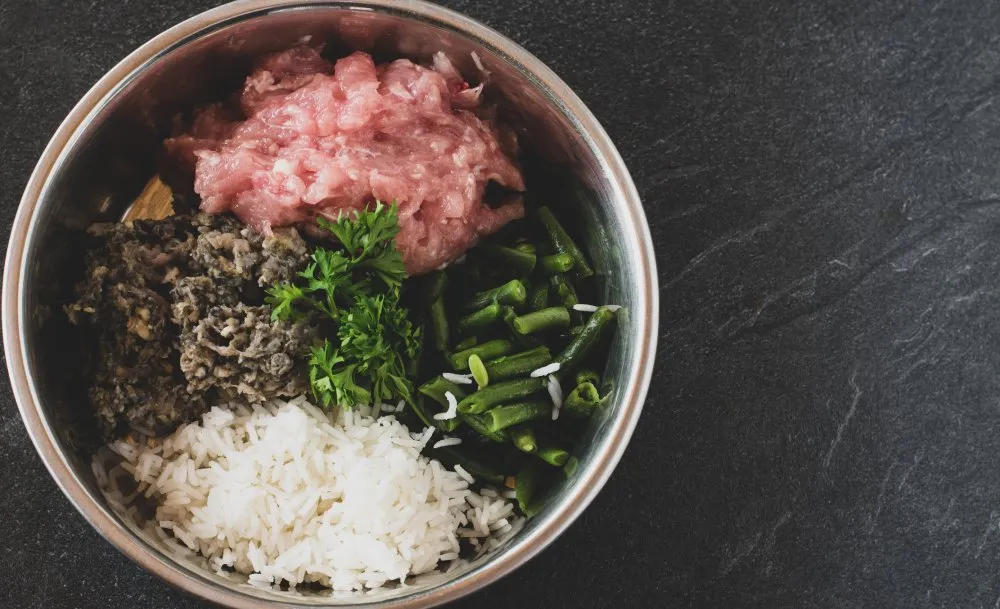
Cut the chicken into cubes and chop the asparagus and broccoli. Combine these ingredients with the chicken soup in a pot and boil until everything is tender. Prepare the brown rice separately according to package instructions, then mix everything together once cooked. Let it cool completely before serving a portion to your dog.
5. Beef and Pumpkin
Botanically speaking, pumpkin is actually a fruit, and it’s packed with vitamins A, C, and E along with fiber that makes it especially helpful for dogs dealing with diabetes or digestive issues. This recipe uses two and a half cups each of ground beef and brown rice, half a cup each of green beans and peas, one and a half cups each of carrot and pumpkin, and four cups of water.
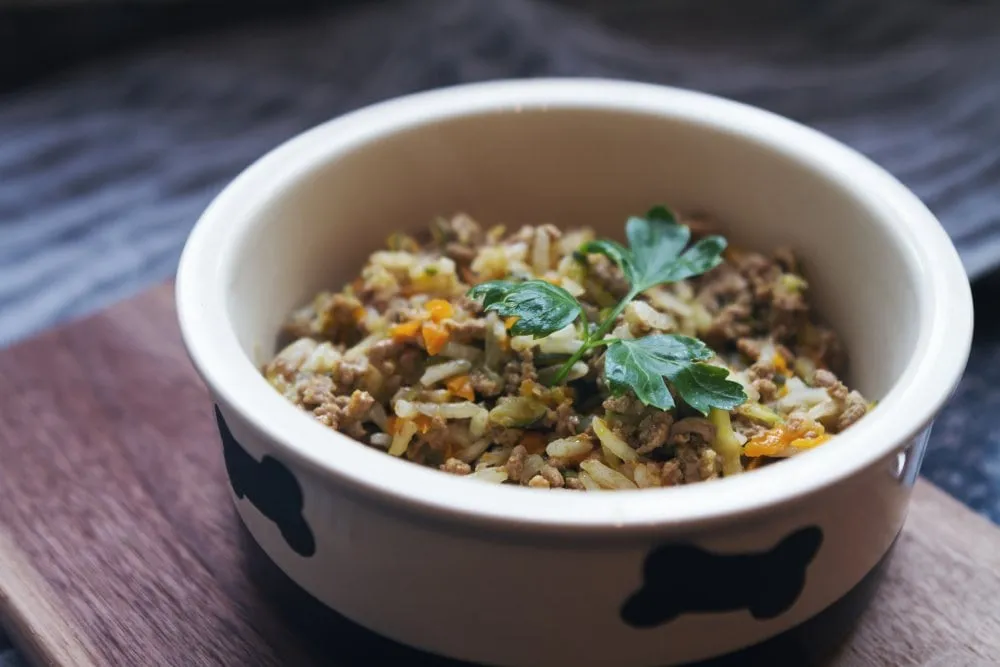 Homemade pet food prepared and served in a ceramic bowl
Chop all the vegetables and combine every ingredient in a large pot. Leave it on medium heat until the water has fully cooked off, which can take a few hours. Let it cool before serving, and store the remainder in the fridge or freezer. If fresh vegetables aren’t available, frozen peas and green beans work just as well.
How Dangerous Is Diabetes in Dogs?
Diabetes is the most common hormonal metabolic disease affecting dogs. It develops when the body produces little or no insulin, or when glucose can’t be absorbed properly into cells. Instead of being used as fuel, that sugar builds up in the bloodstream. Certain breeds face a higher risk, including the Samoyed, Cocker Spaniel, Labrador Retriever, Pomeranian, Toy Poodle, and Miniature Schnauzer.
This chronic condition is often first noticed through excessive thirst (polydipsia) and frequent urination (polyuria). Other warning signs to watch for include unexplained weight loss despite a healthy or increased appetite, low energy and fatigue, sudden blindness caused by cataracts, a dull or matted coat, and wounds that heal more slowly than usual.
When diabetes goes untreated or is managed incorrectly, the body’s cells are starved of the sugar they need for energy. In response, the body starts breaking down fat reserves and producing excessive ketone bodies. This buildup, known as ketosis, can trigger metabolic acidosis — a dangerous hyperacidity of the body’s fluids — leading to vomiting, weakness, and potentially life-threatening complications.
Because early symptoms are often subtle and easy to overlook, regular weight checks and close observation of your dog’s eating, drinking, and bathroom habits are essential for catching diabetes before it progresses.

Conclusion
Diabetes is a lifelong condition, but it’s one that can be successfully managed with the right combination of treatment and diet. Preparing homemade meals that meet your dog’s specific nutritional needs — or choosing a specialized veterinary diet formulated for diabetic pets — gives your dog the best chance at a stable, healthy life. The key principles remain the same across every recipe: no added sugar, low fat, and controlled carbohydrates.
If your dog has recently been diagnosed with diabetes, don’t try to navigate this alone. Work closely with your veterinarian to fine-tune both the diet and insulin therapy, since every dog’s needs can differ based on weight, activity level, and overall health. With consistent care and the right nutritional plan, diabetic dogs can go on to live long, comfortable, and happy lives.
Sources
- Elliott, K. F., et al. “Glycaemic Response to a Barley-Based Diet in Dogs.” PubMed, National Library of Medicine. https://pubmed.ncbi.nlm.nih.gov/30132436/