
If your medium-breed dog has been putting on extra pounds, or you simply want to keep them at a healthy weight for life, Hill’s Science Plan Perfect Weight Adult 1+ Medium with Chicken is worth a closer look. This dry dog food is formulated specifically for weight management in adult dogs, combining a protein-rich recipe with satisfying fibre content so your dog feels full and content, even while consuming fewer calories. Below, we break down what makes this food stand out, how it supports canine health, and how to introduce it into your dog’s diet safely.
Why Weight Management Matters for Dogs
Canine obesity is one of the most common—and most preventable—health issues seen by veterinarians today. Excess weight puts strain on joints, increases the risk of diabetes, heart disease, and can shorten a dog’s overall lifespan. Medium breed dogs, in particular, can gain weight quickly if their calorie intake isn’t carefully balanced against their activity level. That’s where a purpose-built weight management food becomes valuable, rather than simply reducing portions of a standard diet, which can leave dogs hungry and nutrient-deficient.
Hill’s Science Plan Perfect Weight Adult 1+ Medium with Chicken addresses this by rethinking the entire recipe, not just the calorie count. It’s designed to keep dogs satisfied between meals while still delivering the nutrients they need for lean muscle maintenance and overall vitality.

What Makes This Recipe Different
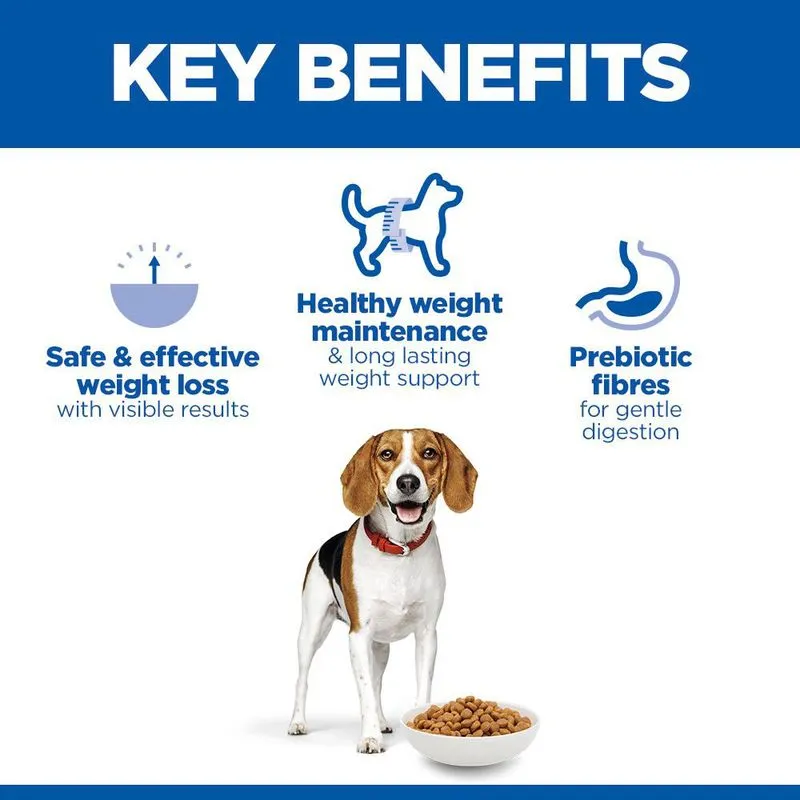
The formula centres on a high-protein, high-fibre approach. Protein helps preserve lean muscle mass even as a dog loses fat, which is important because muscle tissue burns more calories than fat tissue at rest. Meanwhile, the fibre-rich recipe—built around ingredients like pea bran meal, dried beet pulp, and cellulose—helps dogs feel fuller for longer after eating, reducing the temptation to beg for extra treats between meals.
The food is also enriched with L-carnitine and coconut oil, two ingredients often associated with fat metabolism support in dogs. According to the product’s nutritional breakdown, the kibble contains 25.3% protein, 11.3% fat, and 12.1% fibre, along with a full spectrum of minerals including iron, zinc, copper, manganese, and selenium to support overall health during a weight-management programme.
Just as importantly, chicken is used as a primary flavour source, making the food palatable even for dogs that are typically fussy eaters. Hill’s states the recipe contains no artificial colours, flavours, or preservatives—an increasingly common expectation among pet owners who scrutinise ingredient labels the way they would for their own food.
How to Transition Your Dog to a New Food
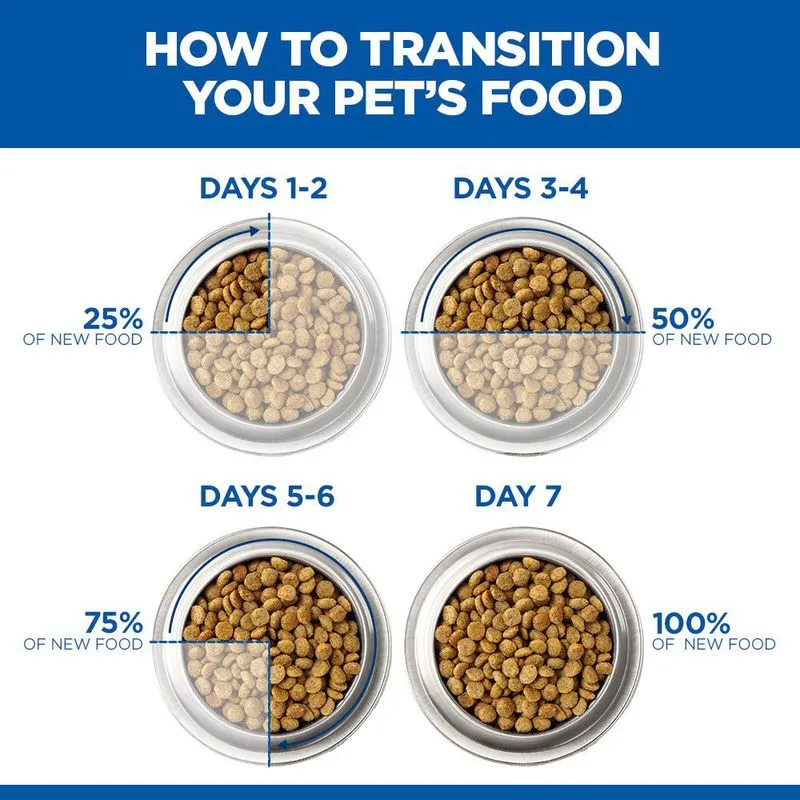
Switching foods too abruptly is one of the most common causes of digestive upset in dogs, including diarrhoea and vomiting. Veterinary nutritionists generally recommend a gradual transition over about seven days: start by mixing a small amount of the new food with your dog’s current diet, then slowly increase the proportion of new food each day while decreasing the old food, until the switch is complete.
This is especially important with a weight-management formula, since the higher fibre content can affect stool consistency if introduced too quickly. Owners who have used this product often note that a slow transition helps their dogs adjust smoothly while still enjoying the taste.
Portion Guidance and Practical Tips
Manufacturer guidelines suggest daily amounts based on a dog’s target weight—for example, around 175g per day for a 10kg dog, or 395g for a 30kg dog, when fed exclusively on the dry food. These figures are a starting point, not a fixed rule; every dog’s metabolism, age, and activity level differ, so portions should be adjusted over time based on how your dog’s body condition changes.
A few practical habits can support the process:
- Weigh food using a kitchen scale rather than estimating by eye, since even small overfeeding adds up over weeks
- Track your dog’s weight monthly to catch trends early
- Limit treats, or factor them into the daily calorie allowance
- Maintain regular exercise appropriate to your dog’s age and breed
Veterinarians typically recommend at least two check-ups per year, which is a useful opportunity to reassess whether the current feeding plan is still appropriate, particularly for dogs actively working toward a lower body weight.
 Veterinary recommendation badge highlighting Hill's Science Plan as a vet-endorsed dog food brand
Real Owner Experiences
Customer feedback for this product tends to highlight two recurring themes: palatability and digestive tolerance. Several long-term users report that even selective eaters accept the kibble well, and that the biscuit size holds up when mixed with a small amount of wet food or gravy, rather than turning to mush. Owners of working and companion breeds alike have described noticeably shinier coats and consistent energy levels after switching to this formula, which aligns with the emphasis on balanced protein and mineral content in the recipe.
Final Thoughts
Weight management in dogs isn’t just about cutting calories—it’s about maintaining balanced nutrition while helping your dog feel satisfied. Hill’s Science Plan Perfect Weight Adult 1+ Medium with Chicken combines a protein- and fibre-rich profile with vet-backed formulation principles, making it a reasonable option for owners looking to support a medium breed dog’s weight goals without compromising on taste or nutritional completeness.
As with any significant diet change, it’s worth discussing your dog’s specific needs with a veterinarian before starting, especially if your dog has existing health conditions. A tailored feeding plan, combined with regular monitoring, gives your dog the best chance of reaching and maintaining a healthy weight over the long term.