
Keeping your dog at a healthy weight doesn’t mean eliminating treats altogether. Choosing the right healthy dog snacks can help your pet maintain a balanced diet while still enjoying tasty rewards. Whether your dog is trying to lose weight or you simply want to support a healthier lifestyle, nutritious homemade and natural treats can be a great option when fed in moderation.
Giving treats responsibly means paying attention to ingredients, portion sizes, and your dog’s overall daily calorie intake. With guidance from your veterinarian and smart food choices, you can keep your dog happy without compromising their health.
Tips for Healthy Feeding Habits
Treats should complement your dog’s regular diet, not replace it. Here are some practical guidelines for healthy snacking:
- Avoid treats high in fat, salt, and sugar.
- Include snacks in your dog’s daily calorie allowance.
- Cut treats into small pieces to reduce choking risks and make them last longer.
- Use food puzzles or interactive toys to provide mental stimulation while slowing down eating.
- Offer treats occasionally rather than throughout the day.
For additional guidance, see our articles on healthy feeding habits and balanced nutrition for dogs.
Lean Protein: Filling and Nutritious
Lean protein is one of the best choices for dogs that need to lose weight or maintain muscle mass. Plain boiled chicken breast without seasoning or oils is easy to digest and provides valuable protein. It also contains omega-6 fatty acids that support healthy skin and a shiny coat.
Salmon is another nutritious option because it provides omega-3 fatty acids. However, salmon contains more fat and should only be offered occasionally in small amounts.
Avoid processed meats such as sausages or deli meats, which are often high in sodium and unhealthy fats.
Kibble Can Make an Excellent Treat
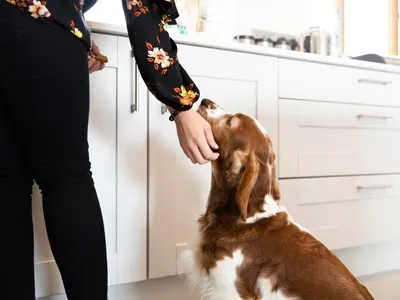
If your dog follows a prescription diet or low-fat feeding plan, a small amount of their regular dry food can serve as a safe reward. Even healthy dogs can benefit from using kibble as treats since it allows owners to control calories more effectively.
Always account for these extra pieces within your dog’s normal feeding schedule to prevent overfeeding.
For more information, explore our guide to transitioning puppy food to adult food.
Peanut Butter: A Favorite Treat With Important Precautions
Many dogs love peanut butter because it is rich in protein and has an irresistible taste. However, not all peanut butter products are safe.
When choosing peanut butter:
- Select varieties with no added sugar.
- Avoid products with excessive salt.
- Never feed peanut butter containing xylitol, also known as birch sugar or E967.
Xylitol is extremely toxic to dogs and can be fatal even in small quantities. If you’re uncertain about the ingredients, it’s safest to avoid the product entirely.
Pumpkin and Squash for Digestive Health
Pumpkin and squash are packed with fiber, vitamins, and nutrients that support digestion and contribute to a healthy coat. Cooked pumpkin flesh or unsweetened canned pumpkin can be offered as an occasional snack.
Before serving fresh pumpkin:
- Remove the rind.
- Discard seeds.
- Avoid adding sugar, butter, or spices.
These vegetables are particularly useful for dogs that need extra fiber in their diet.
Apples: Crunchy and Refreshing
Apple slices provide vitamins, fiber, and a satisfying crunch that many dogs enjoy. They may even help freshen your dog’s breath.
However, apples contain natural sugars, so moderation is important. Always:
- Slice apples into manageable pieces.
- Remove the core.
- Discard all seeds, as they can be harmful if consumed regularly or in large amounts.
Healthy Vegetable Snacks for Dogs
Several vegetables make excellent low-calorie treats. They can be served raw or cooked, depending on your dog’s preference.
Popular choices include:
- Carrots
- Broccoli
- Green beans
Cut vegetables into small pieces, especially if your dog tends to swallow food quickly. Feeding excessive amounts, particularly broccoli, may lead to digestive upset, so moderation remains essential.
For puppy owners, our feeding guide from birth to weaning provides additional nutritional advice.
Homemade Dog Recipes and Treat Ideas
Healthy homemade recipes allow owners to control ingredients and avoid unnecessary additives. Some ideas include:
- Frozen pumpkin cubes.
- Boiled chicken bites.
- Carrot and green bean mixes.
- Stuffed food puzzle toys using kibble and small amounts of peanut butter.
- Apple slices paired with plain chicken.
These recipes should be considered occasional rewards rather than complete meals.
Foods You Should Never Feed Your Dog
Certain human foods are dangerous for dogs and should always be avoided. These include:
- Blue cheese
- Chocolate
- Macadamia nuts
- Onions
- Garlic
- Leeks
- Shallots
- Grapes
- Raisins
- Currants
- Sultanas
If your dog accidentally consumes any potentially toxic food, contact your veterinarian immediately. Prompt treatment can make a significant difference.
See our related article about poisonous foods for dogs for a complete list.
Helping an Overweight Dog Lose Weight Safely
Obesity is a serious condition that increases the risk of arthritis, diabetes, heart disease, and reduced quality of life. Weight loss should always be gradual and supervised by a veterinarian.
Healthy weight management involves:
- Feeding a balanced diet.
- Limiting calories from treats.
- Increasing exercise appropriately.
- Monitoring body condition regularly.
- Following veterinary recommendations.
Sudden or extreme dieting is not recommended and may harm your dog’s health.
Important Things to Remember
Healthy dog snacks are intended to supplement—not replace—a complete and balanced diet. Even nutritious foods should be given sparingly, and portion control is essential.
Whenever possible:
- Choose fresh, high-quality ingredients.
- Feed fruits and vegetables in moderation.
- Consult your veterinarian before changing your dog’s diet.
- Seek professional advice if your dog is overweight or requires a special diet.
By making smart choices and offering treats responsibly, you can help your dog maintain a healthy weight while still enjoying delicious rewards. Explore our other articles on puppy nutrition, feeding schedules, and long-term canine health to give your companion the best possible care.
References
- The Royal Kennel Club. Healthy homemade snacks for dogs and weight management.
- American Veterinary Medical Association (AVMA). Pet Nutrition Guidelines.
- World Small Animal Veterinary Association (WSAVA). Global Nutrition Toolkit.
- American Animal Hospital Association (AAHA). Nutritional Assessment Guidelines for Dogs and Cats.