
The 1969 Pontiac GTO Judge wasn’t just another trim package bolted onto an aging nameplate — it was a calculated gamble that paid off in spectacular fashion. By the late 1960s, the GTO had drifted into an awkward middle ground, no longer the trendsetter it had been when it kicked off the muscle car era earlier in the decade. Pontiac needed something bold to recapture buyers’ attention, and the result was a car loud enough in both color and attitude to demand a second look. This is the story of how a wild stripe package, a clever marketing hook, and a pair of serious engines turned the GTO Judge into one of the most recognizable muscle cars of the golden era.
From Segment Leader to Mid-Pack Contender
By 1969, the Pontiac GTO had a reputation problem. It wasn’t a poorly built car, and it certainly wasn’t a budget model, but it had settled into a strange no-man’s-land — too ordinary to be a halo car, yet too expensive to be a value pick. Competitors were sharpening their muscle car offerings, and Pontiac’s once-dominant GTO needed a jolt of energy to remind buyers why the original “Goat” had started the entire performance car movement back in 1964.
Pontiac’s answer was an options package built specifically to inject excitement back into the lineup. Rather than reinvent the GTO from the ground up, the brand doubled down on visual aggression and performance credibility, betting that a sharper, louder version of the existing car could win back enthusiasts who had started looking elsewhere.
What Made the Judge Package Different
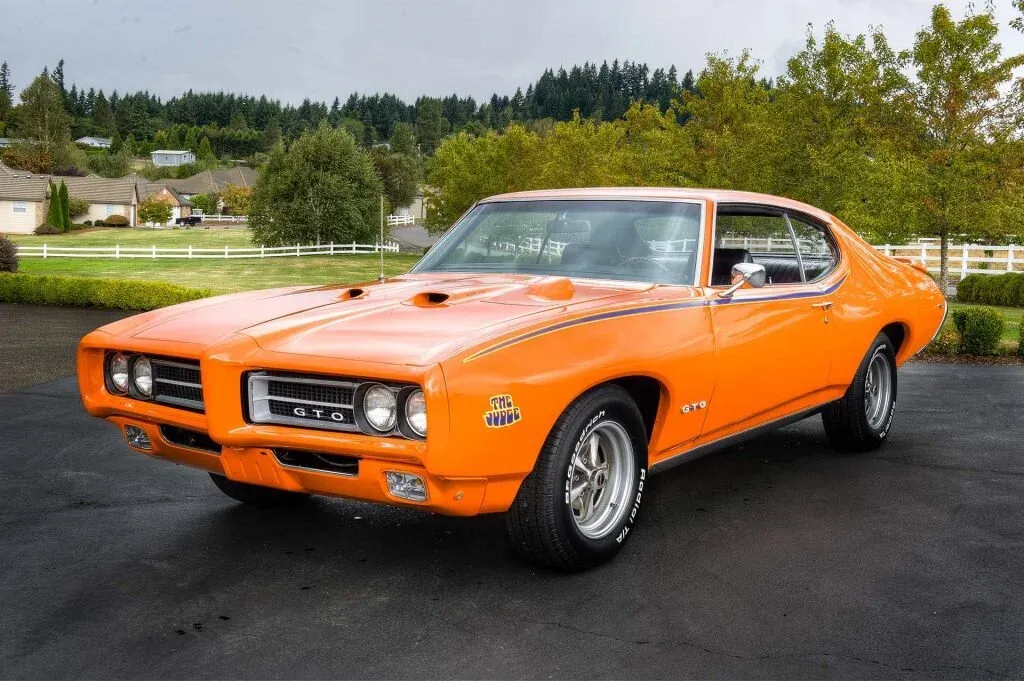
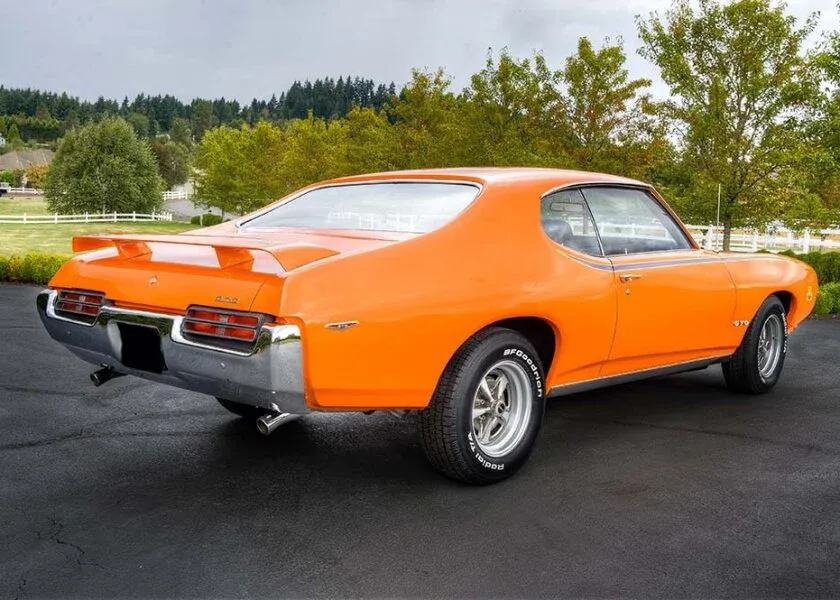
The GTO Judge package centered on a few unmistakable visual cues: a rear-mounted spoiler, bold multi-color stripe graphics running along the body, and prominent “The Judge” decals that left no doubt about what buyers were getting. It was a statement car, designed to be seen as much as driven, and it stood apart from the more understated GTOs that had come before it.
Mechanically, the Judge package didn’t disappoint either. Buyers could choose between two performance-oriented V8 engines. The base option was the Ram Air III, a 400-cubic-inch V8 producing 366 horsepower, available for an additional $332. For those wanting even more performance, the Ram Air IV was offered for $390 and bumped output to 370 horsepower. Both engines paired with a four-speed manual transmission in this particular configuration, reinforcing the Judge’s identity as a driver-focused performance machine rather than a luxury cruiser with a sporty paint job.
Pontiac offered the Judge in two body styles: a two-door hardtop and a convertible. The hardtop proved overwhelmingly more popular, with 6,725 units sold compared to just 108 convertibles — a rarity that makes surviving Judge convertibles especially prized among collectors today.
A Bold Package, But Sales Still Slipped
Despite all the buzz the Judge generated, it couldn’t fully reverse the GTO’s declining fortunes. Pontiac moved just over 72,000 GTOs in 1969, a drop of roughly 20% from the prior model year. The Judge package gave the GTO a temporary spark of relevance and helped it stand out in a crowded muscle car field, but the broader sales trend kept heading downward.
Pontiac pulled the Judge package after the 1970 model year, and the GTO itself continued its decline. By 1971, sales had collapsed to around 10,000 units, and shortly after, the GTO nameplate was discontinued altogether — a quiet end for a car that had once defined an entire genre of American performance vehicles.
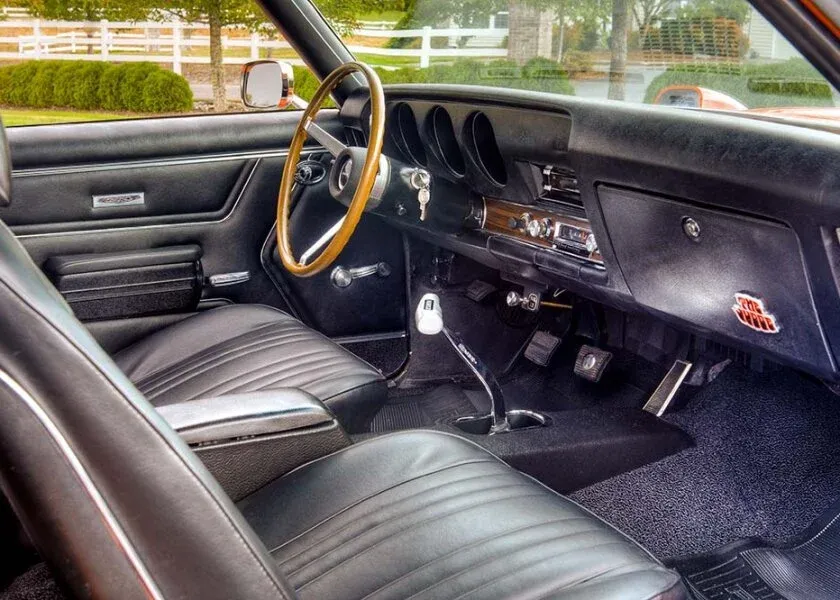
Interestingly, Pontiac paired the Judge’s aggressive image with a few unexpectedly quirky options, including a litter basket and even an interior reading lamp — small details that hinted at the GTO’s broader identity crisis between performance image and everyday practicality.
Pop Culture Roots and Lasting Legacy
The Judge’s name wasn’t a random marketing flourish — it was a direct nod to “Here Comes Da Judge,” a popular catchphrase from the 1960s sketch comedy show Rowan & Martin’s Laugh-In. The reference gave the car instant cultural relevance at a time when television catchphrases carried real weight in pop culture, and it helped the Judge stand out from competitors with more generic performance names.
That cultural footprint outlived the car’s production run. The GTO Judge made a memorable cameo appearance in the 1993 cult classic film Dazed and Confused, cementing its place in the collective memory of muscle car enthusiasts well beyond its original sales era. For many fans who never experienced the late-1960s muscle car boom firsthand, that film moment served as an introduction to the Judge’s bold styling and rebellious image.
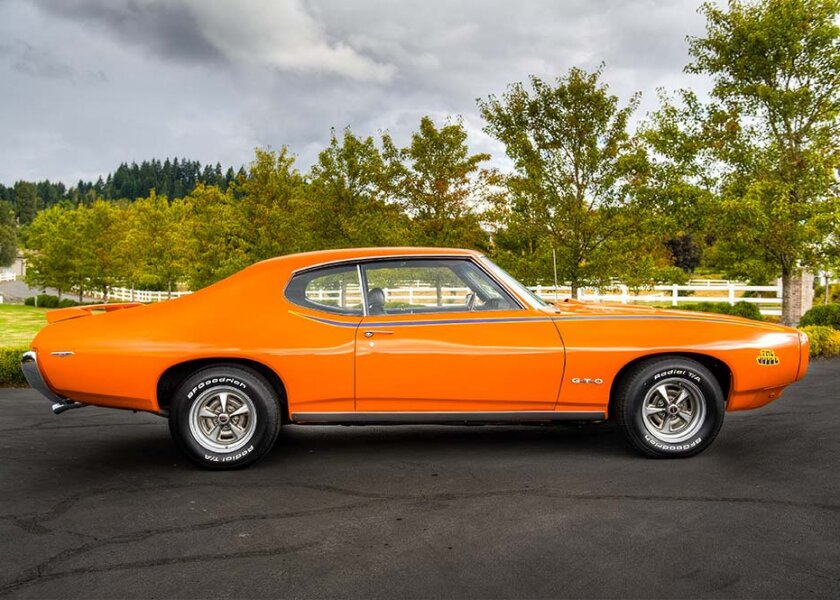 Side profile of a 1969 Pontiac GTO Judge parked on display
Final Thoughts on the GTO Judge
The 1969 Pontiac GTO Judge remains a fascinating case study in how bold marketing and aggressive styling can briefly resurrect a fading nameplate, even if they can’t solve deeper market shifts. With its Ram Air III and Ram Air IV engine options, eye-catching stripe graphics, and unmistakable spoiler, the Judge captured the spirit of late-1960s American muscle in a way few packages managed. While it couldn’t single-handedly save the GTO from its eventual decline, it left behind a legacy that collectors and classic car enthusiasts still chase today — particularly the rare convertible variants.
For anyone exploring American muscle car history, the GTO Judge stands as a reminder that performance numbers alone don’t make a legend; attitude, timing, and a memorable name matter just as much. If you’re researching classic muscle cars for a restoration project or simply building your knowledge of the era, the Judge deserves a spot near the top of the list.
What’s your take on the Pontiac GTO Judge’s place in muscle car history? Share your thoughts, and explore more profiles of classic American muscle cars from this same golden era.
References
- Pontiac Historical Services. (1969). 1969 GTO Judge Specifications and Production Records.
- Rowan, D., & Martin, D. (Executive Producers). (1968–1973). Rowan & Martin’s Laugh-In [TV series]. NBC.
- Linklater, R. (Director). (1993). Dazed and Confused [Film]. Gramercy Pictures.