
If you have ever tried to feed your dog a raw diet but struggled with the mess, the storage space, or convincing sceptical family members that raw meat won’t make your dog sick, you are not alone. Freeze-dried raw dog food has emerged as one of the most interesting solutions to this problem, offering the nutritional benefits of a raw diet without the freezer space or the defrosting routine. One of the pioneers of this approach is Jenny Golsby, founder of The Complete Pet Company in Australia, whose story offers a fascinating look at how this product category came to be and why it matters for anyone serious about their dog’s nutrition.
Jenny’s approach to pet food was never just about business. She is a committed animal rights advocate who has spent years wrestling with the same ethical tension many raw feeders face: how do you meet a carnivore’s biological needs while also caring deeply about the welfare of the animals that become that food? Her answer was to source ingredients from farms where animals are raised with genuine care, including turkeys that roost in trees and are played music, before creating a freeze-dried raw dog food that keeps those ethical standards intact while solving the practical problems that put many people off raw feeding altogether.
What Is Freeze-Drying, and Why Does It Matter for Dog Food?
Understanding freeze-dried raw dog food starts with understanding why removing water from food works so well as a preservation method. Bacteria and other pathogens need moisture to multiply, so when water is removed from meat or vegetables, spoilage organisms simply cannot thrive. Humans have used this principle for thousands of years, first through simple air-drying and later through salting, which works by drawing moisture out of food.
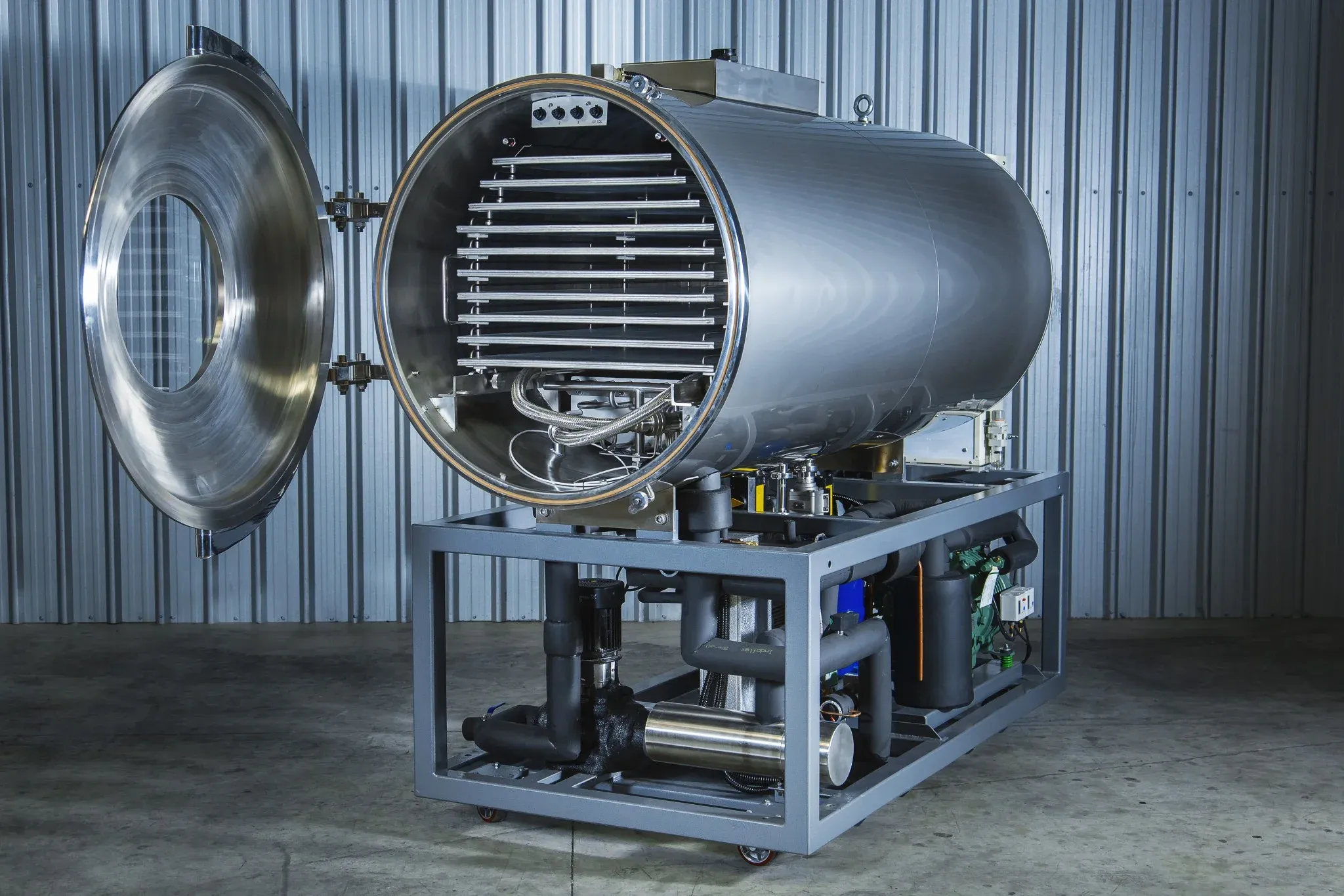
Freeze-drying takes this idea several steps further using a three-stage process. First, the food is frozen solid. It is then placed into a vacuum chamber at very low temperatures, where the frozen water crystals sublimate directly from ice into vapour without ever passing through a liquid state. A secondary drying phase then removes any remaining moisture at a slightly higher temperature. Once dried, the food is sealed in a nitrogen-flushed package to prevent oxygen or moisture from re-entering. This is the same basic technology used to produce meals for astronauts and soldiers, which explains why freeze-dried raw dog food can sit on a shelf for years rather than days.
Freeze-Drying vs Dehydrating: What’s the Difference?
Many pet owners use the terms freeze-dried and dehydrated interchangeably, but the two processes are meaningfully different. Dehydrating relies purely on airflow to remove moisture, a method many households now replicate at home with small dehydrator machines to make treats. Companies producing dehydrated meat treats for dogs have built a solid reputation on this simpler, lower-cost technique.
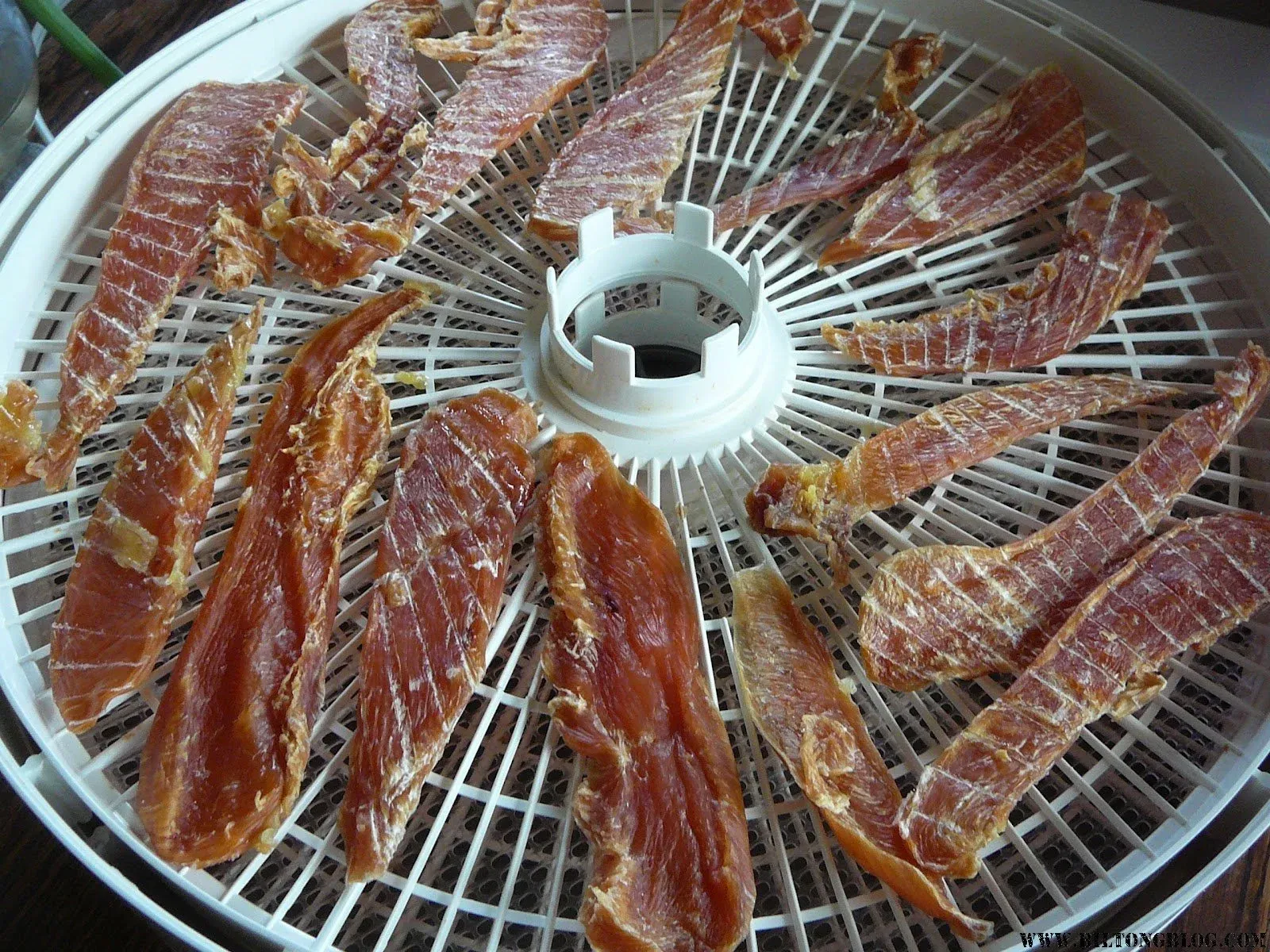
Both dehydrating and freeze-drying use gentle methods with little or no added heat, which helps preserve the nutrient content of the food far better than high-heat processing does. The key difference is that freeze-drying uses a vacuum and an extra drying stage, which typically removes more water overall. This is why freeze-dried products can last as long as two decades in some cases, compared with roughly a year for dehydrated goods. Research on food preservation has shown that freeze-drying tends to retain more nutritional value than dehydrating, largely because the process removes moisture so much faster, minimising the window in which nutrients can degrade.
Where Does Cold-Pressed Dog Food Fit In?
Cold-pressed dog food is another term gaining traction, particularly among premium pet food brands. Like freeze-drying and dehydrating, cold-pressing is fundamentally about moisture removal, but it uses a combination of mechanical pressure and moderate heat, typically between 40°C and 75°C, to partially cook the food and press out water.
Despite the word “cold” in its name, this process is not actually cold, but it is considerably gentler than the extreme heat and pressure used in standard extrusion, which remains the most common method for producing dry kibble.
Why Extrusion Is the Harshest Processing Method for Pet Food
Extrusion cooking mixes all ingredients together under very high pressure and temperatures, usually around 121°C, sustained for roughly thirty minutes. This method dominates the pet food industry largely for reasons of cost efficiency. It processes large volumes quickly and can neutralise contamination in lower-quality ingredients, including stale grains and poor-grade meat by-products. Unfortunately, this same intensity destroys much of the nutritional value of the food.
Heat-sensitive, water-soluble vitamins such as the B-complex group (thiamine, niacin, riboflavin, folic acid) and vitamin C begin degrading at temperatures as low as 40°C, with rapid losses from around 70°C onward. This is precisely why so many extruded dry foods require heavy vitamin fortification after cooking, since a large portion of the naturally occurring nutrients are destroyed during processing. Studies examining cooking at just 100°C found losses exceeding 33 percent for heat-sensitive vitamins including retinol, vitamin C, folate, and thiamine. Given that standard extrusion runs at 120°C or higher for half an hour, the losses in commercial dry dog food are typically far more severe.
The damage does not stop once the food leaves the extruder either. Vitamin concentrations in extruded pet food have been found to decline by roughly half over just six months of storage under normal conditions, with some studies documenting particularly steep drops in vitamins B1, B2, B12, C, and E. Some research has even recorded complete destruction of vitamin C and losses of up to 89 percent for vitamin B6 in certain canned products after prolonged storage. This is one of the strongest arguments in favour of freeze-dried raw dog food and other minimally processed alternatives: they simply retain far more of what nature originally put into the ingredients.
First Impressions of Freeze-Dried Raw Dog Food in Practice
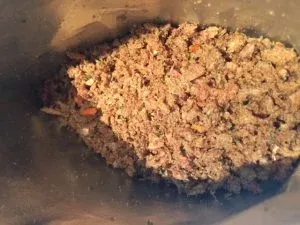
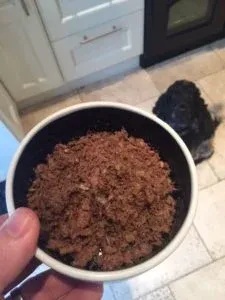
Trying a freeze-dried raw dog food product for the first time, the appearance is somewhat unexpected. Rather than resembling chunks of meat, it looks more like a coarse, fine-textured muesli. Typical ingredient lists include certified organic chicken, organic fresh fruit and vegetables, hemp oil for omega 3, 6, and 9 fatty acids, organic coconut oil, organic chia seeds, and raw honey.
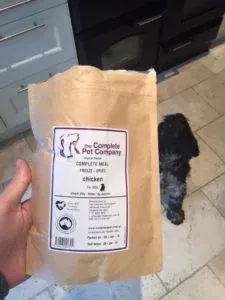 a pouch of freeze dried raw dog food
Preparation is straightforward: add water and allow the mixture to sit. It won’t reconstitute into chunky meat pieces the way a defrosted raw meal would, but it does become a thick, soup-like consistency that most dogs find highly palatable.
One notable downside is cost. Because these products typically use premium, ethically sourced ingredients and require specialised freeze-drying facilities, the price per kilogram tends to be considerably higher than conventional kibble or even standard raw diets. This is generally reflected in relatively small-batch production runs, which many manufacturers see as a feature rather than a flaw, since it keeps quality and sourcing standards consistent.
 IMG 8748 e1522749657338
Ranking Dog Food Processing Methods
When considering what to feed a dog, it helps to think of processing methods on a spectrum, from least to most damaging to nutritional value:
- Fresh meat on the bone
- Chunky minced raw meat and bone products where the ingredients are visibly identifiable
- Finely ground raw products or dehydrated raw dog food, which sit roughly on par with one another
- Cold-pressed dry dog foods that are primarily meat-based
- Extruded dry foods or canned foods that are largely meat-based with no cereal content
- Extruded “grain-free” dry foods, which still rely heavily on other carbohydrate sources like potato or pea
- Extruded cereal-based dry foods using wheat or corn, which represent the most processed and least nutritionally intact option on the market
Final Thoughts on Freeze-Dried Raw Dog Food
Freeze-dried raw dog food occupies a genuinely useful middle ground for owners who understand the benefits of raw feeding but need something more practical for travel, storage, or simply peace of mind. While nothing fully replicates the benefits of fresh meat on the bone, freeze-dried raw dog food comes remarkably close while sidestepping many of the logistical hurdles of a traditional raw diet. As with any dietary change, it’s worth discussing options with your veterinarian, particularly if your dog has existing health conditions, to make sure whichever processing method you choose lines up with their individual nutritional needs.
If you’re curious to learn more about the fundamentals of raw feeding and how to transition your dog safely, it’s worth exploring further guides on raw dog food basics to build a complete picture before making any changes to your dog’s diet.