
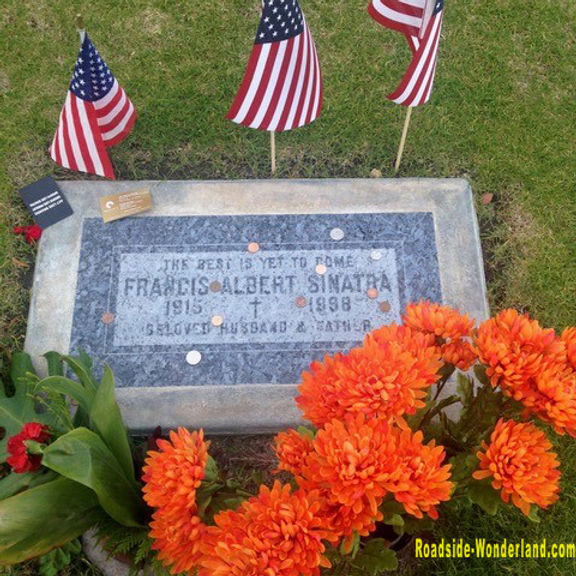
For enthusiasts of the “Golden Era” of American music, the desert landscape of Southern California holds more than just mid-century modern architecture and palm-lined avenues. It is home to a quiet, sacred destination for music lovers worldwide: the final resting place of Francis Albert Sinatra. Known affectionately as “Ol’ Blue Eyes” and “The Chairman of the Board,” Sinatra’s legacy continues to define the quintessential American songbook, making a visit to his grave a profound experience for those who cherish the timeless melodies of the past.
Desert Memorial Park, located in Cathedral City near Palm Springs, serves as the permanent home for many legends, but none cast a shadow as long as Sinatra. To visit this site is to step into a chapter of musical history that spans over sixty years, reflecting the grit, glamour, and soul of an artist who truly did it “His Way.”
A Legend Beneath the Desert Sun
Frank Sinatra passed away on May 14, 1998, at the age of 82. While his career began in Hoboken, New Jersey, his heart was deeply tied to the Coachella Valley. It was here, among the rugged mountains and sprawling estates, that he found a sanctuary from the frenetic pace of Hollywood. Choosing Desert Memorial Park as his final resting place was a testament to his love for the desert lifestyle that he and his “Rat Pack” companions made world-famous.
Sinatra was buried in Plot B-8, a modest location that belies his massive cultural influence. In a touch of character that fans find both moving and classic, he was reportedly laid to rest with a bottle of Jack Daniel’s and a pack of Camel cigarettes tucked into his suit—two items that were his constant companions throughout a life lived at full throttle. This attention to detail reminds us that even in death, Sinatra maintained the persona that captivated millions.
The Message on the Stone
Perhaps the most poignant aspect of the site is the inscription on his headstone. Rather than a somber epitaph, the marker bears the title of one of his most beloved hits: “The Best Is Yet to Come.” This phrase, written by Carolyn Leigh and Cy Coleman and famously recorded by Sinatra in 1964, serves as a final, optimistic wink to the world. It encapsulates the spirit of an era characterized by hope, sophistication, and the belief that the next great melody was just around the corner.
The headstone also identifies him as a “Beloved Husband & Father,” highlighting the man behind the myth. For international visitors, seeing these words offers a bridge between the legendary performer they know from films and records and the private individual who valued family and loyalty above all else.
An Eternal Neighborhood of Stars
A walk through Desert Memorial Park is like browsing a “Who’s Who” of 20th-century entertainment. Sinatra is surrounded by friends and collaborators who helped shape the sound of an era. Nearby lies Jimmy Van Heusen, the prolific songwriter who composed hallmarks such as “Come Fly with Me” and “Love and Marriage.”
Also resting in the same park is Sonny Bono, the former mayor of Palm Springs and half of the iconic duo Sonny & Cher. The proximity of these figures creates an atmosphere of an “eternal party,” a final gathering of the creative minds who brought joy to the post-war world. For the “Oldies” music aficionado, this site is not merely a cemetery but a monumental archive of cultural history.
Preserving the Legacy of “Oldies” Music
The enduring popularity of Frank Sinatra’s grave as a “point of interest” for travelers highlights the global appetite for authentic musical heritage. In an age of digital streaming, the physical act of making a pilgrimage to honor a pioneer like Sinatra connects fans to the tangible history of the craft. His music—ranging from swing and big band to jazz and traditional pop—remains a gold standard for vocal excellence.
To understand the “Oldies” genre is to understand the evolution of the American dream through song. Sinatra’s journey from a skinny kid in New Jersey to a global icon represents the ambition and artistry that define this musical category. By visiting his resting place, fans from London to Tokyo can pay their respects to the man who provided the soundtrack to their most cherished memories.
Conclusion
Frank Sinatra’s grave at Desert Memorial Park is more than a destination; it is a quiet reminder of a voice that will never truly go silent. As you stand in the warm desert breeze, looking down at the simple marker that promises “the best is yet to come,” you realize that his influence is woven into the very fabric of global culture. Whether you are a lifelong fan or a newcomer to the world of classic crooners, a visit to this site is a beautiful way to connect with the timeless elegance of a bygone era. Discover these immortal melodies and let the spirit of “Ol’ Blue Eyes” guide you through the rich history of American music.
References
- Lonely Planet. (2024). Frank Sinatra Grave | Greater Palm Springs, California.
- Time Magazine. (2009). Top 10 Celebrity Grave Sites.
- Palm Springs Cemetery District. (2025). Desert Memorial Park History and Interments.