
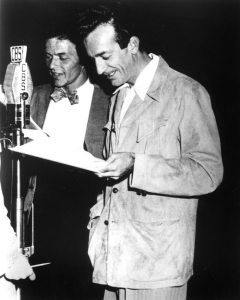
Introduction: The Voice of Generations
Frank Sinatra, known affectionately as “The Voice,” remains one of the most enduring and influential figures in American music history. His career spanned over six decades, captivating audiences with his distinctive baritone, impeccable phrasing, and undeniable charisma. Sinatra’s music transcended genres, evolving from the swing era’s big bands to the intimate ballads of his later years, leaving an indelible mark on popular culture. This timeline explores key milestones in the life and career of this legendary artist, offering a glimpse into the journey of a man who became synonymous with American music itself. Explore the rich legacy of this musical titan and understand why his songs continue to resonate with listeners worldwide.
Early Life and Beginnings
December 12, 1915: A Fighter From Birth
Francis Albert Sinatra entered the world on December 12, 1915, in Hoboken, New Jersey. His birth was a dramatic one; weighing a substantial 13½ pounds, the doctor faced difficulties during delivery. The use of forceps resulted in scars on the baby’s ear, cheek, and neck, and a punctured eardrum. Crucially, the infant wasn’t breathing. It was his grandmother, Rose, a seasoned midwife, who intervened, holding the baby under cold running water until he took his first breath with a cry. This challenging beginning foreshadowed a life of resilience and determination for Sinatra.
Summer 1934: A Romantic Encounter
While spending the summer at his aunt Josie’s house in Long Branch, New Jersey, a 19-year-old Frank Sinatra met Nancy Rose Barbato. Nancy, 17, was vacationing nearby. Frank, accompanied by his ukulele, approached her and began to serenade her. This initial encounter marked the beginning of their relationship, a significant personal milestone that would lead to marriage and family.
September 8, 1935: The First Big Break
Sinatra’s musical aspirations took a significant step forward when he and a local trio, the Three Flashes, auditioned for Major Bowes and His Original Amateur Hour. The show’s producers decided to combine them, forming a quartet known as the Hoboken Four. This appearance provided Sinatra with his first taste of wider recognition and set the stage for his future success.
The Rise of a Star
July 13, 1939: First Recording
Frank Sinatra’s recording career officially began on July 13, 1939, when he cut his first record with trumpeter Harry James. The songs, “From The Bottom of My Heart” and “Melancholy Mood,” were released on the Brunswick label. Though these initial recordings did not chart, they represented a crucial step in establishing his presence in the music industry.
January 10, 1944: Family Milestone
On January 10, 1944, Frank Sinatra Jr. was born, marking a significant personal event in the singer’s life.
June 15, 1944: Hollywood Calling
Sinatra ventured into acting, beginning to shoot the musical film Anchors Aweigh on June 15, 1944. He starred alongside the renowned musical-comedy star Gene Kelly, further expanding his artistic reach beyond music.
February 6, 1946: Critical Acclaim
His performance in the short film “The House I Live In” earned critical praise and an Honorary Award at the Academy Awards in 1946. This recognition highlighted his acting talent in addition to his vocal prowess.
March 14, 1947: Acting Success
Sinatra co-starred with Kathryn Grayson, Jimmy Durante, and Peter Lawford in MGM’s It Happened in Brooklyn. Released on March 14, 1947, the film garnered praise for Sinatra’s portrayal of a World War II veteran adjusting to civilian life, and he performed seven songs within the movie.
Summer – Fall 1947: A Star’s Leisure
During the summer and fall of 1947, Frank Sinatra was known to lead a celebrity softball team in Los Angeles called the Swooners. They played games against other star-studded teams, with Sinatra playing second base. This period also saw prominent actresses like Virginia Mayo, Marilyn Maxwell, Shelley Winters, and Ava Gardner serving as their cheerleaders, showcasing Sinatra’s social prominence.
June 20, 1948: Another Daughter
Christina “Tina” Sinatra was born on Father’s Day, June 20, 1948, becoming his second daughter.
Legacy and Enduring Influence
Frank Sinatra’s career was marked by constant evolution and an unwavering commitment to his craft. From his early days as a crooner to his iconic recordings as part of the Rat Pack and his later, more introspective work, “The Voice” consistently delivered performances that resonated deeply with his audience. His music not only defined eras but also provided a soundtrack to the lives of millions. His enduring popularity is a testament to his timeless talent and the profound emotional connection he forged with listeners across generations. Sinatra’s contributions to music and culture solidify his status as an unparalleled American icon.