
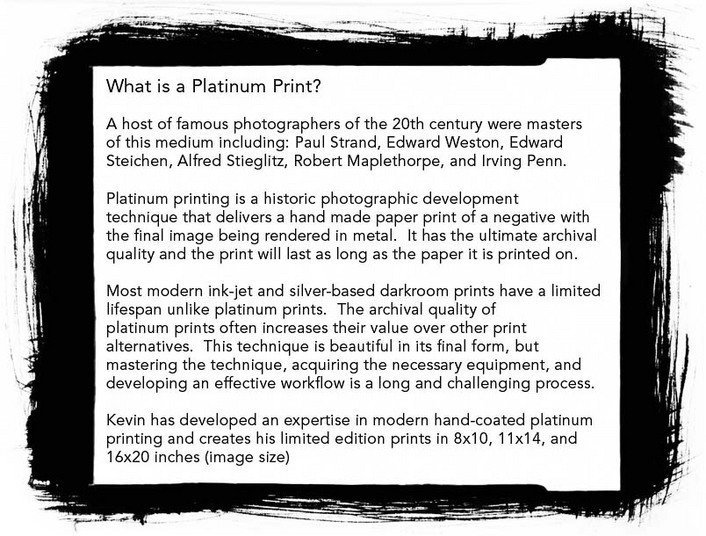
In the realm of photographic art, the Platinum printing process stands as a testament to historical techniques and unparalleled quality. Developed in the late 19th century, this method is now a rare art form, practiced by only a select few printers globally. Its virtually extinct status post-World War I was largely due to the scarcity and prohibitive cost of platinum, leading to the widespread adoption of gelatin silver printing.
The Intricacies of Platinum Printing
Each Platinum print is a unique, handcrafted piece. The process involves laying the negative, which must be the same size as the final image, directly onto paper treated with platinum salts. Unlike other methods where chemicals form a surface layer, these salts are absorbed into the very fibers of the paper. Platinum, being one of the most stable and unreactive metals, imbues these prints with exceptional longevity, rendering them chemically inert and resistant to degradation from light or time.
Artistic and Archival Value
Collectors are drawn to Platinum prints not only for their rarity but also for their superior tonal range and depth. Unlike the stark blacks and whites of gelatin silver prints, Platinum prints offer a subtle spectrum of grey tones. This nuanced gradation allows for the expression of every minute detail within the photograph, creating a depth and richness that is captivating.
Shipping and Delivery
We are pleased to offer complimentary shipping for all orders within the UK. For international orders exceeding £500, shipping is also free. A flat rate of £20 applies to international orders under £500. Please anticipate a processing time of 1 to 10 days, with an additional 1 to 14 days for shipping, depending on your location. All orders are dispatched from our warehouse in the UK, and we guarantee that all applicable customs duties and taxes are covered, ensuring no additional charges upon delivery.