
Few moments in American music history carry the weight of October 1974, when Frank Sinatra stepped onto the stage at Madison Square Garden for what would become one of the most celebrated live recordings in the oldies music canon. The Main Event: Live is not merely a concert album — it is a testament to the enduring power of traditional pop and vocal jazz, and a defining chapter in the story of one of America’s greatest entertainers.
Frank Sinatra and the Art of the Live Performance
By the early 1970s, Frank Sinatra had already cemented his place as the defining voice of traditional pop and vocal jazz in America. His recordings throughout the 1950s and 1960s — from In the Wee Small Hours (1955) to Sinatra at the Sands (1966) — had established a standard of sophistication and emotional depth that few artists could match. Yet in 1971, Sinatra stunned the music world by announcing his retirement, leaving fans and critics to wonder whether the era of the Great American Songbook had truly come to an end.
His return in 1973 with Ol’ Blue Eyes Is Back proved the doubters wrong. But it was the Madison Square Garden concert of October 1974 — broadcast live on ABC television and simultaneously released as a live album — that truly announced his comeback to the world.
Madison Square Garden, October 1974: A Night for the Ages
The Main Event: Live was recorded at Madison Square Garden in New York City, one of the world’s most iconic entertainment venues. The choice of venue was itself a statement: this was not a quiet, intimate comeback. Sinatra was returning to the grandest stage available, before a massive audience, with the cameras rolling.
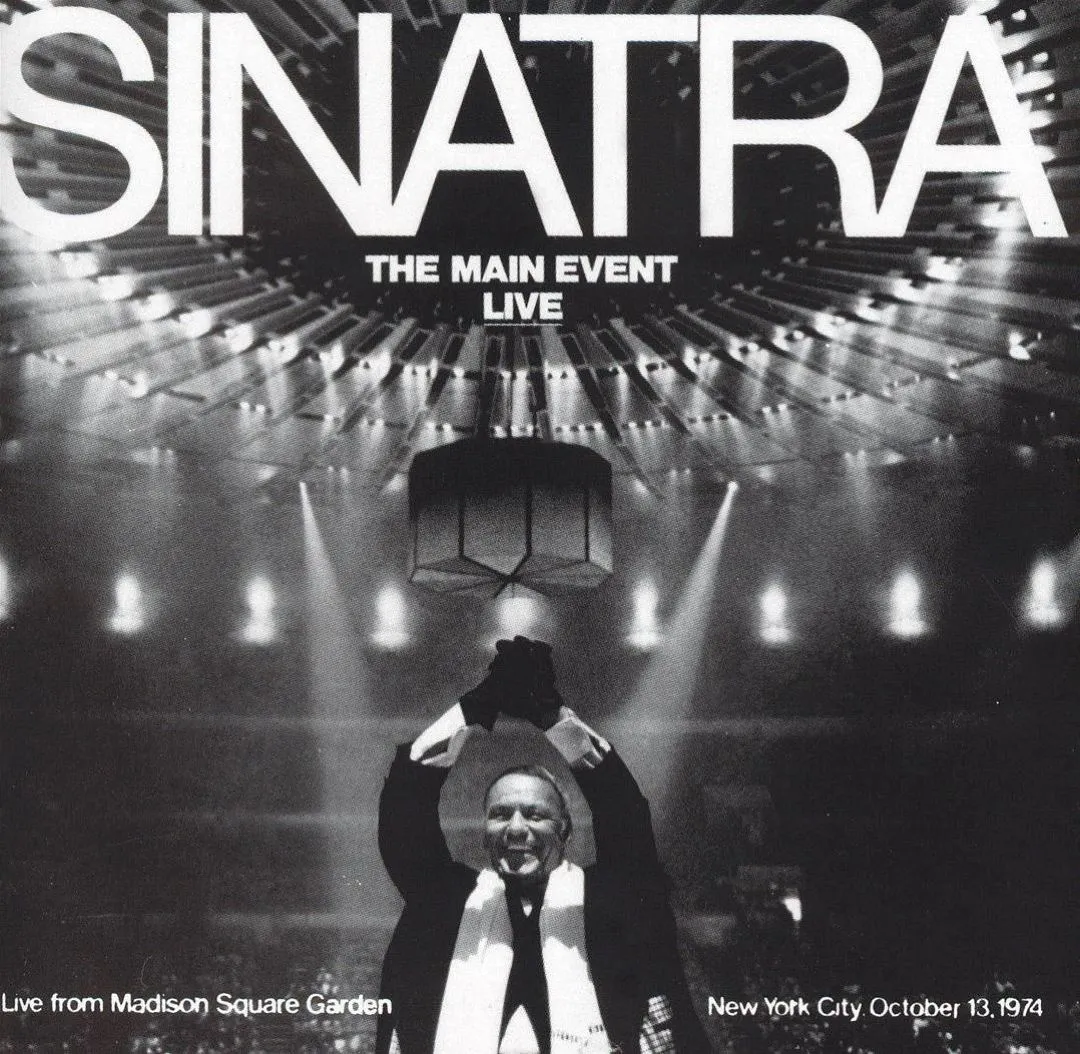
The album runs approximately 40 minutes and 58 seconds — a lean, carefully curated set that showcases Sinatra at his most commanding. Rather than overloading listeners with an exhaustive setlist, the recording captures the concentrated energy of a master performer in full command of his craft.
The Sound of The Main Event: Traditional Pop Meets Vocal Jazz
Stylistically, The Main Event: Live sits at the crossroads of traditional pop and vocal jazz — two of the defining genres of pre-1975 American music. These were not separate worlds for Sinatra. Throughout his career, he moved fluidly between the lush orchestrations of traditional pop and the looser, more spontaneous feel of vocal jazz, and this live recording captures both sides of his artistry.
Backed by a full orchestra under the baton of Woody Herman, Sinatra delivered performances that ranged from swinging, up-tempo numbers to the deeply intimate ballads that had always been his greatest strength. The interplay between Sinatra’s voice and the live orchestra is one of the album’s greatest pleasures — a reminder of what live music sounded like in an era before digital production reshaped the industry.
Why The Main Event Matters to Oldies Music Fans
For enthusiasts of oldies music and the golden era of American popular song, The Main Event: Live occupies a special place. It represents the final chapter of a performing tradition that stretched back through Sinatra’s early recordings with Tommy Dorsey in the 1940s, through the landmark concept albums of the 1950s, and into the pop crossover success of the 1960s.
The album also serves as a bridge between generations. Recorded just as rock music was consolidating its dominance over American popular culture, The Main Event was a powerful reminder that the art of the traditional pop vocalist — the singer who could tell a story, control a room, and bend a melody to emotional purpose — had not disappeared. It had simply found a new context.
Sinatra’s discography up to this point reads like a map of American popular music itself: from early vocal pop records in the mid-1940s, through the groundbreaking album-length mood studies of the mid-1950s, to the Rat Pack–era swing recordings of the early 1960s, and the bossa nova experiments with Antonio Carlos Jobim in 1967. The Main Event gathered all of these threads into a single, triumphant live performance.
Legacy and Influence
The live concert album was broadcast nationally on ABC television on November 18, 1974, reaching an audience of millions who witnessed firsthand why Sinatra had earned the title of Chairman of the Board. For many listeners, the broadcast was an introduction to a style of music that radio in 1974 had largely pushed aside in favor of rock, soul, and country.
In the decades since, The Main Event: Live has remained a touchstone for fans of classic American music before 1975 — a period increasingly recognized by music historians as one of the richest in the nation’s cultural history. The album stands alongside Sinatra’s other landmark live recordings, including Sinatra at the Sands (1966), as proof that the concert stage was where his artistry reached its fullest expression.
For anyone exploring the history of vocal jazz, traditional pop, or simply the great voices that shaped American music in the twentieth century, The Main Event: Live is an essential listen. It is music made with conviction, craft, and an understanding of what a song can mean when delivered by someone who has truly lived it.
Conclusion
The Main Event: Live endures because it captures something that cannot be manufactured or replicated: a great artist, at a pivotal moment in his career, performing with everything he has. Frank Sinatra’s October 1974 concert at Madison Square Garden is more than a historical document — it is a living reminder of why traditional pop and vocal jazz continue to move listeners decades after their golden era.
Whether you are a lifelong devotee of pre-1975 American music or a newcomer curious about the voices that shaped a nation’s soundtrack, The Main Event: Live offers an unforgettable entry point. Explore it, and discover why Frank Sinatra remains, for so many, the voice of the American century.
References
- AllMusic. (n.d.). The Main Event: Live. AllMusic. https://www.allmusic.com/album/the-main-event-live-mw0000192758
- Friedwald, W. (1995). Sinatra! The Song Is You: A Singer’s Art. Scribner.
- Granata, C. L. (1999). Sessions with Sinatra: Frank Sinatra and the Art of Recording. Chicago Review Press.