
Few names in twentieth-century popular music carry the weight of Frank Sinatra. With his effortless charm, flawless sense of timing, and magnetic stage presence, Sinatra didn’t just perform songs—he redefined what American vocal music could be. Yet his legendary career was never a solo act. Behind every unforgettable recording stood a cast of extraordinary musicians, arrangers, and fellow legends who helped shape the sound the world came to know as classic American pop. Exploring these Frank Sinatra collaborations reveals not just a singer’s rise to fame, but a snapshot of the golden era of American music itself.
Learning the Craft with Harry James and Tommy Dorsey
Sinatra’s breakthrough arrived in June 1939, when the 23-year-old joined trumpeter Harry James’s orchestra. James had recently departed Benny Goodman’s swing band, eager to build a more vocal-driven, pop-leaning sound. Sinatra proved to be exactly the voice he needed. Together they cut ten songs, including “All Or Nothing At All,” a track that became a massive hit after its 1943 reissue.
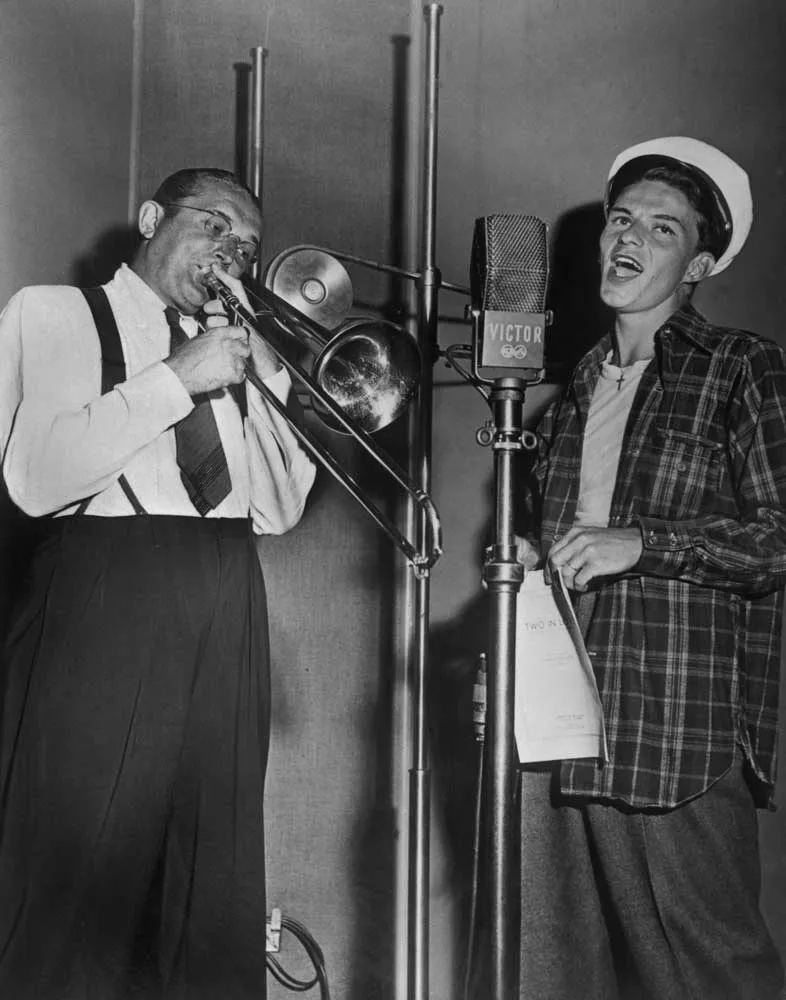
By November of that same year, Sinatra had moved on to an even bigger stage: Tommy Dorsey’s celebrated big band. During their first year together, the pair recorded more than forty songs, among them the million-selling “I’ll Never Smile Again.” Sinatra remained with Dorsey for three years, absorbing the phrasing, breath control, and stage discipline that would define his signature style before finally launching his solo career in late 1942. Listeners today can hear both breakthrough recordings on the 2015 retrospective Ultimate Sinatra.
Reinvention with Arranger Nelson Riddle
By the early 1950s, a decade into stardom, Sinatra’s career had cooled considerably. Everything changed in 1953 when he signed with Capitol Records and began working with arranger Nelson Riddle, already known for his work with Nat King Cole. Their first success, a rendition of Harold Arlen’s “I’ve Got the World on a String,” marked a triumphant comeback.
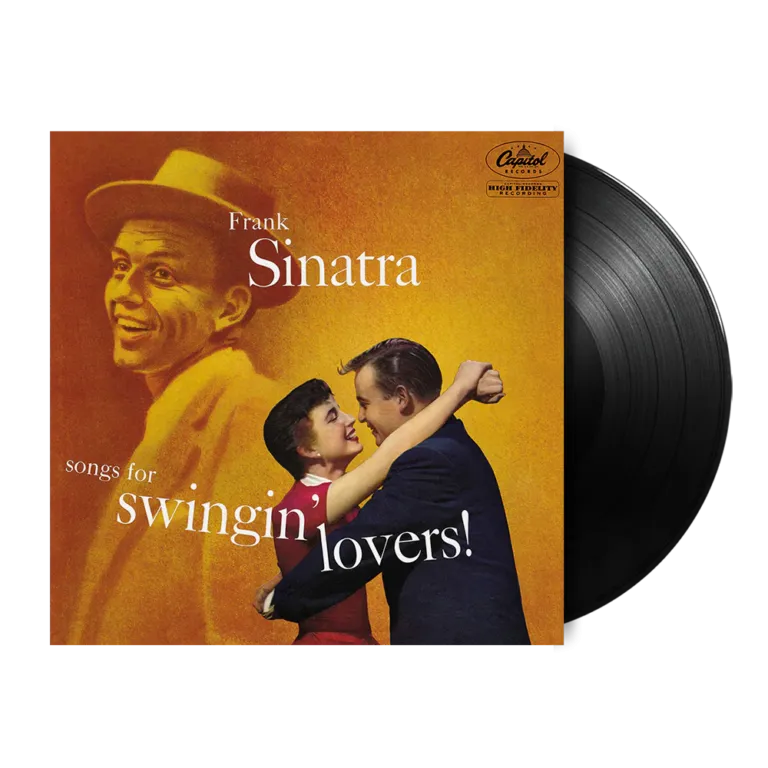
This partnership went on to produce a run of landmark albums, most notably 1956’s Songs for Swingin’ Lovers! Riddle’s lush big-band and string arrangements gave songs like “You Make Me Feel So Young” and “I’ve Got You Under My Skin” a buoyant sophistication that came to define the Sinatra sound of the era. It was this collaboration, more than any other, that cemented Sinatra as a permanent fixture of the Great American Songbook.
Crossing Borders with Antônio Carlos Jobim and Nancy Sinatra
In 1960, Sinatra launched his own label, Reprise, giving him creative freedom to pursue bolder artistic directions. The retrospective collection Nothing But the Best gathers highlights from this fertile period, including two of his most adventurous partnerships.
In 1967, Sinatra joined forces with Brazilian composer and bossa nova pioneer Antônio Carlos Jobim for a full album blending original Jobim compositions with reworked American standards. Their version of “The Girl from Ipanema” remains a striking example of cross-cultural artistry, with Sinatra’s vocals gliding over Jobim’s warm orchestral arrangement.
That same year also brought “Somethin’ Stupid,” a lighthearted duet with his 26-year-old daughter Nancy Sinatra, which became an international hit and remains a charming footnote in his catalog of musical partnerships.
Big Band Power: The Count Basie Orchestra and Quincy Jones
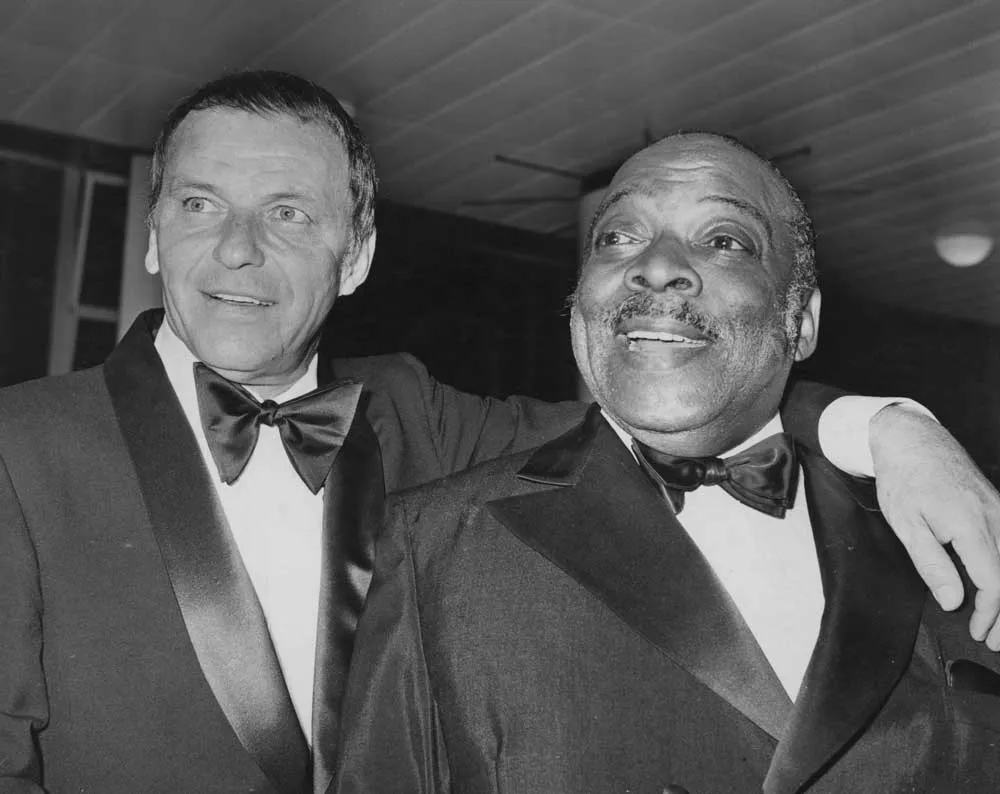
Throughout his career, Sinatra maintained close ties with jazz’s most influential big bands, and few loomed larger than the Count Basie Orchestra. Their studio collaboration began with 1962’s Sinatra-Basie, but the true highlight came in 1966 with Sinatra at the Sands, recorded live at the Copa Room of the Sands Hotel and Casino in Las Vegas.
This recording captures Sinatra at the height of his showmanship, commanding the room with the confidence that earned him the nickname “Chairman of the Board.” Songs like “Come Fly with Me” received definitive live treatments, backed by Basie’s powerhouse orchestra under the direction of a then 32-year-old Quincy Jones. It stands as one of the most essential documents of Sinatra’s live artistry.
A Final Chapter: Aretha Franklin and Luciano Pavarotti
Near the end of his life, some of music’s biggest names sought the chance to sing alongside him. In 1993 and 1994, Sinatra released two acclaimed duet albums featuring an eclectic roster of vocal stars, later compiled into the expanded 20th-anniversary edition of Duets.
Among the standout moments is Aretha Franklin’s jazz-tinged performance on “What Now My Love,” and a previously unreleased version of his signature song “My Way,” performed alongside opera legend Luciano Pavarotti. Both recordings serve as a fitting farewell from an artist who set the gold standard for emotional storytelling through song.
The Lasting Legacy of Sinatra’s Musical Partnerships
From the swing-era big bands of Harry James and Tommy Dorsey to the operatic grandeur of his final duets, Frank Sinatra’s career was built on a remarkable ability to elevate—and be elevated by—the artists around him. These collaborations didn’t just produce hit records; they helped define an entire era of American music, blending jazz, pop, and orchestral tradition into something timeless.
For anyone discovering this golden age of American song for the first time, Sinatra’s catalog offers a perfect starting point. Dive into these classic recordings, and hear firsthand why his voice—and the artists who shaped it alongside him—continue to resonate decades later.