
Maintaining your pressure washer involves more than just firing it up when dirt and grime accumulate. One of the most critical, yet often overlooked, aspects of pressure washer upkeep is using the correct oil. The lubricant you choose is vital for ensuring the longevity and smooth operation of both the engine and the pump. So, what kind of oil does a pressure washer use? The answer isn’t a simple one-size-fits-all; it depends entirely on whether you’re servicing the engine or the pump, and the type of machine you own—gas or electric. This comprehensive guide will walk you through the different oils required for pressure washers and provide essential tips for performing oil changes and proper maintenance.
Types of Oil for Pressure Washer Engines
For gas-powered pressure washers, the engine requires motor oil to lubricate its internal moving parts, such as pistons, valves, and crankshafts. This oil is similar to what you would use in a lawnmower or small car, but selecting the right viscosity and type based on your operating environment and the engine’s specifications is crucial for optimal performance.
Common Types of Engine Oil:
SAE 30 Oil: This is a standard, straight-weight oil commonly used in most small engines, including those found on pressure washers. It is ideal for warmer climates and operating conditions where temperatures consistently stay above 40°F (4°C). Its simple formulation provides reliable lubrication for air-cooled engines that operate at consistent, warm temperatures.
SAE 10W-30: If you use your pressure washer in areas with fluctuating temperatures or during seasons that span both cool and warm weather, SAE 10W-30 is a more versatile choice. The “10W” indicates its performance in cold weather (the “W” stands for winter), allowing for easier starting, while the “30” provides the necessary protection at normal operating temperatures. This multi-grade oil offers better performance when the weather is unpredictable.
Synthetic Oil: For enhanced protection, especially in extreme temperatures, some pressure washer engines can benefit from synthetic oil. Synthetic oils are engineered to provide superior lubrication, reduce friction, and resist thermal breakdown better than conventional oils. They tend to last longer and are an excellent choice for high-hour users or those operating in very hot or cold conditions.
Pro Tip: Before adding any oil, always refer to your pressure washer’s user manual to confirm the manufacturer’s recommended type and viscosity of engine oil for your specific model. Using the wrong oil can void your warranty and lead to engine damage.
Oil for Pressure Washer Pumps
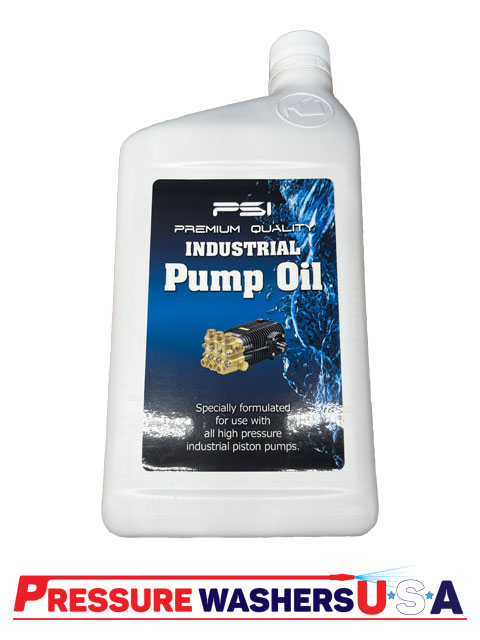
A common point of confusion for many users is that pressure washer pumps also require their own lubrication to function correctly. The pump oil is critical for ensuring the internal components, such as plungers, seals, and valves, move smoothly under high pressure. This oil also helps dissipate heat, preventing the pump from overheating during extended use.
It’s important to note that not all pressure washers require pump oil maintenance. Electric models often feature sealed pumps that are lubricated for life and do not require oil changes. In contrast, gas-powered models typically have serviceable pumps that require regular oil checks and changes.
Common Types of Pump Oil:
Non-Detergent Pump Oil (SAE 30): Most pressure washers with an oil-lubricated pump require non-detergent oil. The “non-detergent” specification is crucial. Detergent oils, commonly used in engines, are designed to hold contaminants in suspension. In a pump, these suspended particles can cause foaming and lead to seal damage, scoring of internal components, and eventual pump failure. Non-detergent oil allows contaminants to settle out, ensuring clean lubrication for the precision parts.
Synthetic Pump Oil: For higher-end or commercial-grade models, synthetic pump oil can provide superior performance and extend the life of the pump. It offers better resistance to thermal breakdown, maintains its viscosity in extreme temperatures, and can provide enhanced protection against wear, making it a worthwhile investment for demanding applications.
Important Note: Never use standard engine oil in your pressure washer pump. Engine oil contains detergents and additives that are not compatible with the pump’s internal seals and precision components. Always use a pump oil specifically designed for high-pressure washer applications.
How to Change the Oil in a Pressure Washer
Performing regular oil changes is one of the most effective ways to keep your pressure washer running smoothly and extend its operational life. Both the engine and the pump require periodic oil changes to prevent sludge build-up, ensure proper lubrication, and remove microscopic metal particles that accumulate over time.
How to Change Engine Oil:
- Warm Up the Engine: Run the pressure washer for a few minutes to warm up the engine. Warm oil flows more easily and will drain more completely, taking more contaminants with it.
- Turn Off the Engine and Ensure Safety: Turn off the engine and disconnect the spark plug wire to prevent accidental starting. Place the machine on a level surface.
- Drain the Old Oil: Position an oil drain pan under the engine. Locate the oil drain plug, usually found beneath the engine base, and remove it, allowing the oil to flow completely into the pan. If your model does not have a drain plug, you can carefully tilt the pressure washer to pour the oil out through the oil fill hole.
- Refill with New Oil: Replace and tighten the drain plug. Place a funnel into the oil fill hole and refill the engine with fresh oil as specified in your manual (typically SAE 30 or 10W-30). Pour slowly to avoid overfilling.
- Check the Oil Level: Use the dipstick (if equipped) to verify the oil level is correct. The oil should be within the marked range—neither too low nor too high.
How to Change Pump Oil:
- Turn Off and Cool Down: Ensure the pressure washer is off and the pump has had time to cool down to a safe temperature to avoid burns.
- Locate the Pump Oil Plug: Find the pump’s oil fill plug and drain plug. Their location varies by model, so consult your manual if needed.
- Drain the Old Oil: Place a drain pan under the pump. Remove the drain plug (and the fill plug to allow for venting) and let the old oil drain out. You may need to tilt the machine to ensure complete drainage.
- Refill with New Pump Oil: Replace and tighten the drain plug. Using a funnel, refill the pump with non-detergent pump oil or synthetic pump oil as recommended by the manufacturer. Fill until the oil reaches the level of the fill hole’s threads. Do not overfill, as this can cause excessive pressure and seal failure.
Pro Tip: For Active pressure washers, always consult the user manual and the manufacturer’s support website for specific oil type recommendations and maintenance intervals. For instance, if you own an Active 2.3 model, 85W-90 motor oil is often suggested for pump oil changes.
How Often Should You Change Pressure Washer Oil?
The frequency of oil changes depends largely on how often you use the machine and the operating conditions. Establishing a regular maintenance schedule is key to preventing premature wear.
Engine Oil: For gas-powered models, it is best to change the engine oil after the first 5 hours of use to remove initial metal shavings and contaminants from the break-in period. After that, change the oil every 50 hours of use or at least once per season, whichever comes first.
Pump Oil: Pump oil does not need to be changed as frequently as engine oil. The standard recommendation is to change the pump oil after every 300 hours of use or annually, depending on your usage patterns.
Important Tip: Before each use, get into the habit of checking both the engine and pump oil levels. Running the machine with low or dirty oil can cause severe, often irreparable, damage to both the engine and pump, leading to costly repairs or the need for a complete replacement.
Oil Recommendations for Different Pressure Washer Models
While the general guidelines above apply to most machines, specific pressure washer brands and models may have unique oil requirements. Here’s a general overview based on common engine manufacturers:
- Honda Engines: Many pressure washers equipped with Honda engines recommend SAE 10W-30 motor oil for its versatility across a wide range of temperatures. Always check the engine’s specific guidelines.
- Briggs & Stratton: For Briggs & Stratton engines, SAE 30 is a common recommendation for warmer temperatures, while 10W-30 is suitable for varied climates. Their pumps often require a non-detergent pump oil.
Again, the golden rule is to always defer to the user manual for your specific pressure washer model to ensure you are using the correct oil and maintaining the machine correctly.
Conclusion
Selecting the right oil for your pressure washer is not just a minor detail—it is a fundamental aspect of ensuring its smooth operation and long-term reliability. Whether you are maintaining the engine or the pump, using the correct type of oil makes a significant difference in performance and durability. Remember that the engine typically requires motor oil like SAE 30 or 10W-30, while the pump needs a specialized non-detergent or synthetic pump oil. Never mix these up.
By always consulting your manual for specific recommendations and adhering to a regular schedule for oil changes and level checks, you can protect your investment and ensure your pressure washer is always ready to deliver peak performance. Keep it well-maintained, and it will continue to provide the power and reliability you need for all your cleaning tasks for years to come.