
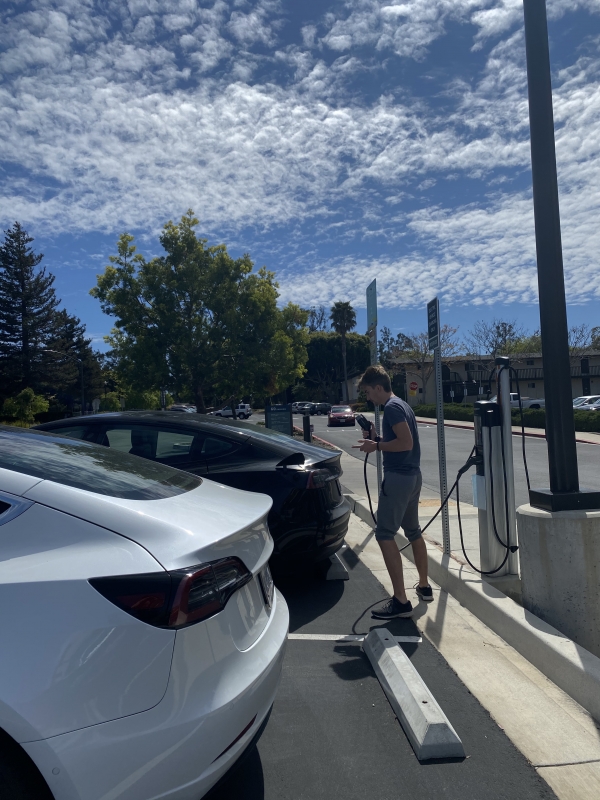
Navigating the electric vehicle (EV) charging landscape on campus can be a complex task for drivers. Understanding the available options, associated costs, and specific requirements is crucial for a seamless charging experience. This guide breaks down the two primary charging solutions available: ChargePoint and Trickle-Charge, providing clarity for EV owners.
Understanding Campus Charging Solutions
University campuses are increasingly adopting EV infrastructure to support sustainable transportation. At this particular campus, EV drivers have two distinct charging pathways: the fast, pay-per-use ChargePoint network and the more basic, permit-based Trickle-Charge system.
ChargePoint: High-Speed, Pay-Per-Use Charging
The ChargePoint network offers a higher charging speed, delivering up to 6.6 kW/h. These stations are conveniently located in several parking lots, including Lots 10, 18, 22, 57, 59, and 60. To utilize ChargePoint stations, drivers must possess a valid parking permit for the specific lot and pay for the electricity consumed on a per-kilowatt-hour basis through the ChargePoint app. It’s important to note that these power costs are subject to change based on fluctuating energy prices. The ChargePoint system is designed for those who need a quick and efficient charge, offering a convenient solution for daily use.
Trickle Charge and EV Power Permits
For drivers seeking a more economical charging option, the Trickle Charge system is available. This method provides a slower charge, up to 1.9 kW/h, and requires an EV Power Permit. These permits can be purchased in flexible 4-hour increments or as a long-term solution. Long-term EV Power Permits allow unlimited trickle-charging for a single vehicle registered to the permit, specifically at the designated Level 2 (240V 8A) trickle-charge spaces. This option is ideal for drivers who have more time for charging and are looking to manage their expenses more closely.
Parking Lot Charging Port Breakdown
To further assist EV drivers, a detailed breakdown of charging ports available in each parking lot is provided:
| Parking Lot | ChargePoint (Up to 6.6 kW/h, Pay per kWh) | Trickle Charge (Up to 1.9 kW/h, Permit Required) |
|---|---|---|
| 1 | 19 x EV-Available | |
| 10 | 8 x EV-Only | 4 x EV-Only (Entry level), 11 x EV-Available (3rd floor), 12 x EV-Available (4th floor) |
| 18 | 8 x EV-Only | 9 x EV-Only |
| 22 | 4 x EV-Only | 11 x EV-Only (Level below Ocean Rd. entrance) |
| 50 | 2 x EV-Only (Bottom level, southeast corner) | |
| 57 | 2 x EV-Only | |
| 59 | 4 x EV-Only ($2/hour additional fee after 5 hours) | |
| 60 | 4 x EV-Only (4kW/h shared circuits; charge speed may decrease if multiple vehicles charging) | |
| Navigator Way | 2 x EV-Only |
It’s important to remember that the cost of an EV Power Permit is in addition to the standard parking fees. This tiered pricing structure for permits is based on the vehicle’s battery capacity, ensuring a fair system for all users.
Understanding EV Power Permit Costs
The EV Power Permit Pilot Program offers various pricing tiers for trickle-charging based on vehicle battery size, effective as of July 1, 2019. These rates apply only to non-ChargePoint trickle-charge locations.
For vehicles with smaller battery capacities, such as the Audi A3 Sportback E-Tron, BMW 330e, and Toyota Prius Plug-In Hybrid, the monthly cost for power is $15. This category includes a wide range of plug-in hybrid models from various manufacturers.
A mid-tier pricing of $37.50 per month applies to vehicles with larger batteries, including models like the Chevrolet Volt, Chrysler Pacifica Minivan Plug-In Hybrid, and Toyota RAV4 Prime Plug-In Hybrid.
Finally, vehicles with the largest battery capacities, such as Tesla Model S, Tesla Model 3, Porsche Taycan, and Volkswagen ID.4, face a monthly power cost of $45. This tier encompasses many of the current all-electric vehicles on the market.
It is crucial to note that these pilot program rates are subject to change with 30 days’ notice.
Payment Options and Permit Proration
Drivers have several convenient options for purchasing their EV power permits. Payment can be made via pretax payroll deduction (PRD), which may offer tax advantages. Alternatively, payments are accepted in cash, by debit/credit card, or by check payable to UC Regents.
Permits purchased after June 30 are prorated. The fee is adjusted to reflect the remaining months until June 30 of the following year, especially when that year ends in an odd-numbered year. This ensures that users only pay for the period they utilize the service.
Conclusion and Call to Action
Choosing the right EV charging solution on campus depends on individual needs, charging frequency, and budget. ChargePoint offers speed and convenience for those on the go, while the Trickle-Charge system, with its associated EV Power Permits, provides a more cost-effective option for drivers with more flexible schedules. By understanding these options and their associated costs, EV drivers can make informed decisions to keep their vehicles powered up efficiently.
What are your experiences with EV charging on campus? Share your thoughts and tips in the comments below!