
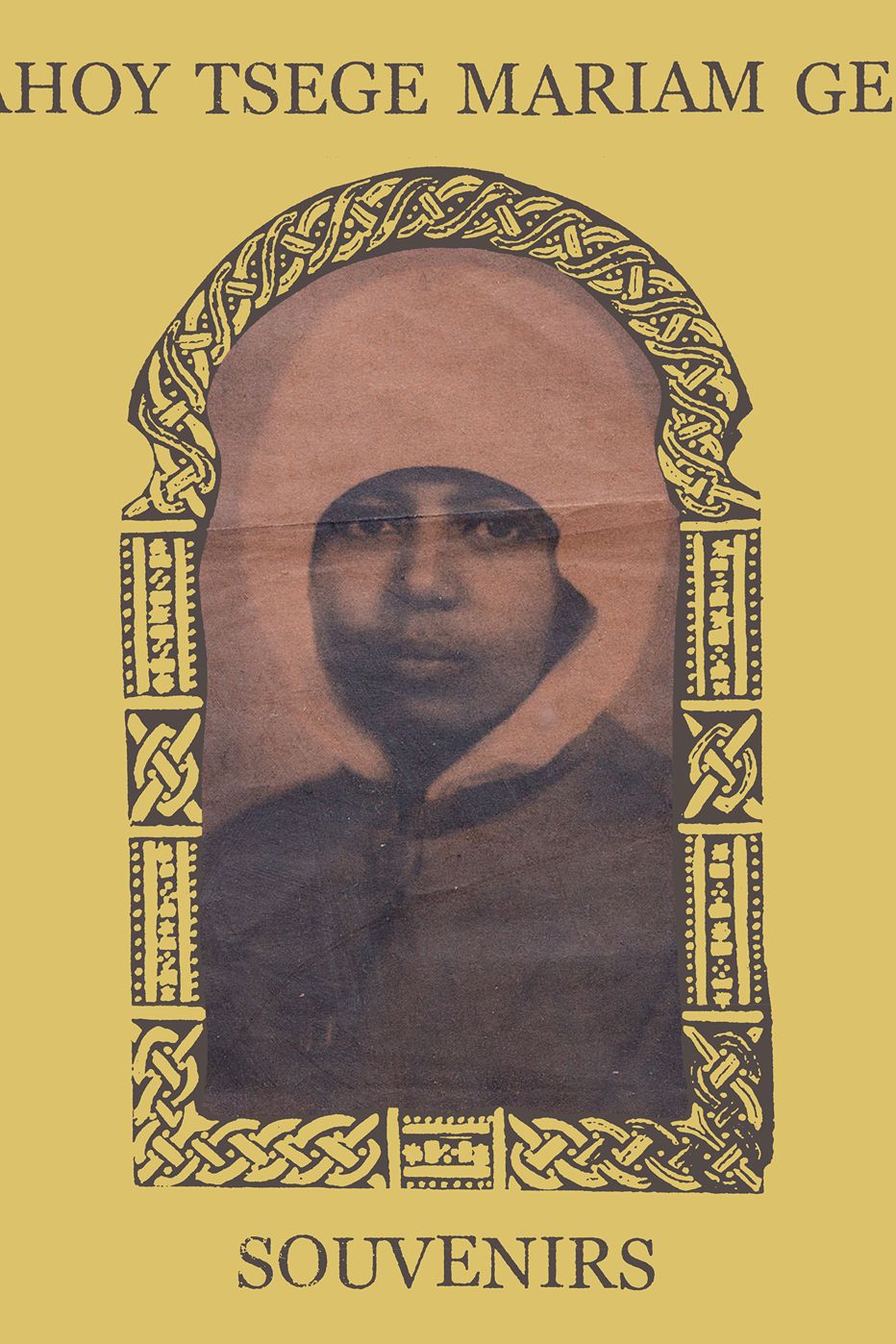
Emahoy Tsegué-Maryam Guèbrou, an Ethiopian composer, pianist, and nun, has carved a unique path through the 20th and 21st centuries, her life a testament to artistic dedication and personal resilience. Despite a career that blossomed later in life, her distinctive musical compositions, a fusion of Western classical training and ancient Ethiopian modal chants, have captivated audiences worldwide. This exploration delves into the life and music of this extraordinary artist, offering a glimpse into the experiences that shaped her sound and her unwavering spirit.
Early Life and Musical Awakening
Born in 1923 into a privileged Ethiopian family, Emahoy’s early life was marked by a progressive education. Alongside her sister, she was among the first girls to be sent abroad for schooling, embarking on a journey by train and ship to a Swiss boarding school at the tender age of six. It was here that she first encountered Western classical music, discovering a prodigious talent for the piano and violin. Her return to Addis Ababa in the 1930s saw her immerse herself in high society, even singing for Emperor Haile Selassie. Portraits from this era capture a stylish young woman with a confident demeanor, who also defied norms by becoming the first woman to work for the Ethiopian civil service and the first to sing within an Ethiopian Orthodox church.
Disruption and Redirection
Emahoy’s promising trajectory was dramatically altered in 1936 by Mussolini’s invasion of Ethiopia. The conflict resulted in the tragic deaths of three family members and led to her evacuation to Europe. Despite this profound loss, her resolve to pursue music remained. She found a mentor in esteemed Polish violinist Alexander Kontorowicz in Cairo, dedicating herself to nine-hour practice sessions daily. However, the Egyptian heat proved detrimental to her health, prompting a return to the more temperate climate of Addis Ababa.
A pivotal moment arrived when, at 23, Emahoy was offered a scholarship to the Royal Academy of Music in London. The reasons for her being refused permission to attend remain undisclosed, a personal crossroads that led her to turn away from a classical concert pianist career and towards spiritual devotion. “It was His willing,” she stated, her choice to respond to life’s unexpected turns by dedicating herself to God.
A Singular Musical Voice
Following her decision to become a nun, Emahoy spent a decade in solitude at a hilltop monastery in northern Ethiopia. Upon her return to music, she began composing her own pieces, drawing inspiration from her classical training and the pentatonic chants of the Orthodox church. Her music possesses a remarkable timelessness, characterized by virtuosic ornamentation and melodies that possess a lilt reminiscent of Chopin waltzes, yet are distinctly original. Her compositions eschew regular meter and a fixed pulse, with melodies that fluidly navigate between traditions and float on their own unique axis.
The Éthiopiques and Global Recognition
Many listeners were first introduced to Emahoy’s music through her solo piano album, released in 2006 as part of the acclaimed Éthiopiques collection. This series, which also featured the vibrant Ethio-jazz that emerged from Addis Ababa in the 1960s, brought her “poised, bluesy, freewheeling waltzes” to an international audience. While she expresses fondness for fellow Éthiopiques musicians like Mulatu Astatke and Alemayehu Eshete, Emahoy maintains that her music is not jazz, but rather a unique fusion rooted in her classical training and spiritual influences.
A Legacy of Resilience and Artistry
In her later years, Emahoy continued to be a force of creativity and wisdom. Living in Jerusalem, she worked tirelessly on her music, collaborating with artists like Israeli musician Maya Dunietz, who helped publish her work for the first time. The resulting volume, containing 12 pieces, was just a fraction of her prolific output, with dozens more compositions awaiting publication or completion.
Even from her bed, Emahoy remained engaged with the world, discussing global politics and offering her perspective. Her life story is one of profound adaptation and an unwavering commitment to her art. She famously told the author, “We can’t always choose what life brings, but we can choose how to respond.” This philosophy resonates through her music and her enduring spirit, encouraging listeners to embrace equality and find strength in their own chosen paths. Her legacy is that of a singular artist whose unique musical language continues to inspire, a testament to the power of choosing how to respond to life’s intricate journey. Explore the evocative sounds of Emahoy Tsegué-Maryam Guèbrou and discover the depth of her extraordinary musical world.