
Few love songs in the history of American popular music carry the tenderness and staying power of “Can’t Help Falling in Love.” Written by George Weiss, Hugo Peretti, and Luigi Creatore, and recorded by Elvis Presley on March 23, 1961, the ballad has become one of the most beloved songs of the oldies era, a gentle promise wrapped in a melody that still moves audiences more than six decades later. For English-speaking listeners discovering the golden age of American music, this song is a perfect gateway into understanding why Elvis Presley remains the defining voice of Pre-75 oldies music, and why his ballads continue to resonate across generations and cultures.
The Song and Its Meaning
The lyrics of “Can’t Help Falling in Love” borrow their central metaphor from a river flowing surely to the sea, a natural and inevitable force, much like the narrator’s love. Lines such as “wise men say only fools rush in” give the song a gentle humility, while the closing plea, “take my hand, take my whole life too,” turns the piece into a quiet vow rather than a grand declaration. This restrained, sincere songwriting style is a hallmark of the golden era of America music, where emotional honesty often mattered more than vocal spectacle.
The song was first released as part of the soundtrack to Blue Hawaii, one of Elvis’s most successful film projects, and it has since been recorded by countless artists, played at weddings worldwide, and used in films and commercials, proof of its universal emotional appeal.
Blue Hawaii: A Career-Defining Soundtrack
To understand the song’s origin, it helps to look at the film that introduced it. On March 14, 1961, Elvis and his entourage flew to Los Angeles so he could begin production on Blue Hawaii. Rather than recording in Nashville, where much of his non-soundtrack material was produced, Elvis worked with Radio Recorders in Hollywood for the film’s music, a choice that gave the soundtrack a distinct, cinematic sound.
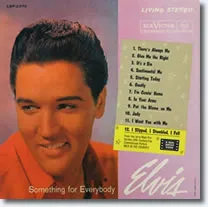
The results were extraordinary. Blue Hawaii became Elvis’s best-selling movie soundtrack, topping the Billboard albums chart two months after its October 1961 release and holding the No. 1 spot for twenty consecutive weeks, a record for a rock performer that stood until Fleetwood Mac’s Rumours broke it in 1977. The album remained on the charts for seventy-nine weeks and was certified double platinum by the RIAA in 1992, a remarkable achievement for a modestly budgeted musical comedy soundtrack.
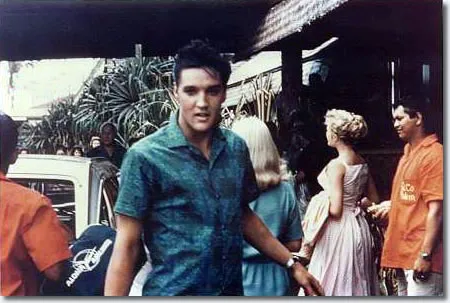
During his time in Hawaii for the film, Elvis stayed near the Coco Palms Resort, a location that became closely associated with his Hawaiian film era and the romantic, island-inspired imagery that surrounded songs like “Can’t Help Falling in Love.”
A Year of Recognition: Memphis, 1961
The year 1961 was significant for Elvis Presley beyond the recording studio. On February 25, he appeared at a luncheon in Memphis where numerous awards were presented to him, and Tennessee Governor Buford Ellington proclaimed the day “Elvis Presley Day.” From that point on, Elvis began an annual tradition of donating to Memphis-area charities, a practice that eventually grew to include fifty or more organizations. The city later honored him with a large plaque listing all the charities he had supported, a testament to his enduring generosity and his deep ties to his hometown.
Shortly afterward, on March 8, 1961, Elvis addressed the Tennessee State Legislature in Nashville and accepted the honorary title of “Honorary Colonel,” a symbolic recognition of his growing stature not just as an entertainer, but as a cultural figure in American public life.
The Aloha from Hawaii Legacy
While recorded in 1961, “Can’t Help Falling in Love” would go on to close one of the most extraordinary broadcasts in television history: the Elvis: Aloha from Hawaii satellite special of January 14, 1973. Broadcast live from the Honolulu International Center Arena, the show was beamed via satellite to countries across Asia and delayed to roughly thirty European nations, eventually reaching an estimated one billion to 1.5 billion viewers worldwide, more households than watched the first moonwalk. Elvis, understandably nervous as the first entertainer ever to attempt a live satellite broadcast, delivered what many consider the pinnacle of his career, closing the historic performance with the very song that had captured hearts over a decade earlier.
The concert doubled as a charity event, raising $75,000 for the Kui Lee Cancer Fund, named after a Hawaiian composer who had died of cancer in his thirties, adding a layer of poignancy to an already historic night.
Conclusion: An Enduring Musical Legacy
“Can’t Help Falling in Love” endures because it captures something universal: the surrender to love as an unstoppable, natural force. Born out of a prolific and historically rich year for Elvis Presley, one filled with chart-topping soundtracks, civic honors, and charitable milestones, the song has traveled far beyond its 1961 origins to become a defining piece of Pre-75 oldies music. Its journey from a modest movie ballad to the emotional closer of one of television’s most-watched broadcasts shows exactly why the golden era of America music continues to captivate listeners around the world.
For anyone beginning to explore the treasures of vintage American music, this song, and the remarkable year that surrounded its creation, offers a perfect starting point. Take the time to listen closely, and discover why these timeless melodies still can’t help but move us today.