
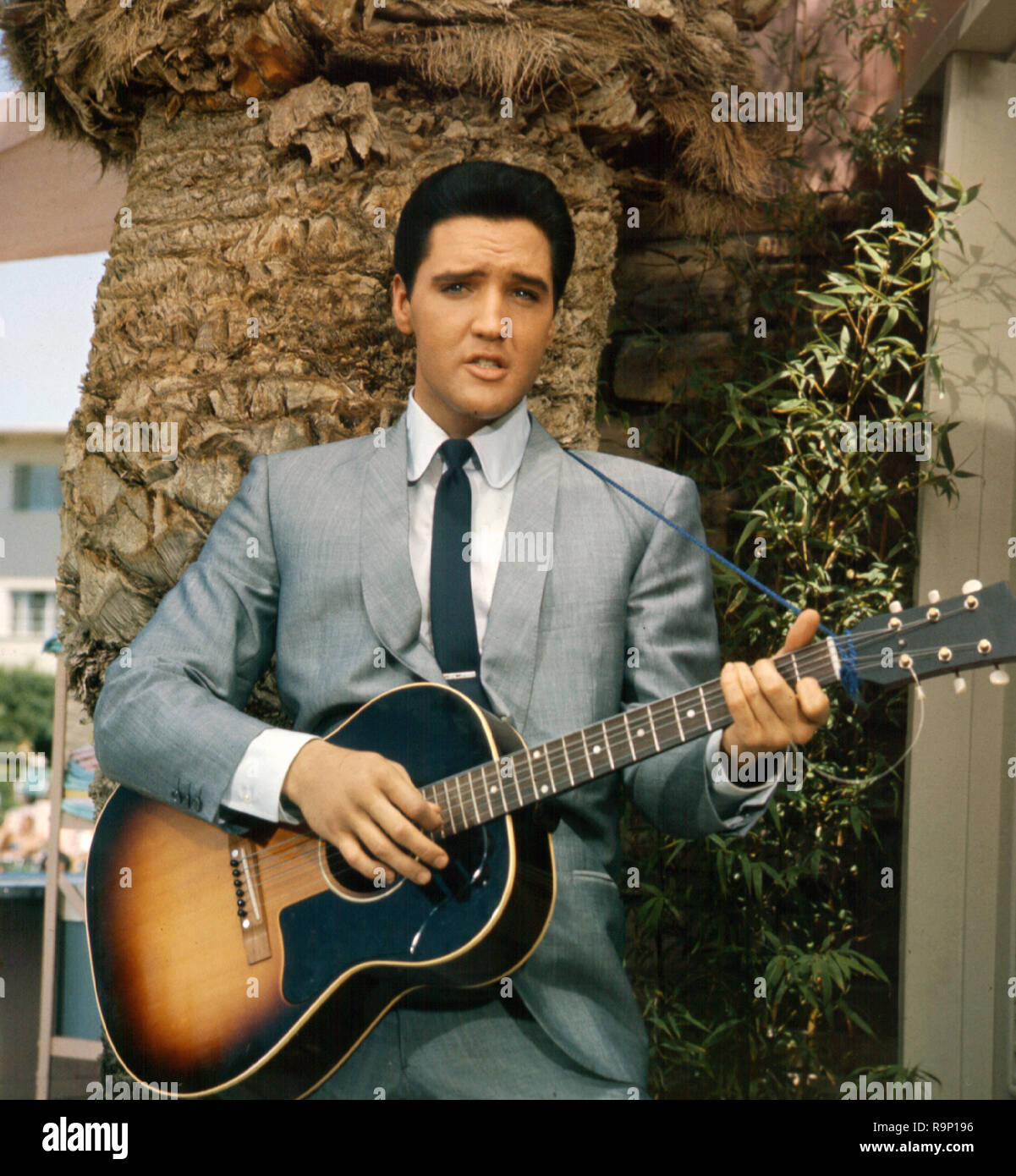
The mid-to-late 1960s marked a period of profound change and resurgence for Elvis Presley. This era witnessed significant personal milestones, including his marriage to Priscilla Beaulieu and the birth of their daughter, Lisa Marie. Professionally, it was a time of career redefinition, highlighted by the groundbreaking 1968 Christmas special, his first Grammy Award, and triumphant returns to live performance in Las Vegas. This period laid the groundwork for the next exciting phase of his legendary career.
A Shift in Personal and Professional Life
Early 1966: Expanding Horizons
January 1966 saw Elvis’s contract with MGM extended for four more films, signaling continued demand for his cinematic presence. Personal life also took shape with the addition of a “trophy room” to Graceland to house his growing collection and a playful moment on January 22nd as Elvis and friends built a large snowman.
February – April 1966: “Spinout” and Musical Exploration
The early months of 1966 were dedicated to recording the soundtrack and filming his 22nd movie, “Spinout,” alongside co-star Shelley Fabares. This period also ignited a renewed passion for music, prompting Elvis to invest in new equipment and spend more time composing at home, with a particular interest in folk music. Simultaneously, a customized Greyhound bus, crafted by George Barris, became part of his entourage.
On March 30th, “Frankie and Johnny” premiered nationwide, though it did not achieve significant box office success, with its soundtrack album peaking at #20.
May – September 1966: “How Great Thou Art” and “Double Trouble”
May 25th marked Elvis’s first meeting with his new record producer, Felton Jarvis, commencing work on the album “How Great Thou Art.” This session was notably energized by his collaboration with the esteemed gospel singer Jake Hess and his group, The Imperials. The summer months, from June to September, were occupied with soundtrack recordings and filming for “Double Trouble.”
July – December 1966: “Paradise, Hawaiian Style” and Career Consolidation
“Paradise, Hawaiian Style” was released on July 6th, reaching #40 for the year, while its soundtrack album climbed to #15. The single “Love Letter” achieved a respectable #19 on the charts. By July 12th, Colonel Parker strategically declined a Japanese movie deal, stating Elvis was fully booked through 1969. Demonstrating confidence in his enduring appeal, RCA extended Elvis’s contract on August 30th, 1966, through 1974. The latter half of the year saw him filming and recording for “Easy Come, Easy Go,” with “Spinout” premiering nationally on November 23rd, reaching #57 for the year and its soundtrack album hitting #18. Elvis was recognized as the 10th highest-paid star of the year. The year concluded with a significant personal step: Elvis’s serious engagement with horseback riding, culminating in purchasing a 163-acre ranch in Mississippi in February 1967, and a Christmas proposal to Priscilla, presenting her with a diamond ring.
A New Beginning: Marriage, Music, and the Iconic ’68 Special
Early 1967: Personal Milestones and Musical Acclaim
The Circle G ranch, acquired in February 1967, provided a much-needed sanctuary and space for his burgeoning equestrian hobby. This period also saw the release of RCA’s “How Great Thou Art,” his second gospel album, which garnered excellent reviews and earned Elvis his first Grammy Award for Best Sacred Performance.
The spring of 1967 was a whirlwind of filming for “Clambake” and the release of “Double Trouble” on April 5th, which, while better than some previous efforts, ranked #58 for the year. Tragically, Graceland’s windows and doors were fortified with ironwork on April 12th, a reflection of the changing times.
May 1st, 1967, was a pivotal day as Elvis married Priscilla Beaulieu in a private ceremony in Las Vegas, followed by a reception at Graceland on May 29th to include friends and family unable to attend the initial event.
Mid-1967 – Early 1968: Hollywood and Creative Re-evaluation
The latter half of 1967 saw Elvis filming and recording for “Speedway,” co-starring Nancy Sinatra, during which the news of Priscilla’s pregnancy was announced. “Stay Away Joe,” a western-themed comedy offering a departure from his recent roles, was filmed and recorded in the fall. The film “Clambake” was released in November, reaching #15 at the box office, with its soundtrack at #40.
The year 1968 began with a significant announcement: NBC vice president Tom Sarnoff confirmed an Elvis Christmas Special, marking his first television appearance since 1960. The joy of February 1st was amplified with the birth of Lisa Marie Presley. However, the joy was tempered by the profound impact of societal upheaval, with Elvis deeply affected by the assassinations of Dr. Martin Luther King Jr. and Robert Kennedy. These events would later inspire a song for his upcoming TV special.
“Speedway” was released in June, reaching #40, though its soundtrack album struggled, peaking at #82.
The Defining ” ’68 Special”
The summer of 1968 became legendary with the taping of the NBC television special, officially titled “Elvis,” but universally known as the ” ’68 Special” or the ” ’68 Comeback.” This production was a pivotal moment, addressing Elvis’s frustration with the creative limitations of his Hollywood career and his seven-year absence from live performance. The special opened with a raw performance of “Trouble,” leading into “Guitar Man,” and featured intimate jam sessions with original band members Scotty Moore and D.J. Fontana, alongside heartfelt renditions of his greatest hits and new songs like “Memories.” Elvis’s black leather attire, designed by Bill Belew, evoked the rebellious spirit of his early career, while his performances showcased undiminished charisma and stage presence.
The special also included a powerful gospel segment and a symbolic production number tracing a journey of ambition and self-discovery, mirroring Elvis’s own career trajectory. The show concluded with a deeply personal and hopeful rendition of “If I Can Dream,” a song inspired by the turbulent times and Elvis’s own reflections. This performance, in particular, is considered one of the most brilliant moments of his singing career.
A Resurgence: Vegas, New Music, and a Renewed Career
Late 1968 – Early 1969: Transition and Artistic Renewal
Following the immense success of the ” ’68 Special,” which garnered rave reviews and a massive audience, Elvis’s career trajectory shifted dramatically. The special was widely regarded as a landmark television event and a crucial turning point, reigniting his passion for music and paving the way for a return to full-time concert performance. The soundtrack album for the special reached #8 on the pop charts.
Elvis wrapped filming on “The Trouble with Girls” in December 1968, the same month he accepted a lucrative deal with the International Hotel in Las Vegas.
The initial months of 1969 were dedicated to recording at American Sound Studio in Memphis, a homecoming for his studio work since 1955. These marathon, all-night sessions produced some of his finest music, regarded as his best work since his Sun Records and early RCA days. The sessions yielded material for two albums and four hit singles, including “In the Ghetto,” “Suspicious Minds,” “Don’t Cry, Daddy,” and “Kentucky Rain,” which began releasing later that year and into 1970. “Suspicious Minds,” released in September 1969, became his first number-one single since “Good Luck Charm” in 1962 and his last chart-topper in the pop category.
Mid-1969: Hollywood Farewell and Vegas Triumph
Elvis returned to Hollywood to film and record the soundtrack for “Change of Habit,” his final acting role in a motion picture. Released in November 1969, the film appeared on Variety’s Box Office Survey for four weeks, peaking at #17.
The summer of 1969 culminated in Elvis’s highly anticipated return to the live concert stage with a four-week engagement at the newly built International Hotel in Las Vegas. His meticulously assembled band, orchestra, and backup vocalists delivered a captivating show that blended classic hits with new material and engaging stage presence. The engagement shattered all previous Las Vegas attendance records, earning widespread critical acclaim and public adoration. The live album, “Elvis in Person at the International Hotel,” captured the magic of this triumphant return. Designed by Bill Belew, his distinctive karate-inspired jumpsuits became synonymous with this new era. Reviews from the time underscored his remarkable “staying power” and his ability to deliver a “pure magic” performance, solidifying his status as an enduring icon.
This transformative period, from 1966 to 1969, demonstrated Elvis Presley’s incredible resilience, artistic evolution, and enduring appeal, setting the stage for the next decade of his unparalleled career.
References
Graceland. (n.d.). Elvis on Television: The ’68 Comeback Special. Retrieved from Graceland.com.
Greil Marcus. (n.d.). Quoted in Graceland.com.
Graceland. (n.d.). Elvis at American Sound. Retrieved from Graceland.com.
RCA Records. (n.d.). Single Release History. (Information derived from historical chart data).
Variety. (n.d.). Box Office Survey Archives. (Information derived from historical survey data).
Graceland. (n.d.). Elvis Live at the International Hotel, Las Vegas. Retrieved from Graceland.com.
Newsweek. (1969, August 11). Review of Elvis’s Las Vegas Engagement.
Harbinson, W. A. (1975). The Illustrated Elvis. London: Chartwell Books.