
Few artists have bridged the sacred and the secular as seamlessly as Elvis Presley. Long before he became the undisputed King of Rock and Roll, Elvis was a boy raised in the churches of Tupelo, Mississippi, where gospel music shaped his voice, his soul, and his sense of purpose. The release of Baz Luhrmann’s biographical film Elvis — featuring Austin Butler’s stunning portrayal of the King opposite Tom Hanks as the manipulative Colonel Tom Parker — has reignited global interest in a dimension of Elvis’s artistry that often goes overlooked: his lifelong devotion to gospel music.
This deep dive into Elvis Presley’s gospel songs explores the tracks that defined his spiritual side, their historical context, and why they still resonate with listeners around the world today.
The Gospel Roots of a Rock and Roll King
Elvis Presley began his career in the 1950s by drawing from three distinct American musical traditions: blues, country, and gospel. Growing up attending Pentecostal church services, he absorbed the raw emotional power of sacred music long before he ever stepped into Sun Studio. That influence never left him.
Throughout his decades-long career — from his explosive early years to his legendary Las Vegas residencies — gospel music remained a constant thread in Elvis’s artistic identity. He didn’t perform these songs for commercial gain; he performed them because they genuinely moved him.
The Elvis film, despite its impressive two-and-a-half hour runtime, cannot accommodate the full breadth of his sacred catalog. But it opens a window into a repertoire that earned him Grammy Awards, honorary citizenships, and ultimately, a place in the Gospel Music Hall of Fame.
Six Essential Gospel Songs From Elvis Presley’s Career
1. “I’ve Got a Feeling in My Body”
One of the most evocative moments in Luhrmann’s film depicts a young, impressionable Elvis singing about Daniel in the lion’s den. The song “I’ve Got a Feeling in My Body” carries lyrics centered on the future fulfillment of God’s promises — and within the narrative of the film, it functions as a powerful foreshadowing of Elvis’s own meteoric rise to fame and fortune.
The song captures something essential about Elvis’s early artistic identity: a young man full of spiritual conviction and raw ambition, standing on the threshold of an extraordinary life.
2. “Peace in the Valley”
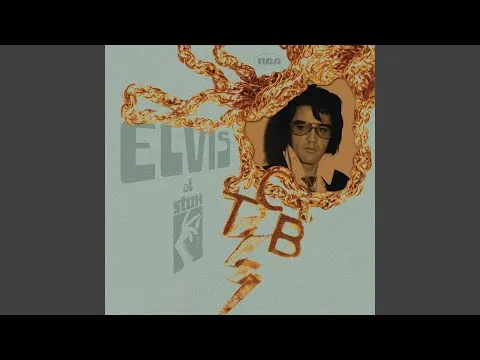
On January 6, 1957, during his third and final appearance on The Ed Sullivan Show, Elvis chose to sing “Peace in the Valley” — a traditional gospel hymn — rather than one of his rock and roll hits. He dedicated the performance to the Hungarian people, who were at that time engaged in a courageous uprising against Soviet rule, and Ed Sullivan himself urged viewers to donate to relief efforts.
This act of solidarity had lasting significance. In 2011, more than five decades later, Elvis was posthumously made an honorary citizen of Budapest in recognition of that compassionate gesture.
“Peace in the Valley” did not make it into Luhrmann’s film, which prioritized better-known and more controversial tracks like “Hound Dog.” But its absence from the movie does nothing to diminish the song’s profound place in Elvis’s legacy.
3. “How Great Thou Art”
Perhaps no gospel recording better demonstrates Elvis’s vocal mastery than his cover of “How Great Thou Art.” Based on a 19th-century Swedish hymn rooted in Psalm 8, the song was reportedly one of Elvis’s personal favorites — and the recordings prove it.
He won his first Grammy Award in 1967 for his studio rendition of the song, and then — remarkably — won his third Grammy in 1975 for a live concert recording of the same piece, performed in Memphis. In a career that produced so many iconic moments, it is telling that two of his three Grammy wins came from gospel performances.
Though absent from the Elvis film, “How Great Thou Art” stands as a towering achievement in American sacred music. Elvis also recorded other beloved hymns during this period, including “Take My Hand, Precious Lord,” “Amazing Grace,” and “In My Father’s House.”
4. “If I Can Dream”
After his military service in Germany and a string of Hollywood films throughout the 1960s, Elvis returned to serious musical performance with the landmark 1968 Comeback Special, broadcast on NBC on December 3, 1968. The special included a deeply moving gospel sequence, and it culminated in one of the most powerful performances of his career.
“If I Can Dream,” written by Earl Brown, is an anthem for racial unity and social hope. Its lyrics echo the spirit of Dr. Martin Luther King Jr.’s famous “I Have a Dream” speech, delivered just months before. The song remains one of Elvis’s most emotionally charged recordings — a reminder that his artistry was never entirely separate from the social upheavals of his time.
The Elvis film depicts Elvis himself composing the song, which is a creative liberty. The actual songwriter was Earl Brown. Nevertheless, the scene captures the emotional truth of what the song meant to Elvis and his audience.
5. “Silent Night”
Elvis released two Christmas albums during his career: Elvis’ Christmas Album in 1957 and Elvis Sings the Wonderful World of Christmas in 1971. Both collections blend traditional Christmas carols with gospel hymns, reflecting the inseparable nature of the sacred and the festive in his musical worldview.
In Luhrmann’s film, Colonel Parker — always focused on commercial opportunity — pressures Elvis to perform “Here Comes Santa Claus.” Elvis, true to his deeper convictions, instead delivers a passionate rendition of “If I Can Dream.”
His cover of “Silent Night,” however, carries a particularly intimate significance. His ex-wife, Priscilla Presley, included it on the 2017 compilation Christmas with Elvis and the Royal Philharmonic Orchestra, noting in the liner notes that Elvis had a special fondness for the song — a tenderness connected to his deep bond with his mother, Gladys.
6. “He Touched Me”
By the 1970s, Elvis had transformed into a larger-than-life Las Vegas showman, performing at the International Hotel in his iconic white, jewel-studded jumpsuit alongside backing vocalists including the gospel group the Sweet Inspirations. Yet even amid the spectacle, the sacred remained present.
His gospel album He Touched Me, released in 1972, earned him his second Grammy Award — a fact the Elvis film notably skips over. It was the last gospel album he would record. The title track and the album as a whole reflect a man who, despite the excesses and pressures of superstardom, never lost his spiritual center.
A Legacy Written in Sacred Music
Elvis Presley died on August 16, 1977, at the age of 42. But the gospel tradition he carried throughout his life did not die with him. In 2001, he was inducted into the Gospel Music Hall of Fame — a recognition that placed him alongside the great sacred music artists of the 20th century and acknowledged what his most devoted fans had always known: that his deepest musical gift was not rock and roll, but reverence.
His gospel recordings — raw, heartfelt, and technically extraordinary — offer a portrait of an artist who genuinely believed in what he sang. In an era when authenticity is endlessly debated, Elvis’s gospel work stands as evidence that the most enduring music comes from the soul.
Whether you are a lifelong Elvis fan, a newcomer introduced to his music through Baz Luhrmann’s film, or simply a lover of classic American music history, exploring his gospel catalog is one of the most rewarding musical journeys you can take. Seek out these recordings, listen deeply, and discover the spiritual heart of the King.
References
- Smith, Michelle. “Elvis’s gospel songs, ranked.” America: The Jesuit Review, 2022.
- Elvis Presley Enterprises. Official Elvis Presley Biography. Graceland.com.
- The Recording Academy. Grammy Awards Historical Archive: Elvis Presley.
- Gospel Music Association. Gospel Music Hall of Fame Inductees, 2001.
- Presley, Priscilla. Liner notes. Christmas with Elvis and the Royal Philharmonic Orchestra. RCA/Legacy Recordings, 2017.