
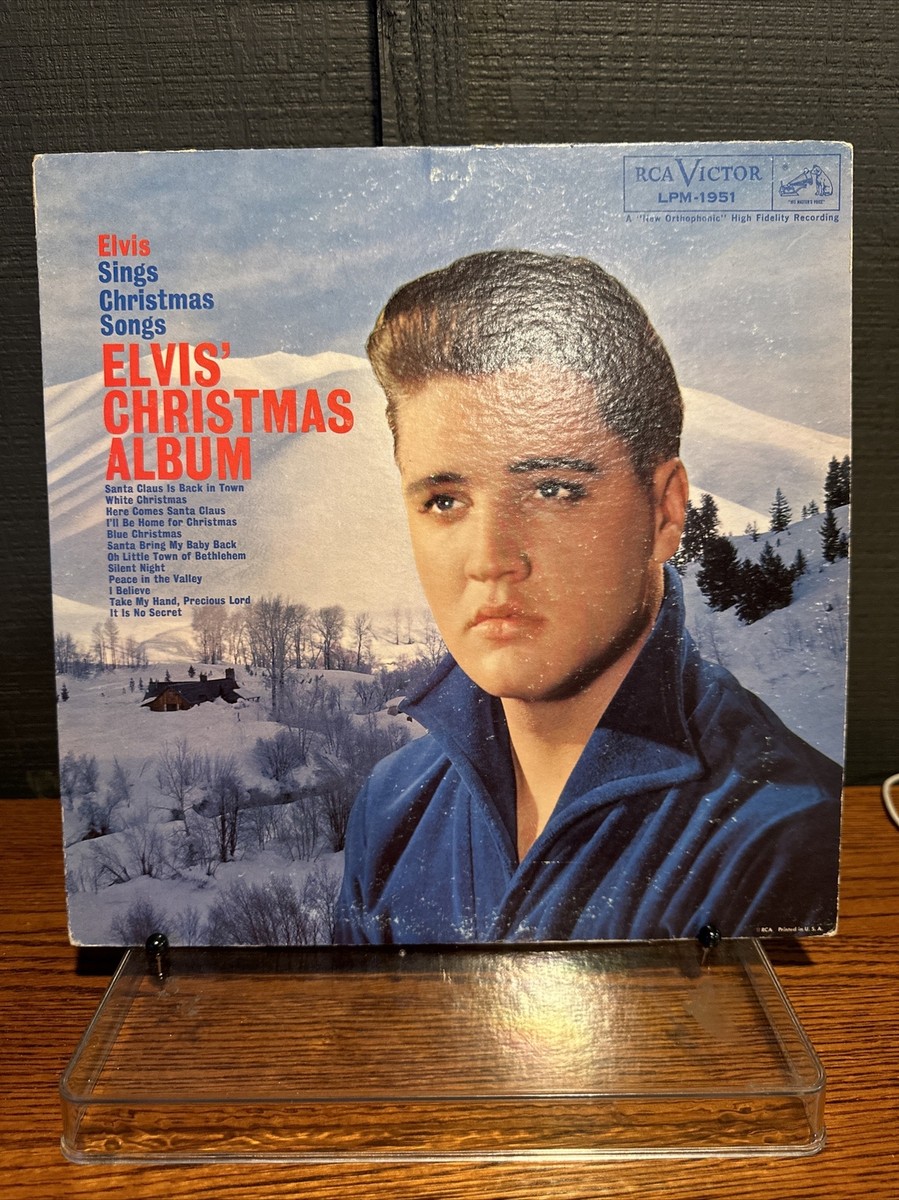
Introduction: A Yuletide Surprise Met with Skepticism
When Elvis Presley, the King of Rock and Roll, released “Elvis’ Christmas Album” in 1957, it wasn’t just another record; it was a cultural event that sparked considerable debate. While his devoted fans eagerly welcomed the album, many adults who already viewed Presley as a disruptive influence on youth culture found his foray into traditional Christmas music deeply unsettling. The idea of Elvis applying his signature rock and roll style to sacred holiday songs was, for some, a step too far, generating a wave of criticism that is fascinating to revisit decades later. This album, now a holiday staple, offers a unique glimpse into the anxieties and shifts in popular culture during the late 1950s.
The Album’s Content: A Blend of Sacred and Secular
“Elvis’ Christmas Album” featured a total of 12 tracks. Four of these were re-recordings of religious hymns Elvis had previously laid down in January 1957 and released on an extended play record that April. These included “Peace in the Valley,” “I Believe,” “Take My Hand, Precious Lord,” and “It Is No Secret (What God Can Do).” Elvis employed traditional arrangements for these spiritual songs, and as such, critics found little to fault in their delivery, beyond the inherent controversy of Presley himself singing them.
The real contention arose from the eight Christmas-themed songs recorded between September 5th and 7th, 1957, in Hollywood. It was during this session that Elvis’s band members Scotty Moore and Bill Black, reportedly frustrated by not being allowed to record their own instrumental album, chose to leave Presley’s employ.
Diverse Yuletide Offerings: From Reverent to Rocking
The resulting eight Christmas songs showcased a range of styles. Elvis’s renditions of “Silent Night” and “O Little Town of Bethlehem” were performed in a traditional manner, yet the very act of him recording these carols ignited criticism. Two other tracks, “I’ll Be Home for Christmas” and “Here Comes Santa Claus,” possessed a subtle rhythm and blues inflection. The remaining four songs, however, were treated to what historian Ernst Jorgensen described as Elvis’s “sexy, rock-it-up approach.” These included his distinctive versions of “Blue Christmas,” “Santa Claus Is Back in Town,” “Santa Bring My Baby Back (To Me),” and “White Christmas.”
Elvis first publicly addressed his upcoming Christmas album during a press conference in San Francisco on October 26, 1957. His announcement, described by a San Francisco Chronicle reporter as “chilling,” indicated that the album would be a “rock ‘n’ roll Christmas,” with “Silent Night” being the only song he hadn’t significantly altered. This “chilling” remark quickly permeated the entertainment media, even catching the attention of Time magazine in November.
Time commented, “Elvis has prepared a surprise package for the nation that is likely to be the most serious menace to Christmas since ‘I Saw Mommy Kissing Santa Claus.’ Victor is planning to release an album of Yule songs by Presley, accompanied by guitar and organ, the selections including ‘Silent Night’ and ‘Santa, Bring My Baby Back to Me.'”
The music industry’s reaction was swift. Bandleader Sammy Kaye declared Presley’s album “borders on the sacrilegious. Presley has gone too far this time.” Similarly, the Ohio Penitentiary News condemned Presley’s rendition of “White Christmas,” calling it “a song beloved until this creature recorded his barnyard version of it.”
“White Christmas” Sparks Outrage and Radio Bans
Elvis’s interpretation of “White Christmas” closely followed The Drifters’ rendition. Reports suggest Irving Berlin, the song’s composer, was so displeased that he attempted to have it banned from radio play. Several stations complied, including KEX in Portland, Oregon. On December 10, 1957, the station’s late-night DJ, Al Priddy, was dismissed for deliberately playing Elvis’s “White Christmas” against station policy. Variety reported that program manager Mel Bailey had forbidden the song, deeming Presley’s treatment of it “in extremely bad taste.”
However, the most significant criticism and airwave bans originated from Canadian radio stations, despite Elvis’s immense popularity during his earlier concerts in Toronto, Ottawa, and Vancouver that year. In Vancouver, all six local radio stations reportedly agreed to a proposed ban on Elvis’s holiday recordings.
Radio station CKXL in Calgary also banned the album, with a spokesperson stating, “Presley’s latest release has, we feel, no place on our station… Presley sings the Christmas songs exactly as we expected he would. It is one of the most degrading things we have heard in some time.” The station further described Presley as “panting” through “Silent Night” and “O Little Town of Bethlehem.” Another Calgary station, CFCN, while not issuing an official ban, indicated the album “would not be played because it happens to be in lousy taste.”
In Toronto, station CFRB banned the album, asserting that “there are better interpretations of Xmas hymns.” Columnist Gordon Sinclair of the Toronto Star criticized Presley’s rock ‘n’ roll approach to carols, suggesting only Mahalia Jackson could “jazz the hymns.” Sinclair, though disliking censorship, found Elvis’s handling of Christmas songs “wildly inappropriate.”
Canadian Airwaves: A Divided Reception
The Canadian Press surveyed disk jockeys across the country. While many stations refused to play any tracks from Elvis’s album, others indicated a willingness to play the more upbeat, non-religious songs like “Santa Bring My Baby Back to Me,” while avoiding traditional standards such as “Silent Night.” Some stations deferred their decision, awaiting feedback from their listeners.
In contrast, the nationwide Canadian Broadcasting Corporation (CBC) adopted a more accommodating stance. A spokesperson stated, “We have no objection if listeners want to hear the Presley albums and CBC disk jockeys want to play the numbers.” This progressive approach stood in stark contrast to the widespread bans elsewhere.
Commercial Success and Lasting Legacy
Regardless of the critical reception, “Elvis’ Christmas Album” achieved massive commercial success in the U.S. Billboard reported on October 7th that advance orders for the LP surpassed RCA’s initial production run of 200,000 copies, with an RCA executive hailing it as “the greatest advance album order in the history of the company.” The album soared to #1 on Billboard’s album chart during the 1957 holiday season.
Elvis’s rendition of “Blue Christmas” has since become a recognized rock and roll holiday classic, aired annually on radio stations nationwide. Reissued every holiday season, “Elvis’ Christmas Album” eventually reached the $1 million sales mark during the 1963 Yuletide season, earning it gold record status. It was Elvis’s sixth gold album at the time. In the decades since, this seminal Christmas LP has continued to sell through numerous repackaged releases. The enduring popularity of Elvis’s initial Christmas recordings has, in many ways, outlived the critics who so vehemently condemned them over half a century ago.
References
- Hanson, Alan. (2008, December). Elvis Presley’s Christmas Album Drew Harsh Criticism in 1957. Elvis History Blog.
elvis presley record valuations
elvis presley authentic signature
authentic elvis presley signature
elvis presley aloha from hawaii via satellite songs
elvis recorded live on stage in memphis