
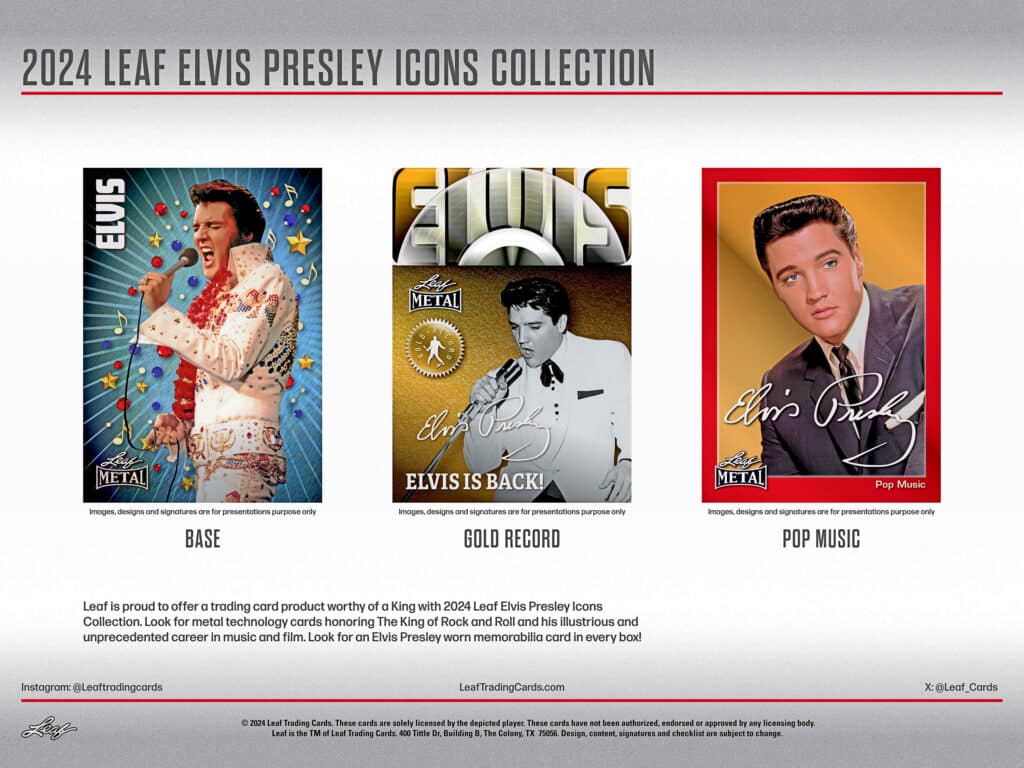
Very few performers in the history of global entertainment have managed to shift the tectonic plates of culture quite like Elvis Presley. Alongside icons such as Frank Sinatra and The Beatles, the “King of Rock ‘n’ Roll” transformed the musical landscape of the 20th century. From his humble beginnings as a country boy in Tupelo to his legendary status as the “Tennessee Troubadour,” Elvis’s journey began with a simple $3.25 recording session at Sun Studios. When asked who he sounded like, his defiant response—”I don’t sound like nobody”—set the stage for a career that would redefine the golden era of American music. This unique identity is preserved today not just in his vinyl records, but in the vibrant world of vintage trading cards.
Toppsing the Charts: The 1956 Revolution
In 1956, during the height of “Elvismania,” the Topps Chewing Gum Company recognized the massive cultural shift and negotiated the rights to produce the first-ever Elvis Presley Picture Cards. Released under their “Bubbles” pseudonym, this 66-card set captured the “Vibrating Valentino” at his absolute peak. For collectors of oldies music memorabilia, these cards represent a physical piece of rock history.
The first 42 cards in the set showcase Elvis in various settings: recording studios, live concerts, and behind-the-scenes moments on movie sets. Each card front features a caption tucked inside a red guitar graphic, while the backs include an “Ask Elvis” Q&A section. Interestingly, Card #2 is a “Record Collector’s Check List,” which remains highly sought after by enthusiasts, often fetching premium prices if found in “unchecked” condition.
The remaining 24 cards in the 1956 collection focused on Elvis’s debut film, Love Me Tender. These cards used a movie clapboard design for captions and provided plot synopses on the back. Today, a high-grade complete set of these cards is a holy grail for fans of American oldies music, with some registry-quality sets selling for over $8,000 at specialized auctions.
Endless Elvis: The Evolution of a Legend
The fascination with the “Memphis Flash” did not end with the 1950s. In 1978, Boxcar Enterprises (Donruss) released the “Elvis Collectors Series.” This 66-card set featured framed portraits and “Elvis Facts” on the reverse. A notable quirk for collectors is Card #24; early printings allegedly featured his manager, Colonel Tom Parker, but were changed after the Colonel himself complained, making the original version a curious piece of music industry lore.
As the decades progressed, the scale of these tributes grew. In 1992, The River Group launched “The Elvis Collection,” an ambitious series billed as “The Cards of His Life.” This was a monumental undertaking, featuring a 660-card base set that chronicled every era of his career—from the lean “Hillbilly Cat” years to his legendary Las Vegas residencies.
This collection was more than just cards; it was a multimedia experience including “Dufex” hits, gold and platinum record inserts, and even mail-in offers for medallions and watches. It provided international fans a deep dive into the cultural impact Elvis had on American society and the global music industry.
Modern Tributes and Rare Finds
In the 2000s, companies like Press Pass and Inkworks continued to honor the King. The “Elv1s by the Numbers” series (2008) introduced modern “chase” cards, including rare cut signatures and authentic costume fragments. Finding a card with a piece of a suit worn by Elvis became the ultimate “I Got Lucky” moment for lucky collectors.
Even 45 years after his passing, the demand for Elvis memorabilia remains insatiable. In 2022, Topps returned to its roots with an online-exclusive “The King of Rock & Roll” series. These print-to-order cards featured limited edition parallels in pink, blue, red, and gold, proving that the King’s influence on the “Oldies” genre and the hobby of collecting is timeless.
As Elvis once said, “Rock and roll music, if you like it, if you feel it, you can’t help but move to it.” These trading cards serve as a visual soundtrack to that movement, preserving the charisma and energy of a man who truly “didn’t sound like nobody.” Whether you are a dedicated philatelist or a casual fan of classic American music, these artifacts offer a unique window into the soul of a cultural phenomenon.
Conclusion
The enduring legacy of Elvis Presley is a testament to the power of authentic artistry. Through decades of trading cards—from the humble cardboard of 1956 to the premium gold-etched relics of today—we see a reflection of a man who paid his “Blue Suede Dues” and changed the world. These collectibles do more than just hold value; they keep the spirit of the golden age of music alive for future generations. Explore the melodies and the history of this immortal icon, and perhaps start a collection of your own to keep the memory of the King alive.