
For fans of Oldies Music, few artists embody the golden era of American popular culture more completely than Elvis Presley. Known worldwide as the “King of Rock and Roll,” Elvis transformed music, film, and youth culture throughout the 1950s and beyond. Looking back at the month of October in his life reveals a remarkable collection of milestones, career highlights, personal turning points, and memorable stories that help explain why his influence remains so powerful today.
October was a particularly significant month in Elvis Presley’s journey. From his first public performance as a child to record-breaking concerts, military service, major film releases, and important personal events, October repeatedly marked defining moments in the life of one of America’s most celebrated entertainers.
Why October Was Important in Elvis Presley’s Career
Elvis Presley experienced many career-changing events during October, spanning more than three decades. These moments illustrate his evolution from a young boy with musical dreams into a global cultural icon.
One of the earliest milestones occurred on October 3, 1945, when ten-year-old Elvis performed the song “Old Shep” at the Mississippi-Alabama Fair and Dairy Show in Tupelo, Mississippi. This appearance is widely remembered as his first public performance, offering an early glimpse of the talent that would later captivate millions.
A few years later, on October 2, 1954, Elvis appeared on the legendary Grand Ole Opry in Nashville, performing “Blue Moon of Kentucky.” Although his appearance was brief, it represented an important step in his early career as he transitioned from regional performer to national recording artist.
Record-Breaking Performances of the 1950s
The 1950s represented the height of Elvis mania, and October featured some of the most notable concerts of that era.
On October 11, 1956, Elvis performed before approximately 26,500 fans at the Cotton Bowl in Dallas, Texas. It was the largest audience to see him perform during the 1950s, demonstrating the extraordinary popularity he had achieved in a remarkably short period.
His television appearances were equally influential. On October 28, 1956, Elvis made his second appearance on The Ed Sullivan Show, performing classics such as “Don’t Be Cruel,” “Love Me Tender,” “Love Me,” and “Hound Dog.” Millions of viewers watched the broadcast, further cementing his status as a household name and a defining figure in American music before 1975.
On October 28, 1957, Elvis appeared at the Pan Pacific Auditorium in Los Angeles. The concert became controversial due to complaints regarding his energetic stage performance. The reaction was so intense that city authorities filmed the following night’s show to ensure that no local decency regulations were violated. The incident highlights the cultural tensions surrounding early rock and roll, a genre that challenged traditional social norms and energized a new generation of music fans.
Elvis Arrives in Germany
Another pivotal October event occurred during Elvis’s military service.
On October 1, 1958, he arrived in Germany aboard the U.S.S. Randall to begin his Army deployment. This period is considered one of the most significant chapters in Elvis’s personal development. His service demonstrated that despite his enormous fame, he was expected to fulfill the same national obligations as other American citizens.
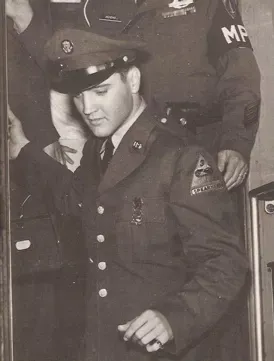
The German years also had a lasting impact on his personal life and future career. They exposed him to new experiences and helped shape the mature entertainer who would emerge in the 1960s.
Film and Recording Milestones
Elvis’s contributions extended far beyond music. Throughout the 1960s, he became one of Hollywood’s most recognizable stars.
On October 17, 1957, his third film, Jailhouse Rock, premiered in Memphis. Although Elvis did not attend the premiere, the movie became one of the most iconic musical films ever produced and remains closely associated with his legacy.
Several additional October milestones followed:
Important Career Achievements
- October 15, 1961 – Elvis recorded “Good Luck Charm” at RCA Studio B in Nashville.
- October 23, 1968 – His twenty-eighth movie, Live a Little, Love a Little, opened in theaters nationwide.
- October 29, 1976 – The famous Jungle Room recording sessions began at Graceland, producing recordings that would become part of his final musical legacy.
These events illustrate the breadth of Elvis’s career, which successfully combined recording, touring, television, and film during the golden era of American entertainment.
An Unusual Elvis Radio Marathon
One fascinating story from October 1956 demonstrates the extraordinary devotion of Elvis fans.
On October 2, 1956, Chicago radio station WAIT conducted a twelve-hour marathon featuring Elvis records. Beginning at 7 a.m., the station repeatedly played thirty-three Elvis recordings throughout the day.
The response was remarkable:
- One listener canceled a dental appointment to stay home and listen.
- Another waited for a lengthy news break before doing household chores because she did not want to miss any songs.
- A mother reported that her six-month-old baby, who normally cried all morning, peacefully fell asleep while listening to Elvis.
- Another woman called in to say she was pretending to be sick so she could remain near the radio.
- Many parents reported that getting teenagers out of bed was no longer difficult—the challenge was persuading them to leave for school.
The story captures the intensity of Elvis fandom during the height of the rock and roll revolution.
Elvis’s Gold Cadillac Becomes an Australian Attraction
Another remarkable October anecdote emerged in 1968.
According to Variety, Elvis’s famous Gold Cadillac became one of Australia’s biggest attractions. Organized by RCA Victor Records and supported by Colonel Tom Parker, the vehicle toured the country to raise funds for the Benevolent Society of New South Wales.
By October 1968:
- More than 400,000 Australians had viewed the car.
- Admission fees had generated approximately $128,000 for charity.
- Every dollar raised was directed to the charitable organization.
- No operating expenses were deducted from the proceeds.
The popularity of the tour demonstrated the extraordinary international reach of Elvis Presley. Even without a personal appearance, an item associated with him attracted enormous crowds across Australia.
Important People Connected to Elvis Born in October
Several prominent figures from Elvis’s professional world celebrated October birthdays:
- Walter Matthau (born October 1, 1920), co-star in King Creole.
- Stella Stevens (born October 1, 1936), co-star in Girls! Girls! Girls!.
- Angela Lansbury (born October 16, 1925), who portrayed Elvis’s mother in Blue Hawaii.
- Julie Adams (born October 17, 1926), featured in Tickle Me.
- Chuck Berry (born October 18, 1926), pioneering rock and roll musician whose songs “Memphis” and “Promised Land” were later recorded by Elvis.
- Wanda Jackson (born October 20, 1937), often called the “female Elvis Presley” and one of the most influential female rockabilly performers.
- Dolores Hart (born October 20, 1938), Elvis’s co-star in Loving You and King Creole.
- Jennifer Holden (born October 24, 1936), featured in Jailhouse Rock.
- Don Siegel (born October 26, 1912), director of Flaming Star.
- Neal Matthews (born October 26, 1929), member of the Jordanaires vocal group.
These individuals contributed to the broader cultural landscape that helped define classic American music and entertainment.
A Memorable Elvis Quote from October 1956
In an interview published by The New York Post on October 4, 1956, Elvis recalled a particularly enthusiastic fan in Atlanta who attended multiple shows and attempted to reach the stage before being stopped by police officers. The incident amused Elvis so much that he reportedly had to leave the stage momentarily because he could not stop laughing.
The story reflects the intense excitement and emotional connection that audiences felt toward him during the peak years of rock and roll.
Conclusion
The month of October serves as a fascinating lens through which to explore the life and legacy of Elvis Presley. From his first public performance of “Old Shep” as a ten-year-old boy to historic concerts, television appearances, military service in Germany, major film releases, charitable initiatives, and personal milestones, October repeatedly marked important chapters in his extraordinary journey.
For anyone interested in Oldies Music, the history of Elvis Presley offers valuable insight into the cultural forces that shaped modern popular music. His achievements continue to influence artists around the world, while his recordings remain timeless symbols of the golden era of American music. Explore more of these unforgettable melodies and discover why Elvis Presley remains one of the most enduring icons in music history.