
Intro: Setting clear time blocks for visits simplifies scheduling and sets accurate client expectations. Using standardized time slots instead of guaranteeing exact arrival times reduces stress for owners and staff while improving route efficiency. This guide covers practical rules, sample schedules, and communication scripts you can use to implement timeblocks for pet sitting and dog walking. The primary keyword is “pet sitting timeblocks.”
Why use pet sitting timeblocks?
- Reduce scheduling complexity, allowing predictable routes and fewer late arrivals.
- Protect profit by reserving high-demand slots (early morning/late evening) for higher-margin services.
- Improve client expectations and satisfaction by being transparent about arrival windows.
- Make staffing and routing scalable as your business grows.
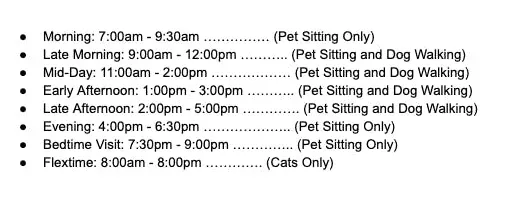
Example time slots (sample schedule)
- Morning: 7:00–9:00
- Early afternoon: 12:00–2:00
- Mid-day / mid-afternoon: 2:00–4:00
- Evening: 5:00–7:00
- Bedtime: 8:00–10:00
Use the slots above as a starting point and adapt to local demand and travel times.
How to set service rules around timeblocks
- Offer all pet sitting services across all slots, but restrict dog walks to 9:00–17:00 to avoid discounting peak pet-sitting demand.
- Price strategically: charge more for visits that fall in the highest-demand slots.
- Offer flex or “flextime” options for cat clients who don’t need fixed timing—this reduces travel time and increases route flexibility.
Scheduling common visit patterns
- Two visits/day (cats): morning and evening—good for low-maintenance pets.
- Three visits/day (dogs or high-need pets): morning, early afternoon, bedtime—split meals or medication times logically across these visits.
- Four visits/day (dogs needing more attention): morning, mid-day/early afternoon, evening, bedtime—best for dogs that require frequent breaks or medication.
Example: When scheduling three visits, suggest splitting the evening meal across early afternoon and bedtime so the dog doesn’t wait too long between feedings. If owners prefer not to split meals, recommend morning + evening + bedtime or move to four visits.
Mixing visit lengths
Offer multiple visit durations (20, 30, 40, 50 minutes) and allow mixing within a single timeblock to tailor service to each pet’s needs while keeping routing predictable.
Communicating the policy to clients
- Clear script: “We can’t guarantee a specific time, but we will arrive within the time slot. We’ll note your preferred time and try to hit it.”
- Explain briefly why: “Sitters follow a route; visits may run long and affect timing.”
- Repeat the policy in writing and add a note to the client profile with their preferred time to reduce misunderstanding.
Handling lateness professionally
- Require sitters to notify the office or client if they are more than 5 minutes past the time slot.
- Be transparent: send an update explaining the delay and expected arrival window. This preserves trust.
Meet & greets exception
Guarantee specific times for meet & greets to respect clients’ schedules and establish rapport. Communicate the same punctuality expectations: notify if running more than 5 minutes late.
Underpromise and overdeliver
- Maintain separate external (what you tell clients) and internal (what staff must do) policies.
- External policy example: “We do not guarantee exact times, only the time slot.”
- Internal policy example: require sitters to aim for a requested time and complete visits within the slot.
- Never promise more than you can consistently deliver; exceeding expectations builds long-term trust.
Operational tips for route efficiency
- Group nearby clients into the same time slots and plan routes that minimize backtracking.
- Use flextime slots for low-priority or flexible visits to optimize travel.
- Track average visit duration by client and slot to refine scheduling and pricing.
E-E-A-T and Helpful Content best practices
- Base your policy suggestions on real operational experience and, where applicable, cite reputable sources for safety or animal care standards (veterinary associations, animal welfare organizations).
- Include brief real-world examples (e.g., how splitting a meal reduced hunger-related behavior in a client’s dog) to demonstrate experience.
- Make policies transparent and verifiable to build trust with clients and staff.
Implementation checklist
- Define your time slots and map which services you offer in each.
- Set pricing tiers for peak and off-peak slots.
- Create client-facing script and written policy.
- Add a “preferred time” note field to client profiles.
- Train sitters to notify when running >5 minutes late and to follow internal routing policies.
- Offer meet & greets by specific appointment only.
- Monitor and refine slots monthly based on booking patterns.
Image examples

Final thoughts
Adopting pet sitting timeblocks reduces scheduling friction, protects revenue, and improves client satisfaction when paired with clear communication and consistent internal practices. Start with a simple set of slots, explain them clearly to clients, and iterate based on your local market and route data.
References
- Pet Sitter Training, “Pet Sitter and Dog Walker Certification Course,” petsittertraining.com.
- Author experience: common operational practices used by professional pet-sitting companies.