
The national average cost for a routine veterinary visit is approximately $214 for dogs and $138 for cats, according to the latest data from the American Veterinary Medical Association (AVMA). However, these figures represent baseline expenses, and actual costs vary significantly based on geographic location, the specific services required, and the type of veterinary practice you choose. Understanding these expenses is crucial for any responsible pet owner.
Key Financial Takeaways for Pet Owners
Average routine vet visits cost $214 for dogs and $138 for cats based on AVMA statistics. Pet owners should anticipate spending $1,000–$2,000 during the first year of pet ownership on routine care, vaccinations, and preventive treatments alone. Emergency situations and surgical procedures can range dramatically from $1,000 to $10,000 or more, depending on the condition’s severity and your location. Diagnostic tests such as X-rays ($75–$400) and bloodwork ($80–$400) frequently add hundreds of dollars to a single appointment. Older pets and larger dog breeds typically incur higher medical costs due to increased health risks and the need for larger medication doses. Pet insurance can provide reimbursement of up to 90% (or more) of covered veterinary expenses.
Standard Veterinary Expenses: A Detailed Price Breakdown
Veterinary costs vary considerably based on the services provided. Veterinary practices charge for physical examinations, diagnostic services, laboratory work, surgical procedures, anesthesia administration, hospitalization, and overnight boarding when necessary. Many of these services qualify for coverage under pet insurance policies, which reimburse a percentage of out-of-pocket expenditures after you pay the veterinary bill.
A surgical appointment will naturally cost substantially more than a wellness visit, while ongoing treatments such as cancer care can accumulate significant expenses over time. Here is a comprehensive breakdown of common veterinary services and their typical price ranges:
| FIRST-YEAR VET SERVICE | COST FOR DOGS | COST FOR CATS |
|---|---|---|
| Vaccinations | $15 to $50 | $25 to $50 |
| Deworming | $25 to $50 | $15 to $25 |
| Spay | $400 to $800 | $200 to $600 |
| Neuter | $300 to $700 | $50 to $400 |
| ROUTINE CARE SERVICE | COST FOR DOGS | COST FOR CATS |
| Wellness Exam | $65 to $150 | $50 to $150 |
| Teeth Cleaning | $500 to $2,000 | $200 to $1,500 |
| Nail Trimming | $10 to $35 | $10 to $25 |
| Anal Gland Expression | $25 to $50 | $25 to $50 |
| SICK VISITS | COST FOR DOGS | COST FOR CATS |
| Ear Infection | $120 to $300 | $120 to $250 |
| Kennel Cough | $75 to $250 | — |
| Allergic Reaction | $195 to $2,500 | — |
| Exam Fees | $75 to $300 | $75 to $300 |
| SURGERY | COST FOR DOGS | COST FOR CATS |
| CCL Tear | $1,500 to $10,000 | — |
| Bloat (GDV) | $2,000 to $7,500 | — |
| Cherry Eye | $500 to $2,500 | — |
| Lipoma Removal | $200 to $1,000 | — |
| Foreign Obstruction | $3,000 to $7,000 | $3,000 to $7,000 |
| Internal Bleeding | $1,800 to $5,000 | $1,000 to $5,000 |
| Pneumonia | $200 to $2,000 | $200 to $1,500 |
| Parvovirus | $1,000 to $3,500 | — |
| Hospitalization | $600 to $6,500 | $600 to $6,500 |
| Accidental Poisoning | $250 to $5,000 | $250 to $5,000 |
| DIAGNOSTICS | COST FOR DOGS | COST FOR CATS |
| Fecal Exam | $25 to $150 | $25 to $150 |
| Biopsy | $150 to $2,000 | $150 to $2,000 |
| Bloodwork | $80 to $400 | $80 to $400 |
| Heartworm/Tick Panel | $35 to $150 | $35 to $150 |
| IMAGING | COST FOR DOGS | COST FOR CATS |
| X-ray | $75 to $400 | $75 to $400 |
| MRI | $1,500 to $7,500 | $1,500 to $7,500 |
| Ultrasound | $300 to $800 | $300 to $800 |
These price ranges can fluctuate based on your geographic location, your pet’s species and breed, and their medical history. Even routine examination fees vary between states. According to AVMA data, pet parents spend approximately $147 per veterinary visit on average, with most being routine wellness appointments. However, unexpected visits occur frequently and can cost thousands of dollars.
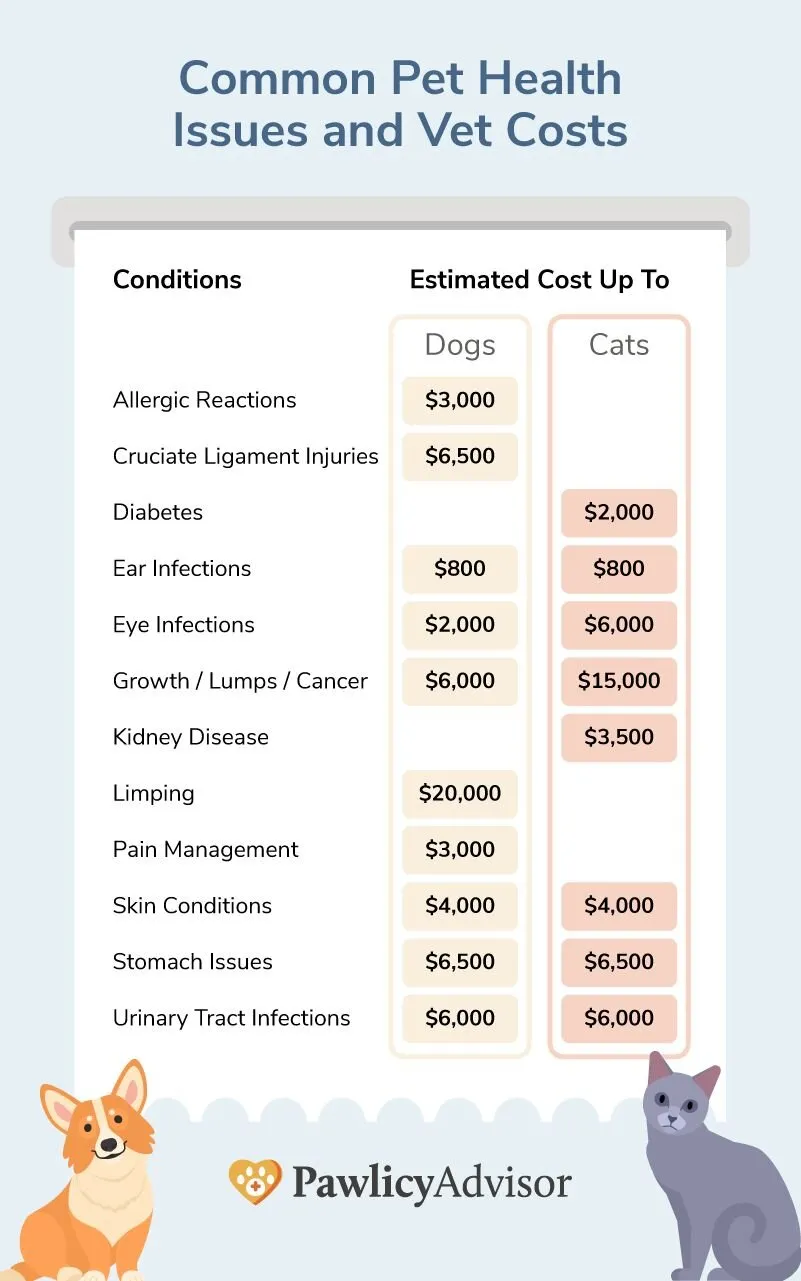
First-Year Veterinary Costs for Dogs and Cats
The American Society for the Prevention of Cruelty to Animals (ASPCA) estimates that the first year of dog ownership can cost $2,000 or more, with the total depending heavily on the animal’s size. For cats, first-year ownership costs average up to $1,174. These estimates assume routine veterinary visits without unexpected charges. If a regular wellness visit costs approximately $250 and you bring a new dog to the vet only once, the remaining budget can be allocated to supplies such as food, toys, and treats.
However, if your pet develops an illness or requires additional diagnostic testing, you could face substantially higher out-of-pocket expenses without adequate pet insurance coverage. Emergency situations and chronic conditions can quickly escalate veterinary costs beyond initial projections.
How Pet Characteristics Influence Veterinary Expenses
Veterinary costs vary significantly based on the type of pet you own. Caring for smaller animals like cats or rabbits generally proves less expensive than caring for large or medium-sized dogs. The species, breed, and individual health status all contribute to long-term medical expenses.
Modern pets are living longer than ever before due to advances in veterinary medicine and improved nutrition. Older pets typically require higher veterinary expenditures because they need more frequent medical attention. The AVMA notes that while outward signs of aging such as graying fur and reduced activity levels are easily observable, internal organ systems also undergo significant changes. Older pets face increased risks for diseases including heart disease, kidney disease, liver disease, cancer, and arthritis. Dogs develop cancer at roughly the same rate as humans, while cats have somewhat lower rates.
Additional factors influencing veterinary costs include your pet’s weight, health history, and temperament. Aggressive dogs may require sedation or calming medication for examinations, adding to the total expense. Some veterinary practices charge additional fees for handling difficult patients.
Maximizing Savings Through Pet Insurance
Veterinary bills accumulate quickly, particularly during emergencies, surgeries, or when managing chronic conditions. Depending on your policy, you may receive reimbursement for 70% to 90% of eligible veterinary expenses.
Understanding how pet insurance reimbursement works helps you plan effectively. Most policies operate on an annual deductible structure. For example, if your pet requires emergency care costing $1,600 with a plan offering 80% reimbursement and a $250 annual deductible, the calculation would be: ($1,600 – $250) × 0.8 = $1,080 reimbursed. For subsequent claims within the same year after meeting the deductible, reimbursement applies to the full bill amount.
With appropriate coverage, you can receive reimbursement for hundreds or thousands of dollars across your pet’s lifetime. Comprehensive pet insurance eliminates the need to choose between emergency veterinary care and financial stability, ensuring your pet receives necessary treatment when needed.
Pet insurance functions differently from human health insurance. Most providers reimburse the policyholder rather than paying the veterinary practice directly. This system eliminates network restrictions—you can visit any licensed veterinarian and receive the same reimbursement rate. However, you typically pay the initial veterinary bill upfront while awaiting reimbursement.
A strategic approach involves using a rewards credit card for upfront payments when financially feasible. If your credit card offers cashback rewards, you effectively reduce the overall cost. For instance, with a 3% cashback card, a $1,237 veterinary bill yields $37.11 cashback. Combined with insurance reimbursement of $888.30 (after a $250 deductible), your total recovery reaches $925.41.
Frequently Asked Questions About Veterinary Costs
What is the average cost of a veterinary visit for a dog or cat?
The national average cost for routine veterinary visits is approximately $214 for dogs and $138 for cats, based on 2024 AVMA data. Routine checkups generally cost less than emergency or specialty care appointments.
How much is a vet visit for a dog without insurance?
Without insurance coverage, the average veterinary visit for a dog costs approximately $214. However, final costs vary based on geographic location, clinic type, and the specific services provided during the appointment.
How much is a puppy’s first vet visit with shots?
A puppy’s initial veterinary visit including vaccinations typically costs between $100 and $350. This amount generally covers the examination ($50–$100) and core vaccines ($20–$50 each). Many veterinary clinics offer puppy packages that bundle these services at discounted rates.
How much can you save on vet bills with pet insurance?
Pet insurance can cover up to 90% of eligible veterinary expenses depending on your selected plan. This coverage translates to potential savings of hundreds to thousands of dollars annually, particularly during emergencies or when managing chronic conditions requiring ongoing treatment.
Planning for Your Pet’s Healthcare Future
Understanding veterinary costs enables better financial planning for your pet’s healthcare needs. Whether you’re welcoming a new puppy or caring for a senior cat, anticipating potential expenses helps ensure your pet receives optimal medical care throughout their lifetime. Consider exploring pet insurance options early, as premiums are typically lower for younger pets with no pre-existing conditions. Regular wellness care, preventive treatments, and emergency preparedness all contribute to responsible pet ownership and financial peace of mind.